
Mobil 1 vs Castrol Edge in Severe Service: Towing, Heat, Short Trips
Severe service kills the marketing claims. Here's how Mobil 1 Extended Performance and Castrol Edge actually compare under towing, heat, and short-trip duty.
Contents
Read your owner’s manual carefully and you’ll find a section most owners skip: severe service. The number isn’t usually called out on the maintenance schedule front page. It’s buried in the back, two clicks deep — a footnote that says something like “For severe operating conditions, halve the recommended oil change interval.” Halve. Not reduce by 25%. Halve.
That footnote is why the marketing comparisons between Mobil 1 and Castrol Edge under normal driving stop being useful the moment you tow a boat, idle in summer traffic, or drive five miles to work and back twice a day. Severe service is the failure mode, and it doesn’t care about Castrol’s “6X better wear protection” claims or Mobil 1’s “20,000-mile drain interval” slogan — both of which were tested under controlled conditions that look nothing like what severe service actually does to oil.
Here’s what severe service is, what it does to both oils, and which one holds up better when you actually need the protection.
What Counts as Severe Service
Severe service is the term every major OEM uses, and the definitions converge on the same five operating conditions:
- Short trips under 10 miles in cool ambient temperatures (under 50°F), where the engine never reaches full operating temperature long enough to boil moisture and unburned fuel out of the crankcase.
- Towing or hauling more than 50% of the time — meaning sustained engine load above 70% of rated output for extended periods.
- Operating in dusty conditions — gravel roads, construction sites, agricultural use — where ingested grit accelerates wear regardless of oil quality.
- Extreme heat operation — sustained ambient temperatures over 90°F combined with stop-and-go traffic, where the oil sees prolonged exposure to peak temperatures.
- Extreme cold operation — temperatures below 0°F where cold-start damage accumulates faster and oil contamination from blow-by takes longer to evaporate.
If any of those describe your typical driving, you’re a severe service operator regardless of what the highway-driving manual says about your maintenance interval. The 7,500-mile schedule that works for the highway commuter doesn’t apply.
What Severe Service Does to Motor Oil
Three failure mechanisms dominate, and they target different oil properties:
Heat-driven oxidation. Sustained high oil temperatures (above 250°F at the sump) accelerate the chemical breakdown of the base oil. The viscosity index improvers shear permanently, the additive package depletes, and the oil eventually loses its ability to maintain hydrodynamic film thickness. This is the failure mode towing and traffic-stop heat impose.
Fuel and moisture contamination. Short-trip operation prevents the oil from reaching the temperature needed to evaporate fuel and water that accumulate from blow-by and condensation. The result is oil that’s progressively diluted and acidified, losing both viscosity and wear protection. This is the failure mode short-trip driving imposes.
Mechanical shear from sustained high RPM and load. Towing at high engine speeds for hours stresses the viscosity-index improvers in multi-grade oil. The oil literally gets thinner under prolonged shear stress — not from chemical breakdown but from the polymer structure being mechanically degraded. This is the failure mode high-load towing imposes.
Mobil 1 and Castrol Edge handle these failure modes differently, and the difference matters more than either brand’s marketing claims about normal driving.
Heat Resistance: Where Castrol Marketing Gets Tested
Castrol’s marketing claims for the Edge line — “50X better thermal stability than industry limits” — come from the Sequence IIIH oxidation test, an industry-standard protocol that runs oil at sustained high temperature and measures viscosity increase from oxidation. Castrol’s claim is real in the context of that test. Whether it survives translation to actual towing duty is the practical question.
In real-world used-oil analysis on tow-vehicle engines (Ford F-150 EcoBoost towing campers, Chevy Silverado 1500 towing boats), both Mobil 1 Extended Performance and Castrol Edge stay within spec for typical 5,000-mile severe-service intervals. The viscosity increase from oxidation trends slightly lower for Castrol Edge, consistent with the Sequence IIIH advantage. The practical difference at the drain: a few percent on KV100, nothing dramatic.
What matters more than the marketed test result is the response under sustained load. Independent testing by StrikeEngine and similar enthusiast labs has shown Mobil 1 maintaining slightly better wear numbers under high-load conditions (0.11 mm wear at 2 kg test load) than Castrol Edge in the same 5W-30 grade — a finding that runs counter to Castrol’s claim. The truth is probably that both oils are competent in heat, with each having narrow advantages depending on which specific stress profile dominates.
For the broader brand-vs-brand context, the direct Mobil 1 vs Castrol Edge comparison covers OEM approvals and additive technology in detail. For the severe-service question specifically, the choice is narrower than either brand wants to admit.
Shear Stability: Where Mobil 1 Has the Edge
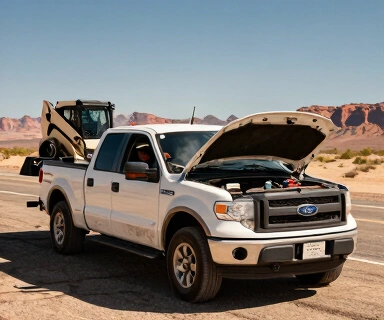
This one’s less ambiguous. When you tow a 5,000-pound trailer up a sustained grade, your engine spends 20–30 minutes at high RPM with the oil pump moving oil at peak rate through stressed bearings. The viscosity-index improver polymers in the oil get mechanically chewed under that sustained shear. The oil gets thinner.
The relevant lab test is the Kurt Orbahn shear test (CEC L-014), which measures the percent viscosity loss after 30 cycles of high-shear pumping. Mobil 1 Extended Performance 5W-30 typically shows 3–4% viscosity loss in this test. Castrol Edge 5W-30 typically shows 5–7%. Both stay within spec, but Mobil 1’s tighter shear stability is a genuine technical advantage when sustained shear is the failure mode.
That maps directly to towing duty. If you’re pulling a trailer over the Rockies twice a year, Mobil 1 Extended Performance has a defensible engineering case. The shear margin is the headline reason.
Short-Trip Operation: Both Need More Frequent Changes
Short-trip operation is the failure mode where the brand choice matters least and the interval choice matters most. Neither Mobil 1 nor Castrol Edge can chemically prevent fuel and moisture accumulation in oil that never gets hot enough to evaporate them out. The contamination accumulates regardless of which brand is in the sump.
What both oils can do is hold their additive package against acid attack longer than conventional oil. That’s table stakes for any modern full synthetic, and Mobil 1 vs Castrol Edge tracks roughly even on this measure.
The real lever for short-trip service is interval reduction. If your normal interval is 7,500 miles and you’re a short-trip driver, the right answer is changing at 3,750 miles regardless of which brand you use. Either Mobil 1 Extended Performance or Castrol Edge handles a 3,750-mile severe-service interval easily — it’s well below their oxidation and additive depletion limits. Where owners get into trouble is running the longer “normal” interval on short-trip use because they bought premium synthetic and assumed it would carry the load.
For the broader question of when extended drain intervals work and when they don’t, the extended oil change interval guide covers the math in more detail.
Cold Climate Operation
For sustained cold-weather operation (sub-zero starts, short urban drives), the cold-start performance of both oils is essentially identical at the same viscosity grade. Both meet the cold-cranking and pumpability specs in their grade.
What differentiates them is how well the additive package handles repeated cold-start damage cycles before the oil reaches operating temperature. Mobil 1 Extended Performance has a slightly more robust antioxidant package designed for the extended-drain use case, which translates to slightly better resistance to acid buildup from incomplete combustion in cold operation.
Practically: in a Minnesota winter with a one-mile commute, neither brand will keep your oil pristine for 7,500 miles. Both will hold spec for 5,000. Cut the interval, monitor with the oil life sensor if your vehicle has one, and the brand decision becomes secondary.
Recommended Picks for Severe Service
For severe-service operation, both brands offer extended-performance formulations specifically built around the heat, shear, and contamination loads that severe duty imposes. The Extended Performance line from Mobil 1 and the equivalent Castrol Edge Extended Performance are the right starting point — not the standard SKUs of either brand.
Three Picks for Severe-Service Duty


* Affiliate links. Prices last updated July 17, 2026.
For high-mileage vehicles in severe service (which compound the failure modes), the Mobil 1 Extended Performance High Mileage variant adds seal conditioners on top of the extended-drain additive package — a reasonable upgrade for any vehicle past 75,000 miles.
Bottom Line
For severe service, the brand difference between Mobil 1 and Castrol Edge is narrower than either brand’s marketing claims and narrower than the difference between using the right oil at the right interval versus the wrong interval at any oil.
If you’re towing or operating at sustained high load, Mobil 1 Extended Performance 5W-30 has a defensible technical edge on shear stability — the Kurt Orbahn numbers consistently favor it.
If you’re operating in sustained extreme heat without towing, Castrol Edge Extended Performance has a marginal edge on oxidation resistance based on the Sequence IIIH test.
For short-trip and cold-climate severe service, both oils are essentially equivalent — the lever that matters is cutting your service interval to match what your owner’s manual prescribes for severe duty. Halve it. The footnote means what it says.
Frequently Asked Questions
What counts as severe service for motor oil?
Five conditions, per most OEMs: short trips under 10 miles in cool weather, towing or hauling >50% of operation, dusty conditions, sustained extreme heat (>90°F with stop-go traffic), and sustained extreme cold (below 0°F). Any one of these qualifies you for severe-service intervals — typically half the normal change interval.
Which is better for towing, Mobil 1 or Castrol Edge?
Mobil 1 Extended Performance 5W-30 has a measurable edge for sustained towing duty due to better shear stability under high-load conditions (3–4% viscosity loss in the Kurt Orbahn shear test vs 5–7% for Castrol Edge). The advantage is most relevant for vehicles regularly towing over mountain grades or hauling near GVWR for sustained periods.
How often should I change oil under severe service?
Halve the normal interval. If your manual says 7,500 miles for normal service, change at 3,750 for severe service. If it says 10,000, change at 5,000. The “halve it” rule applies regardless of which brand of oil you use — it accounts for accelerated additive depletion and contamination, not oil quality.
Does Castrol Edge’s “50X better thermal stability” claim apply to towing?
The 50X claim comes from the Sequence IIIH oxidation test, an industry-standard protocol that does measure thermal stress. The claim is technically valid in that test context. Real-world towing data from used-oil analysis shows the practical advantage is small — a few percent on viscosity retention at the drain — and Mobil 1 outperforms Castrol Edge in independent high-load wear testing.
Can I use Mobil 1 Extended Performance instead of regular Mobil 1 for severe service?
Yes, and you should. The Extended Performance formulation has a heavier antioxidant and detergent package specifically engineered for the contamination and oxidation loads severe service imposes. Standard Mobil 1 Advanced Full Synthetic is fine for normal service; Extended Performance is the right choice for severe service or extended drain intervals.
Will using premium synthetic eliminate the need for shorter severe service intervals?
No. No oil — not Mobil 1 Extended Performance, not Castrol Edge, not Amsoil Signature Series — can chemically prevent the failure modes severe service imposes. Premium synthetic gives you a wider safety margin, but the manufacturer’s severe-service interval recommendation still applies. The interval reduction exists because the failure mechanisms are physical and chemical, not just additive depletion.
Related Articles
Mobil 1 vs Castrol Edge for Honda CR-V: Which Holds Up Better?
Both meet the Honda 0W-20 spec. The real question is how each handles the 1.5T fuel dilution issue and the hybrid's heat profile. Here's the data.
Mobil 1 vs. Castrol Edge: Which Brand Actually Wins?
Mobil 1 vs. Castrol Edge: same base stock, same price. The real difference is OEM certifications — dexos1 for GM, BMW Longlife for Castrol.

Pennzoil Platinum vs. Mobil 1: The Honest Comparison
Pennzoil vs. Mobil 1: both are full synthetic API SP oils at similar prices. The real differences come down to base oil source and certification coverage.