Pennzoil Ultra Platinum vs Mobil 1 Extended Performance: 15K-Mile Showdown
Both promise 15,000-mile drain intervals. The chemistry, the warranty, and the BITOG used-oil data — what actually holds up across the long haul.
Contents
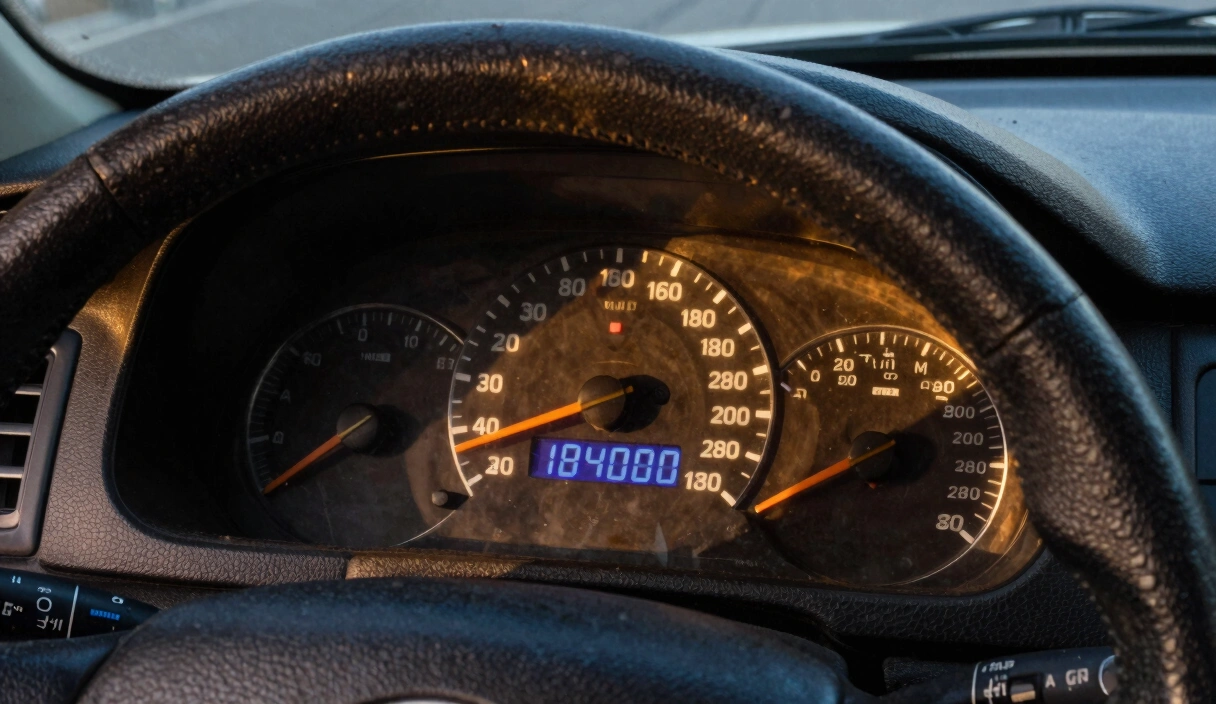
I’ve run my 2014 Honda Civic on 12,000-mile drain intervals for the last six years — first on Mobil 1 Extended Performance, then on Pennzoil Ultra Platinum after a curiosity-driven switch in 2022. The car has 184,000 miles on it. The compression numbers are still inside the factory window. The oil consumption between changes is about a quarter quart. Either oil works, by every measurable standard a backyard owner can run.
What I learned switching brands is that the Pennzoil Ultra Platinum vs Mobil 1 Extended Performance argument isn’t really about which one protects better at 15,000 miles. Both do. It’s about base oil chemistry, warranty fine print, and the kind of driving you do — and those differences actually translate into a defensible buying decision once you understand them.
Here’s what’s in each bottle and how to think about which one belongs in your engine.
The Base Oil Story: Group III vs GTL
This is where the two oils genuinely diverge. Most “full synthetic” motor oil sold in North America is Group III base stock — severely hydrocracked petroleum, refined until the molecular structure is uniform enough to be legally classified as synthetic. Mobil 1 Extended Performance falls in this category, with ExxonMobil’s SuperSyn additive package on top.
Pennzoil Ultra Platinum is the most prominent product built on something different: GTL base stock. GTL stands for Gas-to-Liquid — natural gas converted into a synthetic base oil through Shell’s PurePlus process at the Pearl plant in Qatar. Chemically, GTL is still classified as Group III, but it starts from methane rather than crude oil. The result is a base stock with fewer impurities, a more uniform molecular structure, and lower volatility (less burn-off at high temperature).
Whether that translates to a meaningful performance difference is where it gets interesting. In standardized lab tests — Noack volatility, oxidation resistance, low-temperature pumpability — Pennzoil Ultra Platinum tests slightly better than typical Group III synthetics on volatility and slightly better on cold-flow performance. The differences are real but modest, typically 1–3% on each test. In the real world, that might mean a quarter-quart less burn-off across a 12,000-mile interval. Measurable, but not dramatic.
What the GTL chemistry doesn’t change is the additive package, and that’s where Mobil 1 Extended Performance has its own claims to make.
Additive Chemistry: SuperSyn vs Pennzoil’s Approach
Mobil 1 Extended Performance uses ExxonMobil’s SuperSyn additive system — a phosphorus/zinc (ZDDP) and organic molybdate blend specifically tuned for the extended-drain use case. The detergent and dispersant levels are set higher than standard Mobil 1 to handle the contamination accumulation across 15,000 miles. The antioxidants are designed to deplete more slowly under sustained heat exposure.
Pennzoil Ultra Platinum’s additive package is built around the same principles — extended-drain detergent dosing, robust antioxidant chemistry, ZDDP for wear protection — but the formulation is tuned around the GTL base. Less time degrading the base oil means more of the additive package is doing actual protection rather than fighting base oil oxidation byproducts. That’s the technical case for GTL. Whether it actually shows up in real-world wear data is the question used-oil analysis tries to answer.
For the broader Pennzoil vs Mobil 1 comparison across the standard product lines, the Pennzoil vs Mobil 1 head-to-head covers the consumer-grade synthetic comparison in detail. The Extended Performance and Ultra Platinum tier is a meaningfully different game.
What BITOG Used-Oil Analysis Actually Shows
The Bob Is The Oil Guy (BITOG) forum is the largest aggregated source of used-oil analysis (UOA) data on consumer motor oils. Browse the threads on Mobil 1 Extended Performance and Pennzoil Ultra Platinum at 12,000–15,000-mile intervals and you find a consistent pattern:
- Iron wear (the headline wear metal): Both oils trend in the 8–25 ppm range at 12,000 miles, depending on engine and operating conditions. Pennzoil Ultra Platinum trends slightly lower in some engine families (Toyota, Honda); Mobil 1 trends slightly lower in others (Ford EcoBoost, GM LFY direct-injected). The differences within an engine family are smaller than the differences between engine families.
- Copper and aluminum (bearing and bushing wear): Both stay in the single-digit to low-double-digit ppm range. No statistically significant difference between brands in fleet data.
- TBN retention (additive package depletion measure): Pennzoil Ultra Platinum trends slightly higher TBN remaining at the 15,000-mile mark — about 4.5 vs about 4.0 for Mobil 1 Extended Performance. The practical interpretation: both have headroom; Pennzoil has a touch more.
- Viscosity retention: Mobil 1 Extended Performance holds initial viscosity slightly better under shear; Pennzoil Ultra Platinum holds it slightly better under thermal stress. Engine-specific variation dominates.
The forum consensus, after years of accumulated data: at 15,000 miles in normal service, both oils protect equivalently. The chemistry differences are real but small enough that the engine, the driving conditions, and the maintenance discipline matter more than the brand choice.

The Warranty Fine Print
Both brands market mileage-based engine warranties as part of their extended-performance positioning. They are not equivalent.
Mobil 1 Extended Performance — Annual Protection: Covers the engine for one year or 15,000 miles (whichever comes first) on a single oil change. Per-claim limit is roughly equivalent to a complete engine replacement. Registration is required within 60 days of the oil change. Independent oil analysis at the claim event is required to demonstrate the failure was not caused by oil-related factors.
Pennzoil Ultra Platinum — Lubrication Limited Warranty (formerly the “No Worries Promise”): Provides up to 10 years or 500,000 miles of coverage on engine internal lubrication-related failures, conditional on continuous use of Pennzoil Platinum or Ultra Platinum for the vehicle’s service life. The full coverage requires receipts proving every drain interval used the qualifying product, plus adherence to the vehicle manufacturer’s recommended service schedule.
The Mobil 1 Annual Protection is a simpler, lower-effort guarantee with a shorter time horizon. The Pennzoil program offers longer coverage but requires near-perfect documentation across the vehicle’s life. For most owners, the simpler Mobil 1 program is more likely to actually pay out in a claim scenario. The Pennzoil program rewards owners who keep meticulous records and use exclusively Pennzoil products from the first oil change.
Cold-Climate Performance
Pennzoil Ultra Platinum has the better paper case here. The GTL base oil’s molecular uniformity translates to slightly lower cold-cranking viscosity at extreme low temperatures. In Northern Plains and Alaska use, where -40°F starts are not theoretical, the difference is measurable — typically a few hundred cP lower at -35°C in the same SAE grade.
In practice, both oils start a healthy engine at any temperature a 0W-20 or 5W-30 grade is rated for. The advantage matters when battery condition is marginal, when the engine has accumulated wear that increases cranking resistance, or when you’re trying to start a vehicle that’s been parked in extreme cold for an extended period. For most owners in most climates, the difference is invisible.
Which One I’d Buy Today
For a typical owner running 7,500 to 12,000-mile drain intervals on a healthy modern engine, Pennzoil Ultra Platinum is what I’d buy. The reasons, in order:
- Slightly better cold-climate performance. Even in moderate climates, the lower volatility means a touch less burn-off across an extended interval.
- Slightly better TBN retention at long intervals. More headroom if a planned 12,000-mile interval slips to 14,000.
- GTL base stock as the technical differentiator. Not a dramatic advantage, but a real one.
- Pricing is competitive. Pennzoil Ultra Platinum typically sells within a dollar or two of Mobil 1 Extended Performance per quart.
For owners running closer to 15,000 miles regularly or doing severe service, Mobil 1 Extended Performance 5W-30 is the safer default. The shear stability advantage matters more under sustained load, and the simpler warranty is easier to actually use if a problem develops.
For a high-mileage vehicle (over 100K miles starting to consume oil), Mobil 1 Extended Performance High Mileage adds seal conditioners on top of the extended-drain additive package — a meaningful upgrade for older engines.
The picks below are the closest US-Amazon-stocked equivalents in each tier. Note that Pennzoil Ultra Platinum 5-quart jugs sometimes ship under different SKUs in different geographic regions — verify the bottle on arrival before you commit to the brand for the long haul.
Three Extended-Drain Synthetic Picks


* Affiliate links. Prices last updated July 17, 2026.
For deeper context on when extended drain intervals actually work, the extended oil change interval guide covers what 15,000-mile intervals require to be safe.
Bottom Line
Both oils protect a modern engine across 15,000-mile intervals in normal service. The chemistry differences are real but modest. Pennzoil Ultra Platinum’s GTL base stock gives it a small edge on volatility, cold-flow, and additive package retention at long intervals. Mobil 1 Extended Performance’s SuperSyn additive package gives it a small edge on shear stability and a simpler warranty.
For most owners doing 7,500–12,000-mile intervals, Pennzoil Ultra Platinum is the slightly better technical pick. For owners doing 15,000-mile intervals or severe-service driving, Mobil 1 Extended Performance is the safer default. The brand argument matters less than running the right interval and keeping the maintenance log honest.
Frequently Asked Questions
Is Pennzoil Ultra Platinum better than Mobil 1 Extended Performance?
In typical service, slightly. Pennzoil Ultra Platinum’s GTL (gas-to-liquid) base stock has lower volatility and slightly better cold-flow performance than the Group III base used in Mobil 1 Extended Performance. Used-oil analysis data shows comparable wear protection at 12,000–15,000-mile intervals, with Pennzoil typically retaining slightly more TBN (additive package) at the drain. The differences are real but modest — both oils protect equivalently in real-world use.
Can I switch from Mobil 1 Extended Performance to Pennzoil Ultra Platinum?
Yes, at any scheduled oil change. Both are full synthetic, chemically compatible, and can be switched without flushing or any special procedure. The new oil reaches its full protection level on the first drive after the change.
Does Pennzoil Ultra Platinum really protect for 500,000 miles?
The Pennzoil Lubrication Limited Warranty (formerly No Worries Promise) covers up to 10 years or 500,000 miles on engine internal lubrication-related failures, but only if you’ve used qualifying Pennzoil products (Ultra Platinum, Platinum, or Platinum High Mileage) for every oil change throughout the vehicle’s life and have receipts to prove it. Most owners can’t meet the documentation requirement. The protection itself is real; the warranty is rarely actually claimed.
What is GTL base stock and why does it matter?
GTL stands for Gas-to-Liquid — natural gas converted into a synthetic base oil through Shell’s PurePlus process. It’s chemically classified as Group III (same as most “full synthetic” oils), but the molecular structure is more uniform and the impurity profile is lower than petroleum-derived Group III. The practical result: slightly less volatility (less oil burn-off), slightly better cold-flow, and slightly more headroom for the additive package to work on protection rather than fighting base oil byproducts.
Should I run 15,000-mile drain intervals on either oil?
Only if your owner’s manual or the vehicle’s oil life monitor permits it, and only under normal service conditions (not severe service). Both oils are formulated for 15,000-mile intervals under controlled conditions, but used-oil analysis is the safest way to verify the interval works for your specific engine and driving pattern. Send a sample at 10,000 miles on the first interval; if the wear metals and TBN look good, extending to 15,000 is reasonable for the next interval.
Does Pennzoil Ultra Platinum carry dexos1 Gen 3 approval?
Yes. Pennzoil Ultra Platinum 5W-30 carries current dexos1 Gen 3 licensing for GM vehicles model year 2021 and later. The same applies to Mobil 1 Extended Performance 5W-30. Both are valid choices for a modern Chevy, GMC, Cadillac, or Buick.
Related Articles

Pennzoil Platinum vs. Mobil 1: The Honest Comparison
Pennzoil vs. Mobil 1: both are full synthetic API SP oils at similar prices. The real differences come down to base oil source and certification coverage.

Mobil 1 vs Castrol Edge in Severe Service: Towing, Heat, Short Trips
Severe service kills the marketing claims. Here's how Mobil 1 Extended Performance and Castrol Edge actually compare under towing, heat, and short-trip duty.
Mobil 1 vs Castrol Edge for Honda CR-V: Which Holds Up Better?
Both meet the Honda 0W-20 spec. The real question is how each handles the 1.5T fuel dilution issue and the hybrid's heat profile. Here's the data.