Valvoline Advanced vs Mobil 1: Is the Three-Dollar Gap Worth It?
Valvoline Advanced runs about three bucks less than Mobil 1 per 5-quart jug. Both are API SP. Where the difference actually shows up — and where it doesn't.
Contents
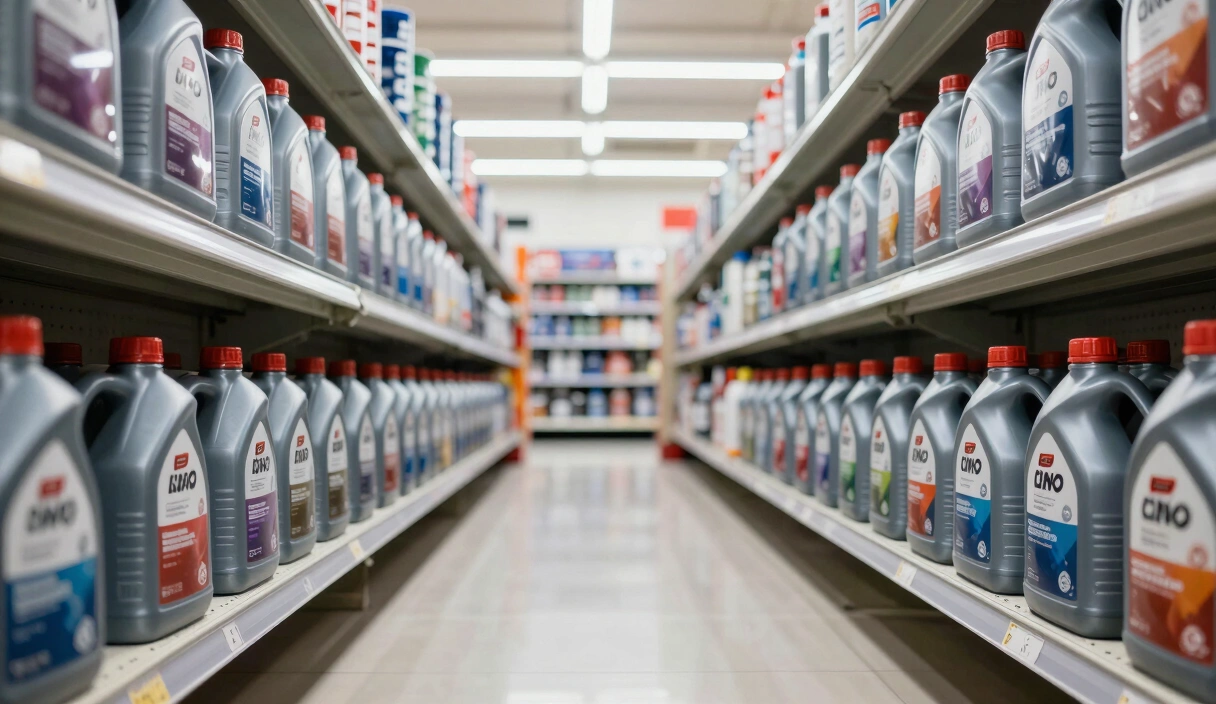
Stand at the Walmart automotive aisle, look at the 5-quart jugs, and you’ll see Valvoline Advanced Full Synthetic 5W-30 at around $26 and Mobil 1 Advanced Full Synthetic 5W-30 at around $29. Three dollars. Same shelf, same viscosity grade, both labeled API SP and ILSAC GF-6A. Both pour the same color, both meet the warranty requirements for whatever you’re driving, both come from companies you’ve heard of since you were a kid riding shotgun on the way to the parts store.
The question owners actually want answered isn’t “which one is better.” It’s “is the three bucks doing anything?” That’s a different question, and the honest answer requires looking past the marketing copy on the back of each jug.
Here’s where the three dollars actually buys you something, and where it doesn’t.
What’s Identical About These Two Oils
The certifications match. Both Valvoline Advanced Full Synthetic 5W-30 and Mobil 1 Advanced Full Synthetic 5W-30 carry:
- API SP — the current US gasoline engine oil standard, including LSPI (Low-Speed Pre-Ignition) protection that turbocharged GDI engines need
- ILSAC GF-6A — the current US fuel economy standard
- GM dexos1 Gen 3 — the GM specification for 2021+ Chevy/GMC/Cadillac/Buick engines
Both are full synthetic Group III base stock — severely hydrocracked petroleum, refined to the point where it qualifies as synthetic under the legal definition. Neither uses Group IV (PAO) base stock in the standard product, despite marketing copy that occasionally implies otherwise.
The pour profile, the cold-cranking viscosity, the high-temperature high-shear (HTHS) numbers, and the basic additive chemistry sit within a few percent of each other on the spec sheet. The two oils are more similar than different at the molecular level.
If your owner’s manual just says “5W-30 full synthetic, API SP” — without an OEM-specific approval code — both oils are correct. The protection floor is set by the API SP and ILSAC GF-6A specs, and both clear it comfortably.
Where Mobil 1 Earns the Three Dollars
Three places, in order of how much they matter for the typical owner:
1. Broader OEM approval coverage. Mobil 1 carries a wider stack of European OEM approvals across its product line — VW 502.00, BMW Longlife-01 FE, MB 229.5 (older Mercedes), Porsche A40, Honda HTO-06. Valvoline Advanced Full Synthetic doesn’t pursue most of these approvals; the Valvoline lines that do (SynPower, Restore & Protect Euro) are separate SKUs at higher prices.
For a typical US-market vehicle without specific OEM approval requirements, this is irrelevant. For owners with a European or Honda turbo who needs a specific approval code, Mobil 1 covers the spec at the price you see at Walmart. With Valvoline, you’d be moving up to the SynPower or Euro line at a higher price — closing or reversing the three-dollar gap.
2. dexos1 Gen 3 across the standard product line. Both brands carry dexos1 Gen 3 in their main 5W-30 SKUs, but Mobil 1’s coverage is broader across viscosity grades. The standard Mobil 1 line stocks dexos1 Gen 3 at 0W-20, 5W-20, 5W-30, and 0W-40. Valvoline Advanced Full Synthetic carries it at the most common grades but the coverage is slightly narrower at the edge cases.
3. Annual Protection guarantee program. Mobil 1 offers a 15,000-mile / 1-year engine protection guarantee tied to the Annual Protection branded oil (a relabeled premium product). The standard Mobil 1 Advanced Full Synthetic isn’t part of the Annual Protection program — that requires the specifically-branded SKU at higher price. So this point is more “Mobil 1 has a premium tier with a guarantee” than “the standard Mobil 1 you’re comparing comes with a guarantee.”
For owners who care about the documented guarantee, Mobil 1 has a clearer marketing path to it. Valvoline’s equivalent is the 300,000-mile guarantee tied to the Restore & Protect line — also a separate product, also at higher price.
Where Valvoline Earns the Three Dollars Saved
The case for Valvoline isn’t that it’s a worse oil — it’s that the additional protection from Mobil 1 doesn’t show up in the use cases most owners are actually driving:
1. The base wear protection is genuinely equivalent. Used-oil analysis from BITOG threads on identical engines (Toyota 2GR, Honda K24, Ford Coyote 5.0, GM LFY) shows wear metals trending equivalently between Valvoline Advanced Full Synthetic and Mobil 1 Advanced Full Synthetic at typical 5,000–7,500-mile drain intervals. Iron in the 8–18 ppm range, copper and aluminum in the single digits, no statistically meaningful difference at the brand level. The engine and the operating conditions dominate the wear picture.
2. The 300,000-Mile Engine Guarantee program (separate from Advanced). Valvoline’s flagship guarantee — 300,000 miles of engine protection on registered vehicles — is tied to the Restore & Protect line specifically, not Valvoline Advanced. So strictly comparing Advanced vs Mobil 1 Advanced, neither has a meaningful guarantee program at the standard tier.
3. Heritage and US-market focus. Valvoline is the oldest continuously-operating US oil brand (founded 1866). The R&D and formulation focus has historically been on the US domestic market — meaning the additive package is tuned around what API and ILSAC test protocols emphasize, not the European Longlife protocols. For US-market vehicles operating in US conditions on US-recommended drain intervals, that focus is an advantage rather than a limitation.
4. The price advantage compounds across vehicle life. Three dollars per change × 30 oil changes (a typical 200,000-mile lifetime) = $90 in cumulative savings on Valvoline. Not life-changing, but real.
Real Driving Scenarios — Which Actually Matters?
Three common scenarios where the choice plays out differently:
The 2018 Toyota Camry doing suburban duty: Either oil. The Camry’s 2.5L Atkinson engine is well within both products’ capability envelope, the manual specifies 0W-20 with no special approval, and 7,500-mile drain intervals are easy for either formulation. Buy on price.
The 2022 Chevy Silverado 1500 with the 2.7L Turbo (LSY): Both oils are dexos1 Gen 3 approved and meet GM’s spec. The truck’s turbo bearings under towing duty are where Mobil 1’s slightly tighter shear stability has a marginal edge — but for a Silverado used as a daily driver with occasional towing, Valvoline Advanced is fully adequate. For a Silverado used heavily for towing, the upgrade to either Mobil 1 Extended Performance or Valvoline Restore & Protect closes the relevant gap.
The 2017 BMW 330i with the B58 turbo six requiring BMW Longlife-04: Neither standard product is correct. The BMW spec calls for ACEA C3 with BMW LL-04 approval — Mobil 1 ESP is the right Mobil 1 product (different SKU, higher price), Valvoline doesn’t have a direct US-market equivalent in the Advanced line. The three-dollar gap is irrelevant here because you’re not really comparing Advanced vs Advanced.
For broader brand context, the best synthetic motor oil roundup covers six brands across more use cases. For the closer Valvoline vs Castrol question, the Valvoline vs Castrol head-to-head takes that comparison directly.
What I’d Buy
For a US-market vehicle without specific OEM approval requirements, doing typical mixed driving on standard intervals, Valvoline Advanced Full Synthetic is the smart default purchase. The three-dollar saving doesn’t buy a lesser oil — it buys the same protection floor with less of the marketing premium baked into the price.
For European vehicles, Honda turbo engines with HTO-06 requirements, or any application where the owner’s manual specifies a particular OEM code, Mobil 1 is more likely to have the spec covered without moving you to a more expensive product line. The same is true for owners doing extended drain intervals where Mobil 1’s Extended Performance line takes over the comparison.
For severe-service driving (towing, short trips, extreme temperatures), the Advanced tier on either brand is the wrong starting point. Move to Valvoline Extended Protection or Mobil 1 Extended Performance and the three-dollar question evaporates.
The picks below are the closest comparable 5W-30 SKUs across the two brands plus Valvoline’s Extended Protection variant for owners considering the upgrade.
Valvoline Advanced, Mobil 1 Advanced, and Valvoline Extended Protection


* Affiliate links. Prices last updated July 17, 2026.
Bottom Line
The three-dollar gap between Valvoline Advanced Full Synthetic and Mobil 1 Advanced Full Synthetic is real, and so is the marginal advantage in OEM approval breadth that buys you. For most US-market drivers in most use cases, that advantage doesn’t translate to anything you’ll measure on the dipstick. Buy Valvoline Advanced and bank the three bucks.
For owners whose specific vehicle needs an OEM approval beyond API SP — most European cars, some Honda turbos, owners running extended-drain protocols — the calculus shifts. Mobil 1’s broader product family makes the upgrade path cleaner, and the three-dollar question turns into a “right product for the spec” question that supersedes brand price.
Frequently Asked Questions
Is Valvoline Advanced as good as Mobil 1?
For typical US-market vehicles operating on normal drain intervals, yes. Both meet API SP and ILSAC GF-6A, both carry dexos1 Gen 3 in 5W-30, and used-oil analysis shows comparable wear metals across major engine families. Mobil 1 has broader European OEM approval coverage that matters for some specific applications; for everything else, Valvoline Advanced is functionally equivalent.
Why does Mobil 1 cost more than Valvoline Advanced?
Three reasons: broader European OEM approval coverage across the product line, slightly wider distribution and stocking, and higher marketing investment in the Mobil 1 brand. The base oil and additive chemistry are similar enough that the three-dollar premium reflects positioning more than performance for typical use cases.
Does Valvoline Advanced have a 300,000-mile guarantee?
The 300,000-mile guarantee is tied to Valvoline’s Restore & Protect line, not Valvoline Advanced Full Synthetic. The guarantee requires registration and continuous use of qualifying products through the vehicle’s service life. Standard Valvoline Advanced is a different SKU without the explicit guarantee.
Can I switch from Mobil 1 to Valvoline Advanced or vice versa?
Yes, at any oil change, with no flushing required. Both are full synthetic API SP oils with chemically compatible additive packages. The new oil reaches full protection on the first drive after the change.
Which one is better for a turbocharged engine?
Both meet API SP, which includes LSPI protection that turbocharged GDI engines require. For typical turbo applications without sustained high-load driving, either is correct. For heavy towing or sustained high-RPM use, both should be upgraded to the Extended Performance or Extended Protection tier in their respective brand families — that’s where shear stability under load becomes the decisive factor.
What’s the difference between Valvoline Advanced and Valvoline Extended Protection?
Extended Protection is Valvoline’s mid-tier full synthetic with a heavier antioxidant and detergent package designed for longer drain intervals and severe service. Valvoline Advanced is the workhorse full synthetic for normal service. Both meet API SP; Extended Protection has more headroom for extended use. The price difference is typically small enough that owners doing severe service should default to Extended Protection.
Related Articles
Pennzoil Ultra Platinum vs Mobil 1 Extended Performance: 15K-Mile Showdown
Both promise 15,000-mile drain intervals. The chemistry, the warranty, and the BITOG used-oil data — what actually holds up across the long haul.

Mobil 1 vs Castrol Edge in Severe Service: Towing, Heat, Short Trips
Severe service kills the marketing claims. Here's how Mobil 1 Extended Performance and Castrol Edge actually compare under towing, heat, and short-trip duty.
Mobil 1 vs Castrol Edge for Honda CR-V: Which Holds Up Better?
Both meet the Honda 0W-20 spec. The real question is how each handles the 1.5T fuel dilution issue and the hybrid's heat profile. Here's the data.