
Is Your Engine Burning Oil? How to Tell for Sure
Burning oil symptoms are easy to miss until levels get critically low. Here's how to spot the signs early and what they tell you about your engine.
Contents
Most engines burning oil don’t announce themselves with a dramatic warning. They give you small signals — a faint smell on startup, an oil level that drops faster than it used to, a dipstick that keeps coming up a quart low at every check. The engine keeps running fine. Until it doesn’t.
Catching oil consumption early is straightforward if you know what to look for. Here are the actual symptoms, what causes each one, and the point at which you need to stop monitoring and start diagnosing.
The Five Signs Your Engine Is Burning Oil
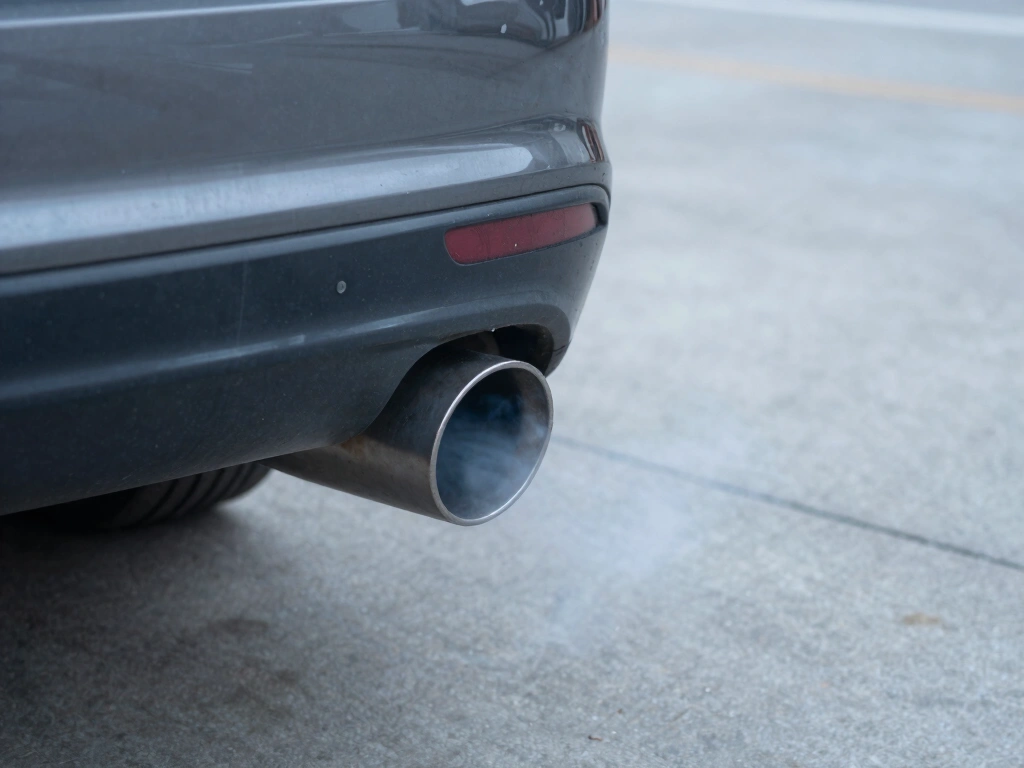
1. Blue or Gray Smoke from the Exhaust
The most visible symptom. Blue smoke — especially on cold startup — means oil is entering the combustion chamber and burning with the fuel. The blue tint comes from burning hydrocarbons in the oil.
Two timing patterns tell you different things:
Blue smoke on cold start that clears within 30–60 seconds: Typically valve stem seals. The seals allow oil to drip past the stems and into the intake ports while the engine sits. When you start up, that pooled oil burns off first. Once the engine warms and the seals expand, it stops. This pattern can persist for months without causing serious damage if oil levels are maintained — but it’s getting worse over time, not better.
Blue smoke throughout driving, particularly under acceleration: Worn piston rings. The rings seal the combustion chamber from the crankcase. When they wear, oil gets pulled up into the combustion chamber continuously. Acceleration increases the amount — more throttle, more vacuum, more oil consumed. This is a more serious mechanical problem than valve stem seals.
Gray smoke is slightly different from blue — it tends to indicate oil mixed with coolant, which points toward a head gasket issue rather than internal oil consumption.
2. Dipstick Reads Low Between Changes
Normal oil consumption is under one quart per 1,000 miles for most engines. Many manufacturers consider anything up to one quart per 2,000–3,000 miles acceptable, particularly at higher mileage.
If you’re adding more than a quart every 1,000 miles, that’s abnormal consumption for most vehicles. But the baseline matters: if your engine has always consumed a quart every 3,000 miles and still does, that’s normal for that engine. If it used to hold level and now drops a quart per 1,000 miles, that change is the signal worth investigating.
Check the dipstick at every other fill-up — or at minimum, once a month. This one habit catches consumption before it becomes a crisis.
3. Smell of Burning Oil After Driving
A hot, acrid smell after parking — particularly after highway driving where the engine has been under sustained load — often means oil is dripping onto a hot exhaust component. This isn’t quite the same as burning inside the combustion chamber.
Common causes: a valve cover gasket leak letting oil drip onto the exhaust manifold, or an oil drain plug or filter that wasn’t properly torqued at the last change. The smell is more pungent than exhaust alone — oilier and more chemical.
Check under the hood and around the engine for wet oily surfaces, particularly on the valve cover, around the oil filter, and at the drain plug. A small flashlight and a piece of clean cardboard under the engine overnight will tell you quickly whether something is dripping.
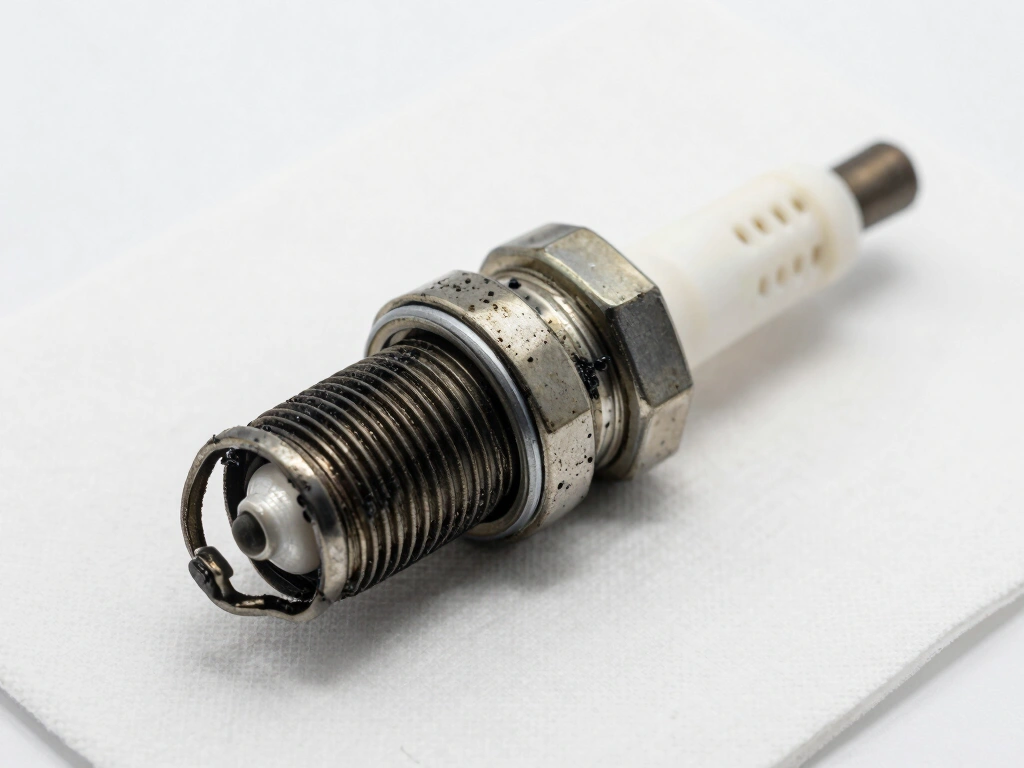
4. Fouled or Oil-Coated Spark Plugs
If you pull a spark plug and find it coated in oily black soot rather than dry tan deposits, that plug’s cylinder has an oil intrusion problem. Oily plugs misfire, reduce fuel economy, and eventually fail entirely.
This symptom confirms oil is reaching the combustion chamber — it doesn’t identify whether the path is past valve stem seals or past piston rings. A compression test and leak-down test can narrow it down, but the oily plug itself tells you the problem is real and ongoing.
5. Oil Consumption That Accelerates Over Time
This is the meta-symptom. An engine that consumed a quart every 4,000 miles at 80,000 miles and now consumes a quart every 1,500 miles at 110,000 miles is telling you that the underlying cause is progressing. Valve stem seals degrade. Piston rings wear. The rate of change matters as much as the current level.
Track it. Write the mileage and oil level on a piece of tape on the oil cap. Check at every oil fill-up. A trend line is more useful than a single data point.
When to Switch to High Mileage Oil
For engines past 75,000 miles showing consumption symptoms, high mileage oil formulas — Valvoline MaxLife, Castrol GTX High Mileage, Pennzoil High Mileage — include seal conditioners designed to swell and recondition aging valve stem seals. This can slow or stop the valve-seal consumption pattern in mild cases.
High Mileage Oil won’t fix worn piston rings. If the consumption is from ring wear (confirmed by blue smoke under acceleration, not just cold starts), a seal conditioner does nothing. But for the valve-seal pattern, it’s a legitimate first step before considering seal replacement.
One additional factor in high-mileage engines: viscosity breakdown. Oil that’s been in service too long undergoes molecular degradation — the viscosity index improvers shear under mechanical stress and the base oil oxidizes, leaving an oil that behaves thinner at operating temperature than its rated grade. Thinner oil at high temperature means weaker film strength in the combustion zone, which makes ring-seal and valve-seal leakage worse. Keeping oil fresh on schedule is part of managing consumption in aging engines. If the engine oil sludge history is in question, that problem compounds the consumption pattern — the engine oil sludge guide explains how degraded oil leads to deposit buildup that accelerates ring and seal wear.
For a full treatment of what high mileage formulas do and when they’re worth using, the why is my car burning oil guide covers both the diagnostic side and the oil treatment options in depth.
The Level That Means Stop Driving
Every modern engine has a minimum safe oil level — the MIN mark on the dipstick. Running at or below MIN means:
- Reduced oil pressure (less volume for the pump to draw from)
- Higher thermal stress on the oil that remains
- Less protection during cold starts
Running a full quart low on a 4-quart system means running 25% below the designed operating volume. That’s not a slight margin issue. Engines have seized from ignored low oil levels in ways that aren’t fixable with an oil change.
If the dipstick reads below MIN, add oil before driving further. Check what you added against what you’d normally add to understand the consumption rate.
Related Articles
Frequently Asked Questions
What does blue smoke from the exhaust mean?
Blue smoke means oil is entering the combustion chamber and burning with the fuel. On cold startup that clears within a minute, it typically indicates worn valve stem seals letting oil drip past while the engine sits. Under acceleration throughout driving, it more likely indicates worn piston rings allowing oil to be drawn up continuously. Both are oil consumption problems, but the piston ring pattern is more mechanically serious.
How much oil consumption is normal?
Most manufacturers consider up to one quart per 3,000 miles acceptable for a modern engine. Some high-performance engines and certain European models have higher OEM-accepted rates. The key signal is a change from your engine’s established baseline — if it always used a quart every 4,000 miles and now uses one every 1,000 miles, that change is what warrants investigation, not the consumption rate alone.
Will high mileage oil stop my engine from burning oil?
It can help in one specific scenario: valve stem seal wear that allows oil to drip into the combustion chamber on startup. High mileage oils contain seal conditioners that can swell and recondition aging seals, slowing that consumption pattern. For worn piston rings, high mileage oil provides no benefit. Diagnosis before treatment is the right sequence — seal conditioner does nothing for ring wear.
Can I keep driving if my engine is burning oil?
Yes, with active management. Check the oil level frequently — every few hundred miles if consumption is significant. Maintain the level between MIN and MAX on the dipstick. Engines that are consuming oil can run reliably for a long time if the level is kept up. The danger is ignoring it until the level drops critically low and oil pressure falls.
What causes an engine to start burning oil after years without issues?
The most common cause is age-related seal and ring wear. Valve stem seals are rubber components that harden and shrink over time. Piston rings wear as cylinder walls develop slight taper and out-of-round. Both processes are gradual. An engine that ran clean at 60,000 miles and starts showing oil consumption at 90,000–100,000 miles is following a normal wear pattern — it’s not sudden failure, it’s accumulated miles.
Related Articles
Best Oil for Turbocharged Engines: What Actually Protects a Turbo
The best oil for turbocharged engines is full synthetic API SP — brand and viscosity matter too. Here's what turbos need and which oils deliver it.
Best Synthetic Motor Oils 2026 (Tested and Ranked)
The best synthetic motor oil for most drivers is Mobil 1 Advanced Full Synthetic. Here's how 6 top brands compare — plus which to buy for your engine.
Pennzoil Platinum vs. Mobil 1: The Honest Comparison
Pennzoil vs. Mobil 1: both are full synthetic API SP oils at similar prices. The real differences come down to base oil source and certification coverage.