
Engine Knocking From Low Oil: What the Sound Means and What to Do
Engine knocking from low oil is rod knock or lifter noise from oil starvation. How to diagnose it, what it means, and whether it's salvageable.
Contents
Engine knocking from low oil comes in two forms that matter very differently. A light ticking on cold startup that fades within 30–60 seconds is one thing. A deep, rhythmic knocking that persists at operating temperature — or gets louder under load — is something else entirely.
The first is often Hydraulic Lifter noise: low oil at startup before the system has fully pressurized. The second is the sound of bearing surfaces contacting without adequate Motor Oil film. Both start from the same cause — insufficient lubrication — but the second one is the version where the engine is measuring its remaining life in miles, not years.
Here’s how to tell them apart, what engine knocking from low oil actually means mechanically, and whether your engine is still salvageable.
Why Low Oil Causes Engine Knock
Engine bearings — the precision-machined surfaces between the crankshaft and connecting rods — don’t actually touch the metal they support. They float on a pressurized oil wedge maintained by the oil pump. The bearing clearance (the gap between the crankshaft journal and the bearing shell) is filled with oil under pressure, and the rotating crankshaft rides on this film rather than on the metal itself.
When Low Oil Pressure drops below the minimum required to maintain that film — from low oil level, pump wear, or oil passages that aren’t fully primed at startup — the oil wedge thins or disappears. The crankshaft journal contacts the bearing shell directly. Metal contacts metal under the full combustion load of the engine.
The resulting sound is Engine Knock: a rhythmic, deep knocking noise that tracks with engine RPM. As RPM rises, the knock comes faster. It’s most pronounced under load — accelerating hard, pulling up a hill, or at operating temperature when the oil has fully circulated and the knock persists anyway.
Cold Knock vs. Oil Starvation Knock: The Key Distinction
Cold startup ticking (Hydraulic Lifter noise):
Modern engines use hydraulic valve lifters — small hydraulic actuators in the valvetrain that self-adjust using oil pressure. When the engine sits overnight, oil drains away from these lifters and the passages feeding them. At startup, there’s a brief period before the oil pump re-pressurizes the entire valvetrain.
The sound is a rapid ticking or clattering, typically high-pitched, that fades to silence within 30–60 seconds as oil pressure builds. This is normal in many engines, particularly after extended cold-soak periods or if the oil level is slightly low. It doesn’t indicate bearing damage.
Persistent rod knock:
Rod knock is a heavier, deeper sound — usually described as a “clunking” or “knocking” rather than a light tick. It follows engine RPM precisely (faster at higher RPM), is most noticeable under load, and does not go away once the engine warms up. If anything, it gets more pronounced at operating temperature when bearing clearances are at their tightest.
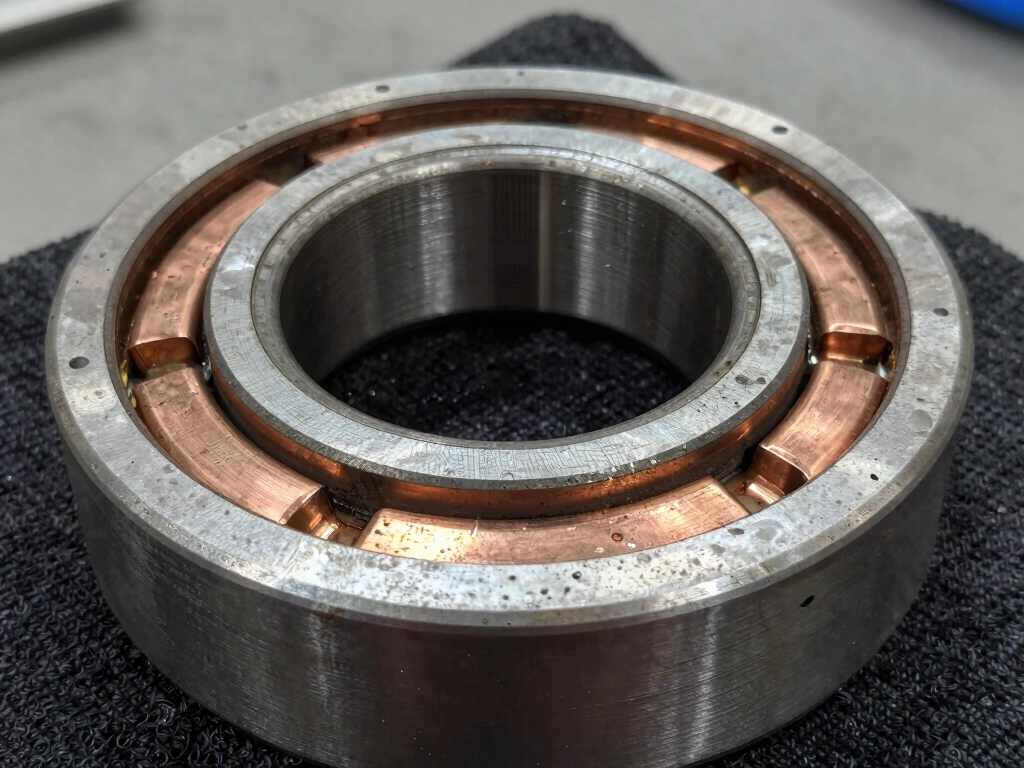
Rod knock is the sound of Bearing Wear that has already occurred. The bearing shell has been worn enough that bearing clearance has grown beyond spec — the crankshaft journal now has enough room to physically impact the bearing surface rather than floating above it. This is mechanical damage that cannot be reversed by adding oil.
The diagnostic test:
Check the oil level first. If the level is low, add oil to the correct level and listen again at warm operating temperature. If the knocking persists at operating temperature, you have rod knock. If it stops, you likely had severe oil starvation that may have caused partial damage — still worth a proper diagnosis.
Is It Salvageable? Damage Assessment
This depends heavily on how far the knock has progressed:
Early rod knock (mild knock, low mileage on damaged state): If the oil level was discovered low and the knock started recently, adding oil and getting immediate professional diagnosis might reveal the bearing is just beginning to show wear. Some shops can confirm bearing clearance with an oil pressure test without disassembly. Early-stage bearing damage can sometimes be addressed with a bearing replacement rather than full engine replacement — expensive, but less than a new engine.
Advanced rod knock (loud knock, knock under all conditions): At this stage the bearing has typically spun, scored the crankshaft journal, or damaged the connecting rod. The oil pressure test will show the problem clearly — significantly low pressure at the affected cylinder. This is a rebuild-or-replace decision. Continuing to drive is not an option; the connecting rod will eventually exit the engine block.
The practical test: With the engine at warm operating temperature, pull the oil filler cap and check for excessive crankcase pressure — if pressure is visibly high (smoke or vapor escaping rapidly), the blow-by situation is severe. Then pull the dipstick and check oil level. If the knock is present at normal oil level with warm oil, you’re dealing with mechanical damage, not just oil starvation.
What Low Oil Does Before the Knock Starts
The knock is not the first sign of oil starvation damage. By the time you hear it, there’s already a sequence that has played out:
- Oil level drops below the minimum effective level — the pump begins drawing aerated or insufficient oil
- Oil pressure drops — the warning light may or may not illuminate (some engines have inaccurate sending units; some owners ignore the light)
- Oil film thins at the most stressed surfaces first — the rod bearings and main bearings, which bear the direct combustion load
- Bearing material begins to transfer — the soft bearing shell (copper-lead or aluminum) begins depositing onto the harder crankshaft journal
At this stage there’s no knock yet, but Bearing Wear is measurable. A used oil analysis at this point would show elevated copper and aluminum. The knock comes after the bearing clearance has grown enough to allow physical impact.
This progression happens faster than most people expect under severe oil starvation — engines with very low oil levels can progress from “no symptoms” to “audible knock” within a single drive if conditions are hot and the engine is working hard.
Full Synthetic Oils That Protect at Low Levels


* Affiliate links. Prices last updated March 6, 2026.
Other Causes of Engine Knock That Aren’t Low Oil
Not every knock is an oil problem. Before assuming rod knock:
Spark knock (detonation): A metallic pinging or rattling under load, typically at low RPM under acceleration. Caused by the air-fuel mixture igniting before the spark plug fires — from low-octane fuel, carbon deposits on pistons, advanced ignition timing, or running lean. Gets better at higher RPM, not worse. Usually resolves by using higher-octane fuel.
Piston slap: A hollow, somewhat muffled knocking that is loudest on cold startup and fades as the engine warms up and the aluminum pistons expand to tighter clearances. Common in high-mileage engines. Not typically an emergency, but indicates significant piston-to-cylinder wall clearance.
Collapsed lifter: A ticking or knocking from a single failed Hydraulic Lifter — localized noise near one valve cover rather than the rhythmic bottom-end pattern of rod knock. Sometimes caused by extended oil change intervals allowing engine oil sludge to plug lifter passages.
Loose heat shield or exhaust shield: External rattling that sounds like it’s coming from the engine but isn’t. These usually rattle at specific RPMs and are inconsistent rather than rhythmic.
For distinguishing knocking sounds from oil pressure problems more broadly, the Low Oil Pressure causes guide covers the full diagnostic approach to oil pressure warning light situations.
Related Articles
- Engine Oil Sludge: What It Is, What Causes It, and How to Fix It
- Low Oil Pressure Causes: What’s Behind the Warning Light and What to Do
- Oil Pressure Light: What It Means and What to Do Right Now
- Best Motor Oil for High Mileage Engines: Tested Picks and Buying Guide
Frequently Asked Questions
Can low oil cause engine knocking?
Yes. Insufficient oil level reduces oil pump suction and degrades oil pressure, which thins the lubrication film at engine bearings. When bearing film pressure drops below the threshold needed to separate metal surfaces, the crankshaft begins physically impacting the bearing shell — producing the rhythmic knocking sound associated with rod knock. The knock directly indicates that metal-to-metal contact is occurring under combustion load.
Will adding oil stop engine knocking?
If the knock is from oil starvation only (oil level was critically low), adding oil may stop the knock if bearing damage hasn’t yet occurred. Check the oil level, add oil to the correct level, warm the engine to operating temperature, and listen. If the knock persists, bearing damage has already happened and adding oil won’t repair it — it can only slow further progression, not reverse existing wear.
How long can you drive with a knocking engine?
This depends on the severity of the knock and the cause. A knocking engine from confirmed rod knock should not be driven beyond getting it to a shop. Continuing to drive risks the connecting rod breaking through the engine block — catastrophic failure that turns a repair job into an engine replacement. If the knock is minor and the cause is still uncertain, get a professional diagnosis the same day rather than driving on it.
What does rod knock sound like?
Rod knock is a deep, rhythmic knocking or clunking that increases in frequency with RPM. It’s most pronounced under load (acceleration, inclines) and at operating temperature. It typically comes from the bottom of the engine. A helpful test: at idle, briefly disconnect one ignition coil at a time (on modern engines) — if the knock disappears or changes significantly when you disable a specific cylinder, the rod bearing for that cylinder’s connecting rod is the likely source.
How much does it cost to fix rod knock?
A connecting rod bearing replacement: $500–1,500 in labor plus parts, if the crankshaft journal isn’t scored. If the journal is damaged: add $500–1,500 for a crankshaft grind or replacement. If damage has spread to multiple cylinders: short block replacement ($2,500–5,000+) or remanufactured engine ($3,500–8,000+ installed). Early diagnosis is the difference between a $1,000 repair and a $5,000 engine replacement.
Related Articles

Is Your Engine Burning Oil? How to Tell for Sure
Burning oil symptoms are easy to miss until levels get critically low. Here's how to spot the signs early and what they tell you about your engine.
Best Synthetic Motor Oils 2026 (Tested and Ranked)
The best synthetic motor oil for most drivers is Mobil 1 Advanced Full Synthetic. Here's how 6 top brands compare — plus which to buy for your engine.
Best Oil for Turbocharged Engines: What Actually Protects a Turbo
The best oil for turbocharged engines is full synthetic API SP — brand and viscosity matter too. Here's what turbos need and which oils deliver it.