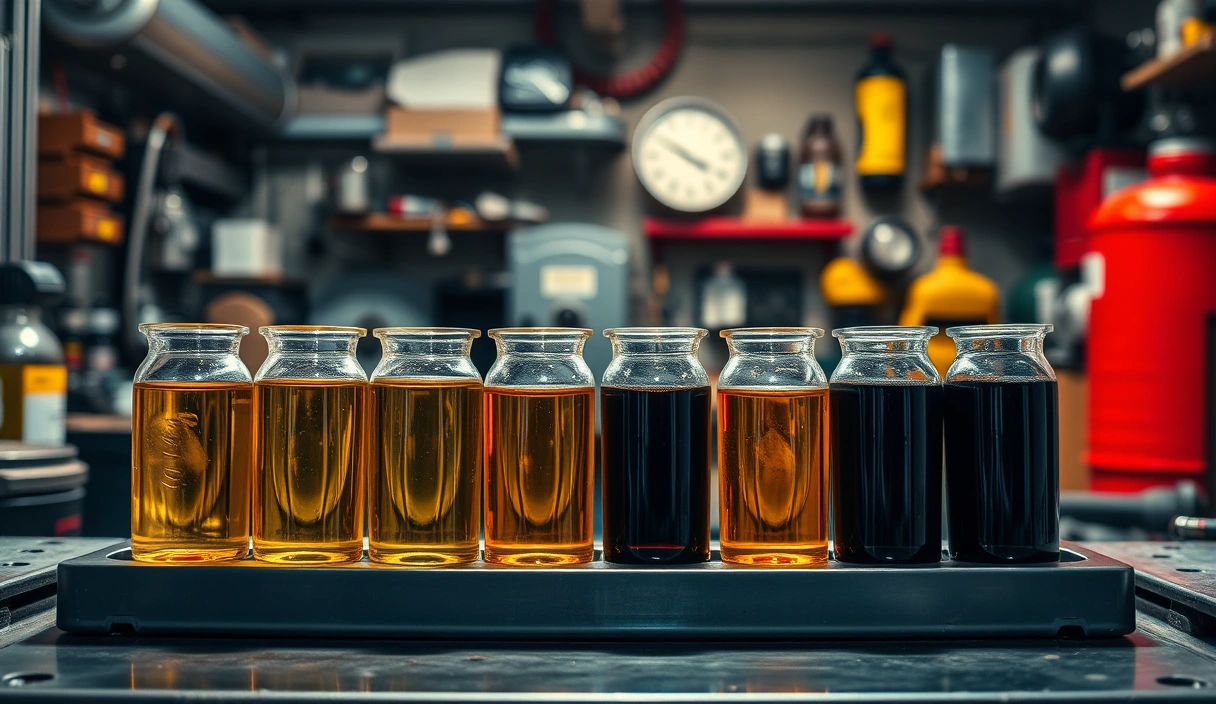
Motor Oil Color Chart: What Each Color Tells You About Your Engine
Use this motor oil color chart to read your dipstick — from normal amber to dangerous milky white — and know exactly when to stop driving.
Contents
Pull the dipstick. Wipe it clean. Reinsert and pull again. Now look at what you’ve got.
Most people know roughly what they’re looking for — level between MIN and MAX — but the color is a second diagnostic that most skip entirely. The motor oil color chart below maps each shade you’re likely to see on a dipstick or hear described in an inspection report, and what it means in plain terms.
The biggest mistake: assuming dark Motor Oil is automatically bad. It usually isn’t. The dangerous colors aren’t dark at all.
The Motor Oil Color Chart
| Color | What It Means | Urgency | Action |
|---|---|---|---|
| Amber / honey | Fresh or recently changed oil | Normal | None |
| Light to medium brown | Normal used oil — detergents working | Normal | Change on schedule |
| Dark brown | Normal — Combustion Byproducts picked up by detergent | Normal | Change on schedule |
| Black | Heavily used oil — may be near end of interval | Monitor | Change soon |
| Jet black + thick/pasty | Possible Engine Oil Sludge forming | Change soon | Change now, investigate |
| Milky / beige / tan | Coolant Contamination — water or coolant in oil | Stop driving | Tow to shop |
| Foamy / frothy | Overfill or coolant contamination | Investigate | Check level and coolant |
| Reddish-brown | Possible transmission fluid contamination | Change soon | Identify source |
Two colors require immediate action: milky and foamy with concurrent coolant loss. Everything else is a matter of timing.
Amber and Golden — What New Oil Looks Like
Fresh full synthetic and conventional oil both start amber to honey-colored. The exact shade varies by brand and additive package, but the baseline is always some version of amber.
Color shift begins within the first few hundred miles. The detergent and dispersant additives in motor oil start picking up Combustion Byproducts — soot, combustion gases, metallic particles — and holding them in suspension. The color change is the additive package working.
Darkening rate varies by engine type. Diesel engines turn oil dark within 1,000 miles. GDI engines do the same. A turbocharged four-cylinder on short city trips may go dark brown by 2,000 miles. In all cases, the rate of darkening tells you about your driving conditions, not about oil quality failing.
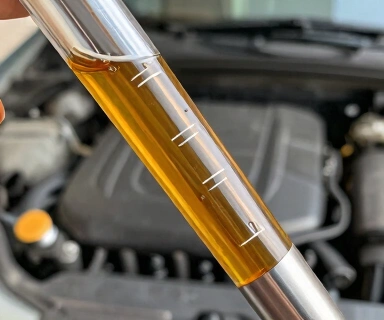
Dark Brown to Black — When Color Means Nothing (and When It Does)
Dark brown to black is the most common color state of used motor oil, and it is not a problem by itself.
Oil turns dark because its detergent package has absorbed Combustion Byproducts. The darker the oil, the more it has picked up. A detergent additive doing exactly what it was designed to do produces dark oil. If you’re seeing dark oil at 5,000 miles in a modern synthetic, that’s the additive package functioning correctly.
The relevant distinction is texture and flow, not color. Pull the dipstick and watch the oil run. Oil that flows freely, drips cleanly, and leaves a thin consistent film on the stick is still working. Oil that barely moves, leaves paste behind, or has a gummy consistency has a different problem — the additive package is depleted and you may be looking at early Engine Oil Sludge formation.
When dark color does indicate a problem: if oil turns jet black within 1,000–2,000 miles of a fresh change, something is producing excess combustion byproducts. Common causes are a worn engine consuming oil and pulling combustion gases past rings, or an engine with existing engine oil sludge already in progress that the fresh oil’s detergents are dissolving. In either case, the additive package is fighting Oil Oxidation faster than normal.
Dark oil at the end of a normal interval: change it. Dark oil 1,000 miles into a fresh change: investigate.
Full Synthetic Oils With High Detergent Packages


* Affiliate links. Prices last updated March 6, 2026.
Milky or Beige — The One Color That Means Stop Driving
This is the entry on the motor oil color chart that matters most. Milky, beige, or tan oil — a color often described as chocolate milkshake or coffee with too much cream — means water or coolant has entered the oil system.
Coolant Contamination happens when the barrier between the engine’s coolant circuit and oil circuit fails. A blown head gasket is the most common cause. A cracked engine block or warped cylinder head are others. In any case, the pressurized coolant side and the oil side are no longer separated, and coolant is crossing into the oil.
Why this means stop driving: Motor Oil mixed with coolant cannot maintain the lubrication film between bearing surfaces. Coolant is water-based — it disrupts the oil’s viscosity and the chemistry of the film entirely. Running on milky oil risks bearing failure, the most expensive internal engine repair short of a full replacement.
Confirm the diagnosis by checking the coolant reservoir. If it’s dropping with no visible external leak — no puddles under the car, no steam from the radiator — the coolant is going somewhere internal. That somewhere is the oil.
One distinction worth making: light foam under the oil filler cap only — without milky color throughout the dipstick reading — is sometimes condensation from short-trip cold-weather driving. If the bulk of the oil on the dipstick is normal brown but there’s a light foam ring under the cap, drive the car for a longer trip and check again. True coolant contamination affects the entire dipstick reading, not just the cap.
For the full dipstick reading protocol and what to look for beyond color, the how to check engine oil guide covers the complete inspection procedure.
Foamy or Frothy Oil — Two Causes, Very Different Urgency
Foam or froth in the oil — visible as air bubbles mixed into the oil sample on the dipstick — comes from two distinct sources, and they are not equally urgent.
Cause 1: Overfill. When the oil level is significantly above the MAX mark, the rotating crankshaft dips into the oil in the pan and churns it into a frothy mixture. Aerated oil loses much of its lubrication capability because air bubbles compress under bearing load and disrupt the film. The fix is mechanical and immediate: drain the excess oil to the correct level and the problem resolves.
Cause 2: Coolant contamination. Coolant mixing with hot oil under operating conditions produces foam through emulsification — the same process you see in the milky-oil scenario, just at a different development stage or in a different part of the engine. Foam from coolant contamination typically shows up alongside a dropping coolant level and often white exhaust smoke.
How to tell them apart: check the oil level itself (above MAX points to overfill), check the coolant reservoir level (dropping = contamination), and look for white exhaust smoke under load (coolant burning in the combustion chamber). An overfill foams; a head gasket foams and smokes.
Overfill foam: drain to correct level and drive on. Foam with dropping coolant and white smoke: stop the engine.
Reddish-Brown Oil — When Transmission Fluid Gets Into the Engine
Reddish or reddish-brown oil on the dipstick is the least common entry on this motor oil color chart, but distinctive enough to be worth knowing.
Fresh ATF (Automatic Transmission Fluid) is red or pink. Used ATF is reddish-brown. If engine oil takes on this coloring, the most common explanation is ATF contamination crossing into the engine oil.
The most common path: a radiator with an integrated transmission fluid cooler. These radiators run ATF through a separate internal circuit to cool it using engine coolant. When the internal cooler fails, ATF crosses into the coolant circuit, and from there can enter the oil system. It’s a two-step failure, but it does happen.
ATF is not motor oil. It is not formulated for engine bearings, does not have the viscosity characteristics an engine requires, and will degrade lubrication if left in place. Drain the oil, identify and fix the source of contamination, then refill.
One false alarm: some full synthetic oils have a reddish-amber tint that can look like mild ATF contamination. If the oil reads slightly reddish immediately after a change but levels are correct, compare against a clean sample from the fresh bottle before assuming contamination.

Related Articles
- Engine Oil Sludge: What It Is, What Causes It, and How to Fix It
- How to Check Engine Oil: Level, Condition, and What to Look For
- Low Oil Pressure: Causes, Symptoms, and What to Do
Frequently Asked Questions
What color is healthy engine oil?
Healthy engine oil ranges from amber (fresh) to dark brown (used). Darkening to medium or dark brown after a few hundred miles is normal — the detergent package is picking up combustion byproducts as designed. The problem colors are not shades of brown: milky or beige points to coolant contamination; foamy with bubbles points to overfill or head gasket failure; reddish-brown points to ATF contamination.
Is black motor oil bad?
Not by itself. Black oil means the detergent additives have absorbed combustion byproducts — exactly what they’re designed to do. Black oil that flows freely is dirty but functional. The combination to watch for is black plus thick, pasty, or barely-flowing texture — that indicates an exhausted additive package and possible early sludge formation. Color alone doesn’t tell the full story; texture and flow matter too.
What does milky oil mean?
Milky, beige, or tan oil means water or coolant has mixed with the engine oil. The most common cause is a failed head gasket. Confirm by checking whether the coolant level is dropping without any external leak. Milky oil requires immediate attention regardless of cause — coolant in the oil disrupts lubrication and risks bearing damage.
Can I drive with milky oil?
No. Coolant-contaminated oil cannot maintain the film that protects engine bearings. Bearing failure can happen within miles when coolant has significantly diluted the oil. Check the coolant level to confirm contamination, then do not drive until the source is identified and repaired. Have it towed.
What causes oil to turn dark quickly?
Oil going jet black within 1,000–2,000 miles of a fresh change usually means one of three things: the engine is burning oil and pulling excess combustion byproducts past worn rings; existing engine oil sludge is being dissolved by the fresh oil’s detergents; or you’re running a diesel engine, which naturally darkens oil faster than gasoline engines. In the first two cases, rapid darkening is a symptom of an underlying condition, not the problem itself.
Related Articles
Best Synthetic Motor Oils 2026 (Tested and Ranked)
The best synthetic motor oil for most drivers is Mobil 1 Advanced Full Synthetic. Here's how 6 top brands compare — plus which to buy for your engine.
Low Oil Pressure Causes: What's Behind the Warning Light and What to Do
Low oil pressure causes range from low oil level to worn bearings. Diagnose which one you have — and what to do in the next five minutes.

Engine Knocking From Low Oil: What the Sound Means and What to Do
Engine knocking from low oil is rod knock or lifter noise from oil starvation. How to diagnose it, what it means, and whether it's salvageable.