
Why Does My Engine Tick When Cold? The Oil Connection
Morning engine tick that goes away after warm-up? Usually oil-related and often preventable. Here's what causes it and when to worry.
Contents
That ticking sound at cold start — the one that disappears after 30-60 seconds once the engine warms up — is one of the most common questions in DIY car maintenance. And for good reason: an engine ticking on startup sounds alarming, but most of the time it’s a predictable oil-circulation phenomenon, not an engine in distress.
Most of the time. There are scenarios where the tick signals something that needs attention. Here’s how to tell the difference.
Why Engines Tick When Cold: The Oil Pressure Explanation
Every time you shut off your engine, gravity slowly drains oil from the top of the engine back to the oil pan. By the next morning — or even after a few hours — the upper valve train components (camshaft lobes, hydraulic lifters, rocker arms) have minimal oil film on them. The oil pump hasn’t started circulating yet.
In the first seconds after startup, the oil pump builds pressure and begins pushing fresh oil up through the passages. In a healthy engine, this happens in 1-3 seconds for the main bearings and somewhat longer for the upper valve train. During that window, components that depend on an oil film — particularly hydraulic lifters — are temporarily running metal-on-metal or on a very thin residual film.
That metallic ticking is what you hear. It’s the sound of components moving before the oil pressure has fully established the protective film throughout the engine.
In a well-maintained engine with fresh oil and the correct viscosity grade, this window is short and the tick resolves quickly. In an engine with degraded oil, a too-thick viscosity grade for cold temperatures, or low oil level — the window is longer, and the tick takes longer to disappear.
The Oil Variables That Make Cold-Start Tick Worse
Wrong Viscosity for Cold Temperatures
The “W” rating in your oil viscosity grade — the 5W in 5W-30, the 0W in 0W-20 — is specifically a cold-weather flow specification. Lower W ratings flow faster at low temperatures. A 5W-30 flows significantly faster at 20°F than a 10W-30. A 0W-20 flows faster still.
If your engine calls for 5W-30 and you’ve been running 10W-40 (thicker), the oil is moving more slowly through the passages during that critical first-seconds window. The tick may last longer and be more pronounced, especially in cold weather.
Running the viscosity grade your owner’s manual specifies — not a “thicker is more protective” alternative — actually produces better cold-start outcomes. Thinner-approved grades were chosen specifically because they flow faster to critical surfaces at startup.
Degraded or Low-Viscosity Oil
Oil that’s past its service life has undergone viscosity breakdown — it’s thicker than its rated grade in some ways (oxidized sludge deposits) but the base oil itself has lost protective additives. Oil that’s been in the engine too long doesn’t flow or protect the way fresh oil does.
Similarly, low oil level means the pump has less to work with and takes slightly longer to fully pressurize the upper valve train. Check your dipstick if the tick persists longer than usual.
Extended Parking on a Slope or Uneven Surface
Oil drains back to the pan faster when a car is parked nose-up on a steep slope. More pronounced oil drain-down means a slightly longer window before the valve train is adequately pressurized. Not a common problem, but worth knowing.
Why Does Engine Tick When Cold but Not When Warm?
The reason the tick disappears as the engine warms is twofold:
Oil pressure builds: Once the pump is circulating oil throughout the system, every surface has a proper film. The ticking stops because the metal-to-metal contact stops.
Oil thins slightly with heat: Counter-intuitively, oil needs to be thin enough to flow into tight passages and thick enough to maintain film strength at operating temperature. Your viscosity grade is chosen to balance both. The multi-viscosity grades (5W-30, 0W-20, etc.) are specifically engineered to thin appropriately as the engine heats, maintaining film strength without over-thickening in the cold.
When the engine is at operating temperature, oil is everywhere it needs to be, at the right viscosity, under full pump pressure. No tick.
When Cold-Start Tick Is Normal vs. When to Worry
Normal Cold-Start Tick
- Resolves within 30-60 seconds of startup
- Only present during cold starts (not when restarting a warmed engine)
- No oil pressure warning light
- No other abnormal engine noises
- Oil level is correct
This pattern, particularly in VVT (Variable Valve Timing) systems, is common and generally not a concern. The VVT solenoids and cam phasers are hydraulically operated and dependent on oil pressure — they’re often the source of the clicking in modern multi-valve engines. Once pressure is established, they operate normally.
When to Investigate Further
- Tick persists more than 60-90 seconds after startup
- Tick is present at operating temperature (not just cold starts)
- Oil level is low — add oil before the next drive
- Recent missed oil change or extended interval beyond spec
- Tick changed in character (louder, different location, rhythmic vs. random)
- Oil pressure warning light is illuminated — stop the engine, this is an emergency
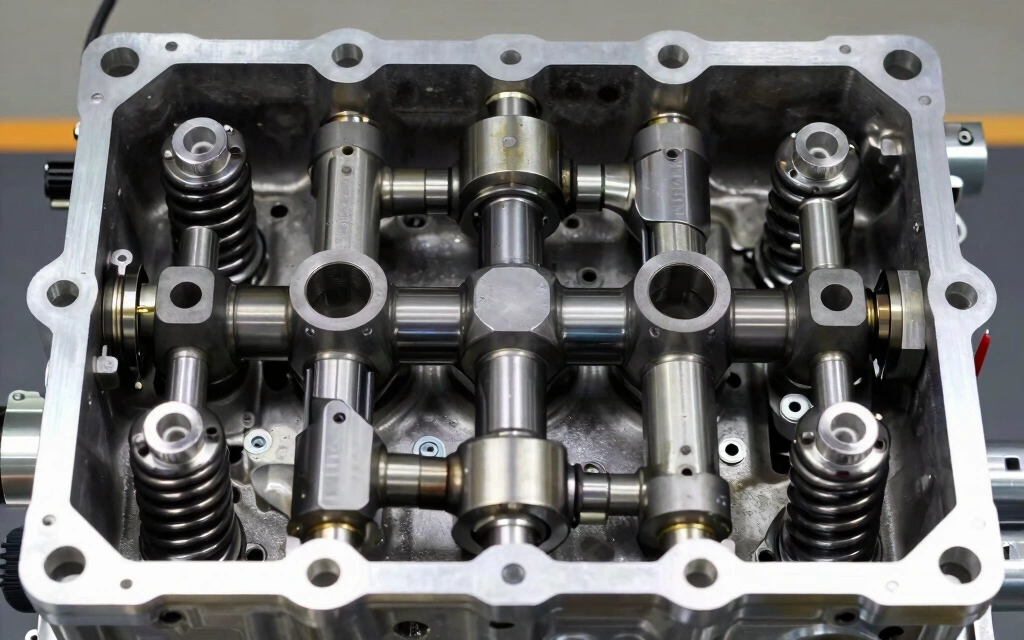
A persistent tick at operating temperature — especially one that’s rhythmic and correlates with engine RPM — can indicate a worn lifter, a collapsed hydraulic lifter, or excessive valve train clearance. These require diagnosis beyond the dipstick.
How to Reduce Cold-Start Tick
Use the correct viscosity grade. If your manual says 5W-30, run 5W-30. If it says 0W-20, the lower W number will reduce the cold-start window compared to a 5W-30 alternative.
Switch to full synthetic if you haven’t. Synthetic base stocks have a lower pour point than conventional oil — they flow faster at low temperatures before the engine reaches operating temperature. The cold-start protection advantage of synthetic over conventional is particularly pronounced on mornings below 30°F.
Change oil on schedule. Fresh oil with a full additive package flows and protects better than oil that’s been in service too long. If the tick is getting longer or louder, check when the last oil change was.
Don’t rev the engine immediately at cold start. Let the engine idle for 30-60 seconds before driving. This isn’t required for modern engines with good oil, but it gives the oil pressure time to fully establish before putting the valve train under load.
The engine oil sludge guide covers what happens in engines where the oil has deteriorated past the point where fresh oil alone fixes the cold-start behavior — if the tick has been there for a long time and seems to be getting worse.
Related Articles
Frequently Asked Questions
Is engine ticking at cold start dangerous?
In most cases, no — if the tick resolves within 30-60 seconds and only appears at cold starts. It’s the sound of the valve train running before full oil pressure is established, which is a normal characteristic of piston engines. It becomes a concern when the tick persists at operating temperature, accompanies a low oil level, or coincides with an oil pressure warning.
Why does my engine tick only in cold weather?
Oil thickens in cold temperatures, slowing its initial circulation through the passages. The colder the ambient temperature, the more pronounced the cold-start viscosity effect. In extreme cold (below 0°F), even 5W oil circulates more slowly than it would at 40°F. Running a lower W-rating synthetic (0W-20 or 0W-30 instead of 5W-30) is the engineering response to cold-weather cold-start behavior.
Can I fix engine ticking by adding an oil additive?
Sometimes, for specific causes. For hydraulic lifters that are ticking due to air entrainment or light sludge, a clean oil change with fresh API SP synthetic may resolve the issue. For worn valve train components where clearance has opened up, additives don’t fix mechanical wear. Diagnosis before treatment is the right order of operations.
Why does ticking go away after the engine warms up?
Oil pressure builds to operating levels and the oil thins slightly with heat to fill every passage and clearance properly. The hydraulic lifters, which are oil-pressure actuated, inflate fully once pressure is established. The cam lobes have a full hydrodynamic film. All the conditions that cause the cold-start tick are eliminated by warm oil under operating pressure.
Should I be worried about VVT ticking?
Variable Valve Timing system ticking at cold start is common in modern multi-valve engines and is usually normal. The cam phasers are hydraulically actuated and momentarily rattle or click until oil pressure fully engages them. If the VVT noise disappears within 30-60 seconds, it’s within normal operating behavior. If it persists or is accompanied by a check engine light or rough idle, it warrants a diagnostic scan for VVT-related codes.
Related Articles

Is Your Engine Burning Oil? How to Tell for Sure
Burning oil symptoms are easy to miss until levels get critically low. Here's how to spot the signs early and what they tell you about your engine.

Low Oil Pressure Causes: What's Behind the Warning Light and What to Do
Low oil pressure causes range from low oil level to worn bearings. Diagnose which one you have — and what to do in the next five minutes.

Engine Oil Sludge: Causes, Symptoms, and How to Fix It
Engine oil sludge can kill your engine silently. Learn what causes it, how to spot it, and the exact steps to flush and prevent it for good.