Why Is My Car Burning Oil? Common Causes and What to Do
Why is my car burning oil? Two causes: valve stem seals and piston rings. Here's how to tell which one and what to do about it.
Contents
You’ve confirmed the problem — the dipstick keeps dropping, there’s blue smoke on startup, the spark plugs are fouled. Why is your car burning oil, and where exactly is it going? Those two questions have the same answer, and it determines everything about how you respond.
The answer matters because the fix is completely different depending on the cause. Valve stem seal wear is a minor seal replacement job. Piston ring wear is a rebuild-level engine issue. High mileage oil with seal conditioners addresses one and does nothing for the other. Getting the diagnosis right before spending money on treatments is the only path that makes sense.
Here are the actual causes, how to distinguish between them, and what the correct response looks like for each.
The Two Burning Oil Mechanisms
All internal oil consumption in a gasoline engine comes through one of two routes:
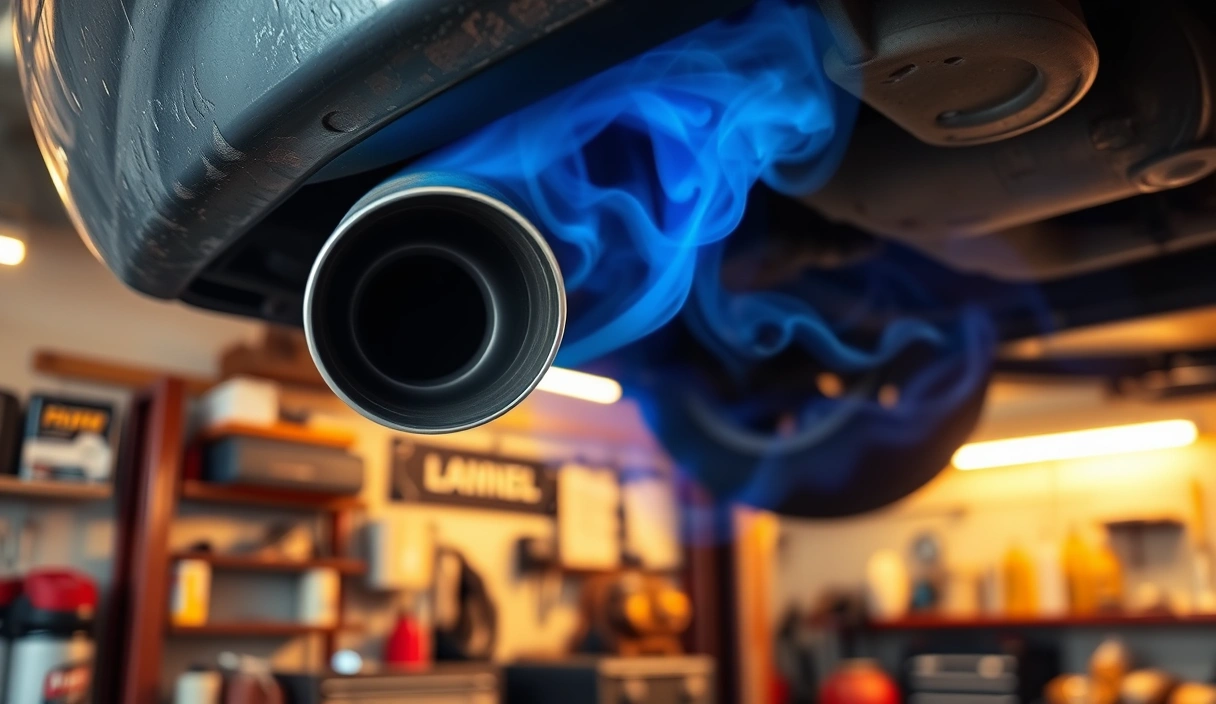
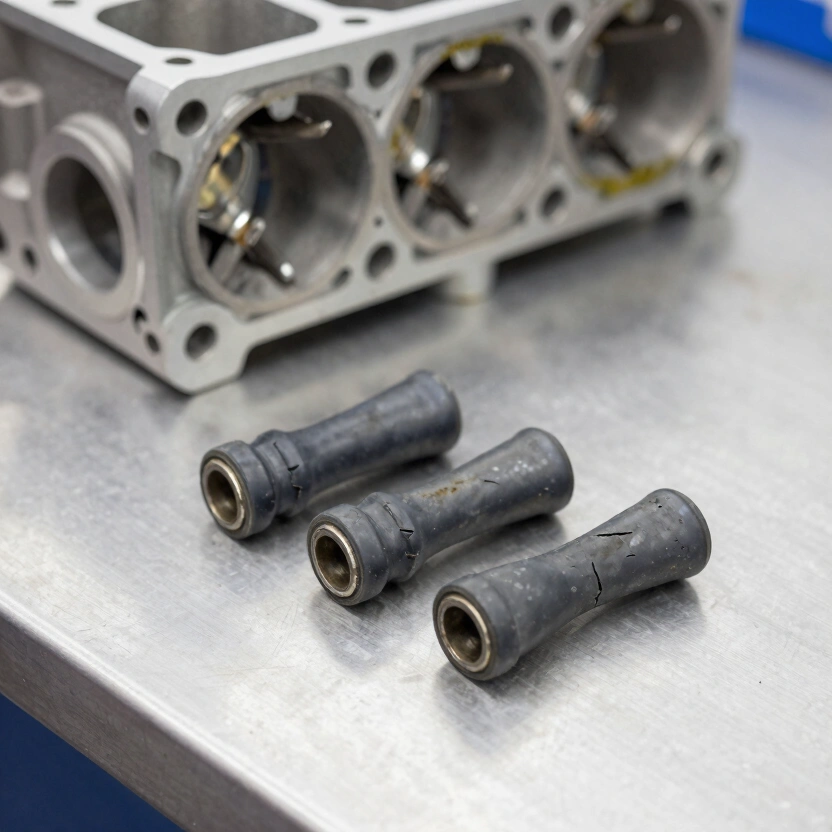
Route 1 — Past valve stem seals. The valve stems pass through the cylinder head into the intake and exhaust ports. Rubber seals around those stems prevent oil from dripping from the valve train above down into the combustion chamber below. When those seals harden, shrink, or crack with age and heat cycles, oil seeps past. It pools above the intake valves while the engine sits overnight, then burns off on the first few starts. This creates the cold-start blue smoke pattern: visible on startup, clears within 30–60 seconds once the engine warms and the seals expand.
Route 2 — Past piston rings. The piston rings seal the combustion chamber from the crankcase. They create the compression seal that makes combustion work, and simultaneously prevent crankcase oil from entering the combustion chamber. As ring wear progresses — or as cylinder walls develop slight taper and out-of-round from accumulated mileage — the ring-to-wall seal weakens. Oil gets drawn up into the combustion chamber by vacuum during the intake stroke. This creates continuous consumption: blue smoke under acceleration, loss of compression, oil fouled spark plugs on affected cylinders.
The diagnostic distinction is the timing pattern of the smoke.
Valve Stem Seals: Reading the Cold-Start Pattern
Valve stem seal failure has a characteristic signature that makes it diagnosable without disassembly:
- Blue smoke on cold startup, most visible in the first 30–60 seconds
- Smoke largely disappears after warm-up
- May return slightly on deceleration after hard acceleration (engine vacuum draws oil past partially-failed seals)
- Oil consumption is moderate — often in the one quart per 3,000–5,000 mile range initially
- Engine compression typically normal (rings are fine)
The reason for the cold-start pattern: oil seeps past the hardened seals and pools above the intake valves while the engine sits. On startup, that pooled oil is the first thing that gets drawn into the combustion chamber. It burns off in a brief blue puff. Once the engine is running and seals are heated and expanded, the seep rate drops dramatically.
Why seals fail: Heat cycles harden rubber over time. Valve stem seals on an engine with 80,000–120,000 miles have been through thousands of heat-cool cycles. High-temperature operation accelerates the process. Turbocharged engines run hotter; their valve train components wear faster. Vehicles that spent years sitting unused often have worse seal condition than ones that ran consistently — rubber deteriorates faster without regular heat cycling that keeps it pliable.
Oil sludge connection: An engine with a history of extended drain intervals or oil neglect accumulates oil sludge — baked-on oxidized oil deposits — throughout the valve train. Sludge deposits can block oil return passages, keeping oil pooled above the head and creating more opportunity for valve-seal seepage. An engine that’s burning oil AND has a sludge history has both problems compounding each other. The engine oil sludge guide covers how sludge forms and how to address it.
Piston Ring Wear: The More Serious Diagnosis
Piston ring wear produces different symptoms than valve seal failure, and the implications are more severe:
- Blue smoke throughout driving, not just on cold start
- Smoke increases under acceleration and load
- Oil consumption is higher — often one quart per 1,000–2,000 miles in serious cases
- May be accompanied by reduced engine compression on affected cylinders
- Spark plugs on affected cylinders show wet, oily carbon fouling
- Crankcase blow-by: you may notice excess pressure and oil mist venting through the PCV (positive crankcase ventilation) system
The cause is mechanical wear of the cylinder wall-piston ring interface. Cylinder walls develop slight out-of-round and taper as miles accumulate, particularly at the top of the stroke where heat and pressure are highest. The rings themselves wear thinner. The combination means the ring no longer seals the cylinder wall cleanly, and oil from the crankcase gets drawn into the combustion chamber under intake vacuum.
Contributing factors:
Extended oil change intervals accelerate ring wear. Oil that’s been in service too long breaks down — the Viscosity Index Improvers shear, the base oil oxidizes, and what remains provides inadequate film strength at the ring-cylinder wall interface. Every interval of degraded oil leaves slightly more wear behind.
Oil sludge contributes differently than with seals. In the ring belt area (the grooves around the piston that hold the rings), sludge accumulation causes the rings to stick in their grooves. Stuck rings don’t rotate properly, don’t maintain consistent contact with the cylinder wall, and wear unevenly. An engine that ran extended intervals on conventional oil and developed sludge around the piston rings is a candidate for accelerated oil consumption well before high mileage.
Turbocharged engines face additional stress. A turbocharged engine running significant boost pressure puts elevated heat and mechanical load on the ring belt area. Oil consumption in turbocharged engines often begins at lower mileage than in naturally aspirated engines — particularly if the engine ran extended intervals or saw sustained track or towing use early in its life.
When High Mileage Oil Helps (And When It Doesn’t)
High Mileage Oil formulas — Valvoline MaxLife, Castrol GTX High Mileage, Pennzoil High Mileage, Mobil 1 High Mileage — contain two additives that address aging engine components: seal conditioners and extra detergent packages.
Seal conditioners (typically based on swelling agents) cause aging rubber seals to absorb them slightly and expand. For valve stem seals in early to moderate failure, this can slow or stop the cold-start drip pattern. Real, measurable effect — many drivers report reduction in cold-start smoke within 1–2 oil changes after switching to high mileage oil.
Extra detergents are formulated to address accumulated deposits in aging engines — cleaning up varnish and mild sludge over time. For an engine approaching the first oil consumption symptoms, this can slow the progression. For an engine with a serious sludge problem, it’s insufficient on its own.
What high mileage oil cannot do:
- Regrow piston ring material worn from cylinder walls
- Restore compression lost from ring seal failure
- Fix piston rings stuck in their grooves by hardened sludge (though switching to a detergent-heavy formula while managing intervals can sometimes free mild cases over multiple changes)
If your consumption follows the cold-start-only pattern described above for valve stem seals, switching to a high mileage synthetic blend is a sensible first step. Give it two oil changes to assess whether consumption improves.
If your consumption is continuous — burning under acceleration, losing a quart per 1,000–1,500 miles, fouling plugs — a seal conditioner is not the fix. You’re dealing with ring wear, and the question becomes one of economics: how much longer does the engine have before consumption reaches a threshold that justifies repair cost.
High Mileage Oils with Seal Conditioners


* Affiliate links. Prices last updated March 6, 2026.
When to Stop Managing and Start Diagnosing Mechanically
Most oil consumption can be managed rather than immediately repaired. An engine burning a quart every 3,000 miles with the cold-start-only pattern can run reliably for another 50,000–80,000 miles with oil level monitoring and an appropriate high mileage formulation. Valve stem seals cost $300–600 to replace at a shop — the decision of whether that repair makes sense depends on the vehicle’s overall condition and mileage.
Piston ring wear requires a different economic analysis. A true ring seal repair requires engine disassembly — either a partial teardown (hone and ring replacement) or a full rebuild. At 100,000+ miles, that repair cost often approaches or exceeds the vehicle’s value. Most drivers with ring wear choose to manage rather than repair: monitor oil level, maintain fresh high mileage full synthetic on schedule, and assess whether the overall vehicle is worth the rebuild cost.
The signals that management is no longer viable:
- Oil consumption exceeds one quart per 1,000 miles and is increasing
- Significant compression loss on one or more cylinders
- Oil in the coolant, or coolant in the oil (separate problem — head gasket failure)
- Visible oil smoke under all driving conditions, not just acceleration
At that point, the engine needs mechanical attention or replacement. Fresh oil won’t slow the progression meaningfully.

Frequently Asked Questions
What causes a car to suddenly start burning oil?
In most cases it’s not sudden — it’s a gradual wear process that passes a threshold where it becomes noticeable. Valve stem seals harden over heat cycles. Piston rings wear as cylinder walls develop slight taper. An engine that “suddenly” starts burning oil usually has been accumulating the underlying wear for years. True sudden onset of oil consumption can indicate a more acute failure: a PCV valve stuck open (allows crankcase pressure to push oil into the intake), a failed valve cover gasket dripping oil onto exhaust components, or catastrophic ring seal loss in one cylinder from a separate mechanical event.
Is burning oil expensive to fix?
It depends entirely on the cause. Valve stem seals: $300–600 at most shops, a manageable repair on a vehicle worth keeping. PCV system failures: $50–150, straightforward. Piston ring wear requiring a rebuild: $2,000–4,000+ depending on the engine. Many drivers with ring wear at 100,000+ miles choose to manage consumption rather than repair — it’s an economically sound decision when the vehicle itself isn’t worth the rebuild cost.
Will thicker oil reduce oil consumption?
A thicker viscosity grade can slightly slow some consumption patterns by maintaining better film strength at the ring-cylinder wall interface. This is sometimes recommended for high-mileage engines — going from 5W-20 to 5W-30 when consumption begins. It’s a marginal improvement, not a solution. Never go so thick that you’re outside the OEM specification range — too thick harms a modern tightly-toleranced engine more than it helps.
How many miles is it OK to drive with an oil burning engine?
Indefinitely, with active management. An engine burning a quart every 3,000+ miles can run for another 50,000–100,000 miles if: oil level is checked and topped off regularly, oil is changed on schedule, and the consumption rate isn’t accelerating rapidly. The risk is neglect — burning oil doesn’t hurt the engine; running critically low oil level does.
Does high mileage oil really help with oil burning?
Yes, in the specific scenario of valve stem seal wear. High mileage oils contain seal conditioners that cause aging rubber seals to swell slightly and seal better, reducing the drip-into-combustion-chamber pattern. Many drivers see a meaningful reduction in cold-start smoke after 1–2 changes on high mileage full synthetic. For piston ring wear, the seal conditioner has no mechanism of action — it helps seals, not rings.
Can an oil additive fix oil burning?
Some oil additives (like Lucas Oil Stabilizer or Restore) claim to address oil consumption. Their mechanism is typically increasing oil viscosity and coating cylinder walls with additional film. Thickening agents can marginally slow ring-seal consumption by filling gaps with a more viscous oil. The effect is temporary and small. For seal-related consumption, high mileage oil with seal conditioners is a more targeted and reliable approach than aftermarket additives. For ring wear beyond early stages, nothing short of mechanical repair changes the trajectory.
Related Articles
Related Articles

Is Your Engine Burning Oil? How to Tell for Sure
Burning oil symptoms are easy to miss until levels get critically low. Here's how to spot the signs early and what they tell you about your engine.
Oil Pressure Light: What It Means and What to Do Right Now
The oil pressure light is not a maintenance reminder — it's an emergency. What it means, what's causing it, and the right steps in the next five minutes.
Low Oil Pressure Causes: What's Behind the Warning Light and What to Do
Low oil pressure causes range from low oil level to worn bearings. Diagnose which one you have — and what to do in the next five minutes.