ACEA C3 vs Stellantis MS-12991: Same Spec, or Different?
RAM EcoDiesel owners ask this every week. The answer is more nuanced than the forums suggest — MS-12991 actually traces back to a different ACEA family.
Contents
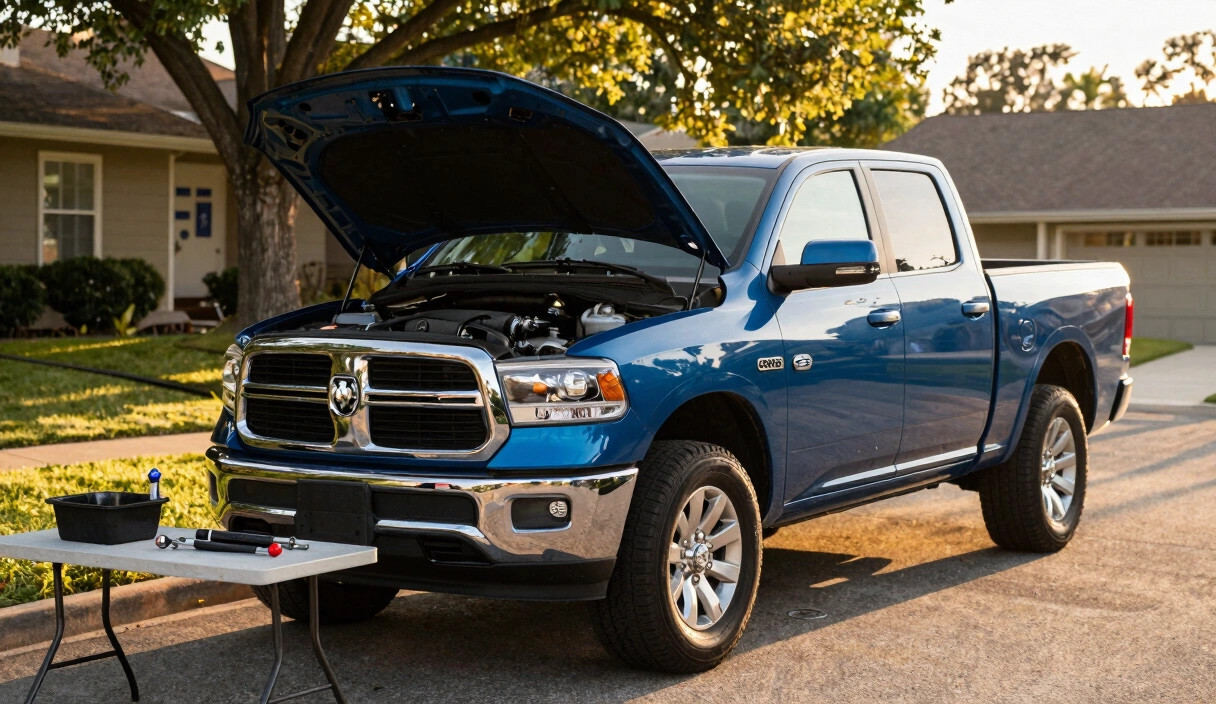
A guy posts to the Ram EcoDiesel forum, frustrated. His 2021 Ram 1500 EcoDiesel calls for “Stellantis MS-12991, 5W-40.” He’s at AutoZone holding a bottle of full synthetic 5W-40 that says “Meets ACEA C3.” The counter guy says “yeah that should work.” The dealer service writer told him last month “no, you need our oil.” Twenty minutes of Bob Is The Oil Guy later, he posts the question: are ACEA C3 and Stellantis MS-12991 the same spec or not?
The forum will give him three answers in six replies. None of them is quite right. The real answer requires understanding that MS-12991 isn’t actually rooted in ACEA C3 the way the spec name suggests — it traces back to a different European family entirely.
Here’s what each spec is, where they overlap, and what to actually buy for a Ram EcoDiesel or Jeep Gladiator EcoDiesel.
What ACEA C3 Is (Quick Refresher)
ACEA C3 is the European low-SAPS oil specification — sulfated ash maximum 0.8% by weight, HTHS viscosity minimum 3.5 cP, designed for engines with diesel particulate filters and three-way catalysts. The “C” stands for catalyst-compatible. C3 was introduced in the late 2000s as European OEMs migrated to engines with after-treatment hardware where the additive ash content of older oils was loading up the DPF and shortening its service life.
Most modern European diesels and turbocharged gasoline engines call for ACEA C3 in their spec sheets. The deeper breakdown of how C3 compares to C4 and C5 in the ACEA C-category guide covers the differences in detail.
The thing that matters for the MS-12991 question: ACEA C3 is a low-SAPS spec by design. The ash limit is the headline restriction.
What Stellantis MS-12991 Actually Is
Here’s where the confusion starts. MS-12991 is Stellantis’s (formerly FCA’s) proprietary specification for engine oil in certain Stellantis vehicles — specifically the Ram 1500 EcoDiesel (3.0L V6 turbodiesel), Jeep Grand Cherokee EcoDiesel, and Jeep Wrangler/Gladiator EcoDiesel applications. The spec was developed for the engines built by VM Motori (the Italian engine manufacturer that designs the EcoDiesel) and adopted by FCA/Stellantis as the official approval requirement.
The trap: despite being used in DPF-equipped engines that you’d assume need a low-SAPS oil, MS-12991 is not a low-SAPS specification. It’s actually based on ACEA A3/B4 — a higher-SAPS, full-additive-package European spec roughly equivalent to Mercedes-Benz 229.5. The sulfated ash limits in MS-12991 are higher than ACEA C3, which means the oil contains more of the metallic detergent and anti-wear additives that ash-classification specs allow.
Multiple long threads on Bob Is The Oil Guy and the Ram EcoDiesel forums have dug into this puzzle. The consensus: Stellantis chose the MS-12991 spec (based on the MB 229.5 lineage) because the EcoDiesel engine’s wear protection demands favor higher-SAPS chemistry, even at the cost of slightly faster DPF ash loading. The DPF service life is shorter than it would be with strictly low-SAPS oil, but the engine wear protection is better in the spec window FCA tested against.
The Practical Implication
ACEA C3 and Stellantis MS-12991 are NOT the same spec. They’re in different SAPS families and target different priorities.
That said, in practice, many oils carry both approvals because the OEMs whose European-spec products carry MS-12991 also tend to chase the broader ACEA C3 / MB 229.51 / BMW LL-04 stack. The intersection oil — one that meets both ACEA C3 and Stellantis MS-12991 — exists and is sold under several brand names.
The clearest example: Pennzoil Platinum Euro L 5W-30. This product carries:
- ACEA C3
- Stellantis MS-12991 (current approval)
- Mercedes-Benz MB 229.51
- BMW Longlife-04
- VW 502.00 / 505.01
The fact that one oil can carry both ACEA C3 and MS-12991 doesn’t mean the specs are equivalent. It means the formulator engineered a product that hits the requirements of both — typically by tuning the SAPS content to land at the upper edge of C3’s limit (close to but not exceeding 0.8% sulfated ash) while still passing the MS-12991 wear and shear tests.
For Ram EcoDiesel owners, this is actually the simplest path. Pennzoil Platinum Euro L 5W-30 covers the MS-12991 requirement, the ACEA C3 ask if you happen to need it, and the major European OEM approvals as a bonus.
What the Owner’s Manual Actually Specifies
For 2014–2023 Ram 1500 EcoDiesel and 2014–2017 Jeep Grand Cherokee EcoDiesel, the official Stellantis spec is 5W-40 motor oil meeting MS-12991. Note the viscosity grade: 5W-40, not 5W-30. This is critical and trips up owners who default to thinner grades.
The 2020+ third-generation EcoDiesel (Ram 1500, Jeep Gladiator EcoDiesel) may show slightly different requirements depending on production date and any post-purchase service bulletins. Check your specific vehicle’s manual — Stellantis updated some specifications after the 2021 software/recall campaign.
Pennzoil Platinum Euro L is sold in 5W-30 for the European Longlife stack. For the Ram EcoDiesel’s 5W-40 requirement, the equivalent product is Pennzoil Platinum Euro L 5W-40 (separate SKU). Shell Rotella T6 5W-40 is another commonly-cited option that carries MS-12991 along with API CK-4 for diesel engines — it’s the most-recommended oil on the Ram EcoDiesel forums and is widely available at chain auto parts stores in the US.
The thing not to do: substitute any 5W-30 oil — even one that carries ACEA C3 and MS-12991 — into a Ram EcoDiesel that calls for 5W-40. The viscosity grade is part of the spec, and the engine’s bearing clearances are designed around the higher operating viscosity that 5W-40 provides.
What About MS-6395 (the Older Chrysler Spec)?
For context — and this comes up because some FCA / Stellantis vehicles have both spec codes floating around in their service history — Chrysler MS-6395 is the older specification for FCA gasoline engines. It’s an API SP-class spec for naturally-aspirated and turbocharged gasoline engines, not the diesel-focused MS-12991.
If you have a 2014+ Ram 1500 with the 3.6L Pentastar (gasoline V6), the spec is MS-6395. If you have the 5.7L HEMI gasoline V8, also MS-6395. If you have the 3.0L EcoDiesel V6, the spec is MS-12991. Same truck, different engine, completely different oil specifications.
The forums sometimes conflate the two specs because they share the “MS-” prefix. They are entirely separate. MS-6395 is for gasoline engines and aligns with API SP-class oils. MS-12991 is for diesel engines and aligns with the MB 229.5 family.
Recommended Picks
For a Ram EcoDiesel or Jeep Gladiator EcoDiesel that needs MS-12991, the right oil is Pennzoil Platinum Euro L 5W-40 or Shell Rotella T6 5W-40 — both carry MS-12991 in their current US-market formulations and are widely available through Amazon, Walmart, and the major auto parts chains.
For owners with a non-Stellantis vehicle who happen to have read this far and need a generic ACEA C3 5W-30 picks, the three full synthetics below are general-purpose options. None is specifically MS-12991 approved (because they’re 5W-30, not 5W-40), but they cover the ACEA C3 ask for European cars that need it.
Three Full Synthetic 5W-30 Picks for ACEA C-Spec Vehicles


* Affiliate links. Prices last updated July 17, 2026.
For deeper context on what ACEA C3 actually requires and how to verify it on a bottle, the ACEA C3 motor oil guide covers the spec in detail.
Bottom Line
ACEA C3 and Stellantis MS-12991 are different specifications from different lineages targeting different priorities. ACEA C3 is low-SAPS (sulfated ash ≤0.8%) for DPF longevity. MS-12991 is rooted in MB 229.5 — a higher-SAPS spec that prioritizes wear protection over DPF ash management.
Some oils carry both approvals because the formulator specifically engineered them to hit both targets — Pennzoil Platinum Euro L is the most prominent example. But “an oil that meets both specs exists” is not the same as “the specs are equivalent.”
For Ram EcoDiesel and Jeep EcoDiesel owners, the practical answer: buy a 5W-40 oil with explicit MS-12991 approval. Shell Rotella T6 5W-40 and Pennzoil Platinum Euro L 5W-40 are the two most reliable picks in the US market. Don’t substitute a 5W-30 oil even if it carries ACEA C3 — the viscosity grade matters as much as the SAPS classification for what the EcoDiesel engine needs.
Frequently Asked Questions
Is ACEA C3 the same as Stellantis MS-12991?
No. ACEA C3 is a low-SAPS European specification (sulfated ash ≤0.8%) designed to protect diesel particulate filters. MS-12991 is rooted in the ACEA A3/B4 family (higher SAPS) with origins in Mercedes-Benz 229.5 — it prioritizes engine wear protection over DPF ash management. Some oils carry both approvals because the formulator specifically engineered to hit both targets, but the underlying specs are different.
Can I use ACEA C3 5W-40 oil in a Ram EcoDiesel that calls for MS-12991?
Probably not safely for the long term without explicit MS-12991 approval. ACEA C3 doesn’t include the specific Stellantis test protocols that MS-12991 requires. The engine will run in the short term, but you’re operating outside the approval envelope and may compromise wear protection or warranty coverage. Look for an oil that explicitly carries MS-12991 — Shell Rotella T6 5W-40 and Pennzoil Platinum Euro L 5W-40 are the standard recommendations.
What oil meets both ACEA C3 and MS-12991?
Pennzoil Platinum Euro L 5W-30 is the most commonly cited oil meeting both specs (in the 5W-30 viscosity grade — useful for some Stellantis applications but not the Ram 1500 EcoDiesel which calls for 5W-40). The 5W-40 variant of Pennzoil Platinum Euro L meets MS-12991; specific approval claims for ACEA C3 in the 5W-40 grade vary by production batch.
Why does Stellantis use MS-12991 instead of just ACEA C3?
Because MS-12991 (rooted in MB 229.5) provides better engine wear protection for the VM Motori-designed EcoDiesel V6 than strict ACEA C3 chemistry would. Stellantis accepts the trade-off of slightly faster DPF ash loading in exchange for the wear protection advantage on the engine’s specific bearing and ring design. The decision is engineering-driven, not arbitrary.
Is Shell Rotella T6 5W-40 approved for Ram EcoDiesel?
Yes. Shell Rotella T6 5W-40 carries Stellantis MS-12991 approval and is one of the two most-recommended oils on Ram EcoDiesel forums. It’s also widely available through Walmart, Amazon, AutoZone, O’Reilly, and Advance Auto Parts — making it the easiest practical pick for most Ram EcoDiesel owners doing DIY oil changes.
Is Chrysler MS-6395 the same as Stellantis MS-12991?
No, completely different. MS-6395 is the older Chrysler/Stellantis specification for gasoline engines (3.6L Pentastar V6, 5.7L HEMI V8), aligning with API SP-class oils. MS-12991 is the diesel specification for the EcoDiesel V6, aligning with the MB 229.5 family. Same vehicle make, different engines, different specs — don’t substitute oils between gasoline and diesel applications.
Related Articles
ACEA C3 vs C4 vs C5: Which Spec Does Your European Car Need?
ACEA C3, C4, and C5 all look like the same family — they're not. SAPS limits, HTHS viscosity, and which European cars actually need each one.
ACEA C3 Motor Oil: What It Means and Which Oils Actually Meet It
ACEA C3 motor oil is the European standard for petrol and diesel engines with emissions equipment. What the spec requires and which oils carry it.
Best ACEA C3 Oils for BMW Longlife-04 (2026 Approved List)
Six BMW Longlife-04 approved 5W-30 synthetics that actually carry the LL-04 stamp — ranked by availability, price, and OEM approval depth.