
Does It Actually Matter What Motor Oil You Use?
Does it matter what oil you put in your car? Viscosity grade matters a lot. Brand matters much less. Here's exactly where the line falls.
Contents
Short answer: yes, but maybe not in the ways you’re worried about.
The things that actually matter: viscosity grade and API certification. The things that matter much less than the marketing suggests: brand name and the $8 price difference between two API SP-rated synthetics on the shelf. Getting the first two right protects your engine. Getting the third wrong costs you money, not reliability.
Here’s the breakdown.
Viscosity Grade: This Part Actually Matters
The number on your oil cap — 5W-30, 0W-20, 5W-20 — is a SAE viscosity grade specified by your OEM for your specific engine’s bearing clearances, pump geometry, and thermal operating range. It’s not a suggestion.
Use 5W-30 when your cap calls for 0W-20? The thicker operating viscosity means the oil circulates slightly slower and doesn’t reach the designed film pressure in tight bearing clearances. Do it once in an emergency and your engine survives without drama. Do it for 80,000 miles and the wear data will show it — in microscopic bearing journal wear that wasn’t in the engineering plan.
Use 10W-30 in an engine calling for 5W-30 and you’re adding cold-start risk. The thicker cold-viscosity (10W vs. 5W) means slower oil circulation in the first 30 seconds after startup — the window when most engine wear happens regardless of oil type.
The viscosity grade is the specification. Match it exactly. Your owner’s manual and oil cap agree on this. They’re both right.
API SP Certification: Get This Too
Every reputable motor oil sold in the US carries an API service category rating. API SP is the current standard for gasoline engines (introduced 2020). The rating means the oil passed a standardized battery of engine tests covering sludge resistance, wear protection, LSPI (Low Speed Pre-Ignition) protection for turbocharged GDI engines, and oxidation stability.
If you’re buying an oil that doesn’t carry API SP (or at minimum API SN Plus for pre-2020 vehicles), you’re buying a product with no third-party verification of its performance claims. Any bottle at AutoZone from a major brand — Mobil, Valvoline, Castrol, Pennzoil, Supertech — carries the certification. That’s the bar to clear.
The API Donut on the label (a round seal with “SP” at the top) is the thing to look for. It’s not optional.
Does the Oil Brand Actually Matter?
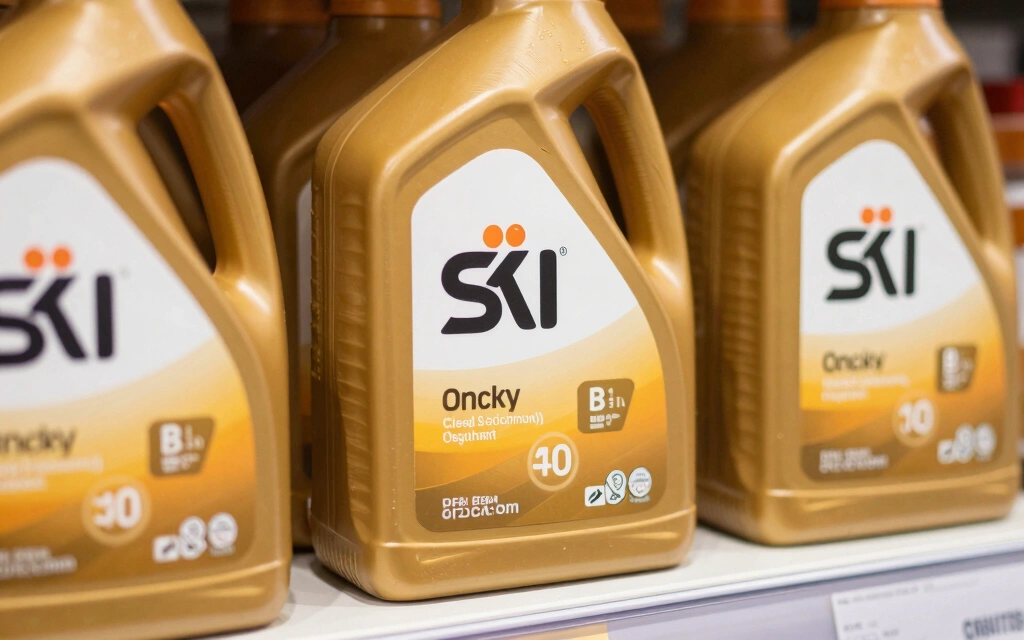
Here’s the thing most people don’t realize: every major synthetic motor oil brand in the US is using roughly similar Group III base stocks refined to meet the same API SP specification. Mobil 1 passes the same tests as Valvoline Advanced Full Synthetic. Both pass the same tests as Supertech from Walmart.
Brand loyalty in motor oil is a product of marketing budgets and forum culture, not measurable engine protection differences at normal drain intervals. Independent oil analysis results from communities like BITOG (Bob is the Oil Guy) consistently show that API SP full synthetics from major and store brands perform comparably in used-oil testing at 5,000-7,500 mile intervals.
I buy Mobil 1 because it’s convenient where I shop and I’ve used it for 15 years without a sludge problem. But I don’t have any illusions that my engines would be measurably worse off on Valvoline Advanced or Pennzoil Platinum at the same interval.
Where brand differences show up more:
- At extended intervals (10,000+ miles), base oil quality and additive package durability starts to diverge
- Under specific stress (sustained turbo load, extreme cold) the chemistry differences in premium formulas matter more
- When OEM specs require a brand-specific approval (BMW Longlife-04, dexos1 Gen 3) — those approvals are earned, not universal
What About Synthetic vs. Conventional?
For most vehicles built after 2010: yes, it matters — and synthetic is the right answer. The difference isn’t about brand, it’s about base oil chemistry. Synthetic base stocks resist oxidation longer, flow better in cold temperatures, and maintain viscosity better under sustained heat than conventional petroleum base stocks.
For turbocharged and direct-injection engines: not optional. Those engines run hotter, and conventional oil in a turbocharged GDI engine on extended intervals is a documented path to sludge and premature turbo wear.
For older, simple naturally aspirated engines: conventional meets the spec. Synthetic also meets the spec and provides more protection margin. The choice is real but not urgent.
The full breakdown — including cost-per-mile math and which engine types actually need synthetic — is in the how to choose motor oil guide.
The Short Version
Three things, in order of importance:
- Viscosity grade: Match your oil cap exactly. No substitutions.
- API SP certification: Any bottle with the API Donut in the current rating is meeting the standard.
- Oil type (synthetic vs. conventional): For modern engines, go synthetic. For older simple engines, either works.
Brand name comes after those three. Price comes after brand. A $28 jug of Valvoline Advanced Full Synthetic 5W-30 with API SP certification protects your engine just as well as a $35 bottle with a more familiar logo on it — as long as you’re changing on schedule.
Related Articles
Frequently Asked Questions
What happens if you put the wrong oil in your car?
Wrong viscosity: either oil film is too thin (wear under load) or cold-start circulation is slower than the engine expects. One fill won’t destroy a healthy engine, but the wrong grade used repeatedly creates measurable wear over 50,000+ miles. Wrong API rating: you’re running below the performance standard the engine was designed around. More relevant for turbocharged and GDI engines where sludge and LSPI protection are practical concerns.
Is cheap motor oil bad for your engine?
Not automatically. Store brands like Supertech (Walmart) and Amazon Basics motor oil are manufactured at the same refineries as name brands and carry the same API SP certification. “Cheap” matters if it means buying oil without an API certification. “Cheap” doesn’t matter much if it’s API SP certified in the right viscosity.
Can I mix different motor oil brands?
Yes, chemically safe. Two API-rated oils from different brands use compatible additive chemistry. The resulting mix performs like a blend of the two. Mixing brands mid-interval isn’t ideal as a regular practice, but a top-off with a different brand won’t harm the engine.
Does it matter if I use 5W-30 vs. 0W-20?
If your engine calls for one, don’t substitute the other as a regular practice. The viscosity difference affects cold-start circulation speed and oil film pressure at operating temperature. Modern engines specced for 0W-20 have tighter tolerances calibrated for that film pressure. Using 5W-30 in a 0W-20 engine won’t cause immediate failure, but it doesn’t meet the OEM specification and reduces fuel economy by a measurable amount.
How do I know what oil my car takes?
Two places: the oil cap on top of the engine (shows the viscosity grade) and the maintenance section of your owner’s manual (shows the full specification including API rating and any OEM-specific certifications). Both sources agree. The oil cap is the quick answer; the manual has the complete spec.
Related Articles

Why Is My Car Burning Oil? Common Causes and What to Do
Why is my car burning oil? Two causes: valve stem seals and piston rings. Here's how to tell which one and what to do about it.
API SP Motor Oil Ratings: SP, SN Plus, and ILSAC GF-6 Explained
API SP replaced SN Plus in 2020. ILSAC GF-6A and GF-6B cover newer thin-oil engines. Here's which certification your car actually needs and why.
ACEA C3 Motor Oil: What It Means and Which Oils Actually Meet It
ACEA C3 motor oil is the European standard for petrol and diesel engines with emissions equipment. What the spec requires and which oils carry it.