
How to Choose the Right Motor Oil for Your Car
Learn how to choose motor oil using your owner's manual, SAE viscosity grades, and API specs. Includes a selection table for all vehicle types.
Contents
The answer to “what oil does my car take?” is printed on the engine of every modern vehicle. Look at the oil cap — it’s right there: 5W-30, 0W-20, 5W-20. SAE International set the viscosity grading system, your OEM chose the number for your specific engine, and the cap repeats it. For most people, that solves 70% of the decision.
The other 30% is where it gets complicated. The cap tells you the viscosity grade. It doesn’t tell you whether to run conventional, synthetic, or a blend. It doesn’t explain why API SP superseded SN Plus, or what ILSAC GF-6A means for your direct-injection engine. It doesn’t tell you whether your 110,000-mile Camry would be better served by a high-mileage formula. Those decisions — the ones that actually affect long-term engine health — are what this guide covers.
Start Here: What Your Owner’s Manual and Oil Cap Actually Tell You
The oil cap is the starting point, not the finish line.
How to Read the Viscosity Grade on Your Oil Cap (5W-30, 0W-20, etc.)
That number is a two-part SAE viscosity rating. The first number — 5W, 0W, 10W — is the cold-weather rating. The “W” stands for winter, not weight. Lower numbers flow faster in cold temperatures, which matters in the seconds right after startup when oil hasn’t fully circulated. The second number — 20, 30, 40 — is the operating viscosity at normal engine temperature. Higher means thicker. Thicker provides a more protective oil film under heat and load, but creates slightly more friction that thin modern oils are designed to avoid.
Put it together: 5W-30 flows like a 5-weight in the cold, then behaves like a 30-weight once the engine is running. 0W-20 is thinner at both ends — designed for modern engines with tighter tolerances that generate proper hydrodynamic lubrication on less oil film thickness.
See the viscosity grade guide if you want the full technical breakdown, including why some engines are now specifying 0W-16 and what that means in practice.
Where to Find the Spec in Your Owner’s Manual — and Why It Overrides Everything Else
The oil cap tells you the grade. The owner’s manual tells you the full specification. Those are two different things, and both matter.
Open the maintenance section and look for the oil change entry. It lists:
- The SAE viscosity grade (5W-30, 0W-20, etc.)
- The API performance rating (API SP for most post-2020 vehicles, SN Plus for many 2016–2020 vehicles)
- Any OEM-specific certification: dexos1 Gen 3 (GM), BMW Longlife-04, Mercedes-Benz 229.x
That OEM certification matters more than the brand name on the jug. A $24 jug of Castrol that meets dexos1 Gen 3 is more appropriate for a 2022 Silverado than a $38 jug of a brand that doesn’t carry the approval. The spec is the requirement. Brand is a preference.
What Happens If You Use the Wrong Viscosity Grade
Too thin: you don’t get the oil film thickness the engine was engineered for, particularly under load and heat. Too thick: the oil doesn’t circulate fast enough on cold starts, and you’re burning fuel pumping heavy oil through tight passages.
Persistently wrong viscosity — especially running thicker than specified — can accelerate sludge buildup in engines designed for thinner modern oils. One fill with the wrong grade won’t destroy a healthy engine. Making it a habit over 50,000 miles? The wear data shows up eventually.
Conventional, Full Synthetic, or Blend — Which Oil Type Do You Actually Need?
Here’s the honest version of this decision, without the marketing overlay.
Conventional Oil: When It Is Still the Right Call
Conventional oil is refined from crude petroleum. It works — genuinely, reliably works — for engines built before the era of turbocharging and direct injection became standard. For a pre-2001 vehicle with a naturally aspirated engine, normal driving conditions, and no OEM synthetic requirement, conventional oil meets the engineering spec. That’s not settling. That’s reading the requirements accurately and not spending money that doesn’t buy you anything measurable.
Where conventional starts showing limits: engines that run hotter (turbos), tighter tolerances (anything modern), longer drain intervals, and cold-weather starts below 20°F. In those conditions, conventional’s molecular irregularities — sulfur compounds, paraffin waxes, uneven hydrocarbon chain lengths — break down faster than a synthetic’s more uniform base stock.
Castrol GTX conventional has been around long enough that there’s decades of real-world data behind it. API SP rated, widely available. Does exactly what it says for engines it’s appropriate for.
Full Synthetic Oil: Performance Gains Worth the Price Premium?
For most vehicles built after 2010 — yes. The math works out: synthetic costs more per jug but lasts roughly twice as long between changes. Two services per year instead of four. The cost-per-mile difference nearly disappears, and you get better cold-start behavior and sludge resistance as a bonus.
For turbocharged and direct-injection engines, full synthetic isn’t a preference. It’s what the engineering requires. Turbo bearings spin at 100,000+ RPM. The oil lubricating those bearings needs to survive temperature and shear forces that conventional wasn’t designed for — the chemistry is the reason the interval doubles, not marketing.
I run full synthetic in all three vehicles I maintain. Not because I’m convinced by the advertising, but because cold-start protection on Minnesota mornings is a real-world concern, not an abstract one. The synthetic vs. conventional oil deep-dive has the full cost-per-mile breakdown and the base oil chemistry that explains why the extended interval is real.
Synthetic Blend and High-Mileage Oils: The Middle-Ground Options
Synthetic blend is a mix of conventional and synthetic base stocks. Performs better than conventional under thermal stress, costs less than full synthetic. A reasonable middle ground for normal-use vehicles where the OEM doesn’t specify full synthetic and the driving profile doesn’t demand it.
High-mileage oil is its own category, worth understanding separately. At 75,000 miles and beyond, engine seals age and compress slightly. Oil consumption tends to creep up. High-mileage formulas add seal conditioners that cause aging elastomers to swell back toward their original dimensions, plus extra detergent packages calibrated for engines that have accumulated deposits. Valvoline MaxLife and Castrol GTX High Mileage are two that have real-world reputations backed by owner-reported data on forums like BITOG.
If your vehicle has over 100,000 miles and is starting to burn oil between changes, a high-mileage synthetic blend is where I’d start before trying anything else.

API and ILSAC Certifications: The Spec Numbers That Actually Protect Your Engine
This is the part no guide explains clearly. Here’s what actually matters.
What API SP Means and Why It Replaced SN Plus
API stands for American Petroleum Institute. The API Service Category is a performance specification — a set of standardized engine tests the oil must pass before it earns the rating. SP is the current standard for gasoline engines, introduced in 2020.
SP replaced SN Plus, which replaced SN, which replaced SM. Each iteration tightened the requirements — primarily around LSPI (Low Speed Pre-Ignition, a potentially engine-destroying detonation event in turbocharged GDI applications), sludge resistance at high temperatures, and oxidation stability over extended drain intervals. When you see API SP on a bottle, it means the oil passed those tests. The API audits manufacturers. It’s not a self-reported claim.
Running SN-rated oil in an engine that specifies SP isn’t catastrophic for one change, but you’re operating below the standard the engine was designed around. Any oil purchase going forward should be SP regardless. The cost difference is zero.
ILSAC GF-6A vs. GF-6B: Which One Applies to Your Car?
ILSAC is the International Lubricant Standardization and Approval Committee — a joint program between SAE International and the major vehicle manufacturers including GM, Ford, Toyota, and Honda. The GF-6 standard (effective 2020) introduced two sub-categories:
GF-6A covers viscosity grades 0W-20, 5W-20, 5W-30, 10W-30, and 0W-30. Backward compatible with the older GF-5 specification. The vast majority of passenger car applications fall here.
GF-6B covers 0W-16 only. Specifically engineered for engines designed around ultra-low-viscosity oil to hit tight fuel economy targets. Not backward compatible. If your engine calls for 0W-16, GF-6B is what you need. If it doesn’t, this sub-category doesn’t apply to your purchase decision.
For most drivers: look for API SP + ILSAC GF-6A on the label. That covers the current standard across almost all gasoline passenger cars sold in the US.
How to Spot a Certified Oil on the Label (The API Donut and Starburst)
Two symbols confirm certification:
The API Donut — a round seal. The top half states the service category (SP), the center displays the SAE viscosity grade, and the bottom notes “Energy Conserving” if applicable. Present on every API-certified oil.
The ILSAC Starburst — a starburst-shaped mark certifying the oil meets the current ILSAC fuel economy and engine protection standard.
If a bottle carries neither of these and makes performance claims, there’s no third-party verification behind those claims. Niche brands and specialty blends sometimes skip certification. That doesn’t disqualify them automatically, but it means you’re trusting the label more than the testing data.
Motor Oil Selection Table: The Right Oil for Every Vehicle Type
How to Use This Table
Find your vehicle type in the left column, check the recommended oil type and minimum API certification, then match the viscosity grade from your owner’s manual. Annual cost estimates assume DIY changes at the intervals appropriate for each oil type.
| Vehicle Type | Recommended Oil | Minimum API Cert | Viscosity | Est. Annual Cost (DIY) |
|---|---|---|---|---|
| Modern car (post-2010, naturally aspirated) | Full Synthetic | API SP | Per owner’s manual | ~$50–60 |
| Older vehicle (pre-2001, simple engine) | Conventional acceptable | API SN or better | 5W-30 or 10W-30 | ~$85–100 |
| Turbocharged engine (any year) | Full Synthetic | API SP | Per OEM spec | ~$50–60 |
| High-mileage vehicle (75K+ miles) | High-Mileage Synthetic Blend | API SP | 5W-30 or 5W-20 | ~$60–75 |
| Truck/SUV with regular towing | Full Synthetic | API SP (dexos1 if GM) | Per OEM spec | ~$65–80 |
| Performance / sport vehicle | Full Synthetic | OEM-specified cert | 0W-40, 5W-40, or per spec | ~$70–90 |
Special Cases: Turbocharged Engines and Vehicles Under Active Warranty
Turbocharged engines — Ford EcoBoost, virtually every BMW and Audi, most Hondas after 2017, anything with a turbo badge — require full synthetic. Not as a recommendation. As a requirement based on thermal loads and LSPI risk in GDI combustion systems.
Vehicles under active factory warranty: use the oil type and spec the OEM mandates. The Magnuson-Moss Warranty Act prevents manufacturers from requiring their branded oil, but they can and do require the specification. If dexos1 Gen 3 is in your maintenance schedule, run a dexos1 Gen 3-approved oil. Castrol, Pennzoil, Mobil 1, and Valvoline all make dexos-approved products in the major viscosity grades.
Top Motor Oil Picks Across Every Category
How I Selected These Oils
These aren’t sponsored picks. They’re oils I’ve personally used across the vehicles I maintain, or tracked through owner communities and oil analysis data from places like BITOG and TDIClub. The selection covers the main vehicle categories from the table above: full synthetic for modern engines, conventional for older simple engines, and high-mileage blend for the 75K+ scenarios.
Top Motor Oil Picks by Category


* Affiliate links. Prices last updated March 6, 2026.
For a complete brand-by-brand breakdown — Mobil 1 vs. Castrol EDGE, Pennzoil Platinum vs. Valvoline Advanced, what store-brand oil delivers versus name brands at the same price point — see our full motor oil rankings.
Driving Conditions That Should Change Your Oil Choice
Extreme Cold Climates: Why Low-Viscosity Full Synthetic Matters
If you park outside below 10°F regularly, viscosity grade and oil type both matter in a way they don’t in moderate climates. The 30 seconds after cold-start are when most engine wear happens — oil hasn’t fully circulated, and bearings are running on whatever residual film was left from the last run.
Synthetic’s lower pour point means it flows during that window significantly faster than conventional. The difference between a 5W-30 conventional and a 0W-20 full synthetic at -20°F isn’t abstract — it’s the difference between oil reaching the bearings in roughly two seconds versus eight. Six more seconds of metal-on-metal contact per cold start, every morning, adds up across 150,000 miles.
In Minnesota, Wisconsin, or anywhere you’re regularly scraping ice off the windshield: 0W-20 or 0W-30 full synthetic isn’t overkill. It’s the correct engineering call.
Short Trips, Stop-and-Go, or Towing: The Case for Upgrading Oil Type
Short trips under five miles never bring the engine to full operating temperature. Moisture and combustion acids accumulate in the crankcase instead of burning off. The oil chemistry degrades faster than the odometer suggests. If your commute is five miles each way through city traffic, you’re in severe-service territory — even if your Oil Life Monitor is calibrated for the highway driving that most cars see less of than the algorithm assumes.
Towing and hauling push oil temperatures beyond what most OEMs define as “normal service.” Sustained 250°F+ oil temperatures over thousands of towing miles accelerate oxidation faster than the rated interval accounts for. Running conventional oil in a truck that tows regularly is the kind of thing that looks fine at the 60,000-mile inspection and shows up as an expensive problem later.
Extended Drain Intervals: What the Data Actually Says
Extended intervals are only appropriate for full synthetic meeting the current API SP spec, in normal service conditions. Going 10,000 miles on a synthetic that meets your OEM’s specification, in a modern engine not subject to severe duty, is fine. The oil is engineered to last that long.
Going 10,000 miles on conventional is not fine. Going 10,000 miles on a high-mileage blend in an engine that’s consuming a quart between changes is also not fine — consumption accelerates chemical degradation beyond what any interval number captures. See the how often to change your oil guide for the full interval breakdown by oil type and driving profile.
One thing most drivers don’t think about: Oil Life Monitors — the algorithm GM, Honda, Toyota and others use to estimate remaining oil life — are calibrated for the average driver, not your specific driving profile. GM’s system, called the GM Oil Life System, tracks engine RPM, temperature cycles, and cold-start frequency to model oil degradation mathematically. It’s a real engineering tool, not a guess. But if your actual driving is meaningfully more severe than the model assumes — lots of short trips, consistent towing, extreme climate — the OLM may let you run further than the oil condition justifies.
The fix is simple: if you’re in a severe-service category, use the severe-service schedule from your owner’s manual rather than relying on the OLM countdown. For everyone else running normal conditions on full synthetic, follow the monitor. It’s accurate enough for typical use.

How to Choose Motor Oil: Three Questions, One Decision
The actual process comes down to three things, in this order:
1. What viscosity grade does the owner’s manual specify? Match it exactly. Don’t substitute a nearby grade because it was on sale.
2. What’s your vehicle’s situation? Turbo or GDI engine → full synthetic, no exceptions. High-mileage (75K+) with consumption → high-mileage synthetic blend. Modern naturally aspirated engine → full synthetic or synthetic blend. Older simple engine → conventional is acceptable.
3. Does the bottle carry API SP certification? Look for the donut. If it’s SP-rated in the right viscosity, you’ve met the spec. Brand preference is secondary.
One thing I’d add from experience: photograph the maintenance schedule page in your owner’s manual and save it to your phone. The oil cap tells you the grade. The manual tells you the full spec. Having both on hand at AutoZone prevents the paralysis that comes from staring at 40 jugs trying to remember what the car needs.
Related Articles
- How to Read a Motor Oil Label: API, SAE & ILSAC Explained
- Engine Oil Viscosity Explained: What 0W-20 Actually Means
- API SP Motor Oil Ratings: SP, SN Plus, and ILSAC GF-6 Explained
- Dexos1 Motor Oil: What Every GM Owner Needs to Know
- Supertech Motor Oil Review: What the Certifications Actually Say
- Best Motor Oil for GDI Engines: What LSPI Protection Actually Means
- What Is Viscosity Grade? The SAE System Explained
Frequently Asked Questions
How do I know what motor oil to buy for my specific car?
Check the oil cap for the viscosity grade — 5W-30, 0W-20, etc. Then open the owner’s manual to the maintenance section for the complete specification: API rating and any OEM certification (dexos1, BMW Longlife, Mercedes 229.x). Those two things determine the correct oil for your engine. Anything API SP certified in the right viscosity grade from any major brand meets the engineering requirement.
What happens if I use the wrong motor oil?
Wrong viscosity: the oil film is either too thin (wear under heat and load) or too thick (poor cold-start circulation, higher friction, lower fuel economy). One change at the wrong grade won’t ruin a healthy engine. Making it a habit across 50,000 miles produces measurable differences in wear patterns. Wrong API rating: you’re running below the standard the engine was calibrated for — matters most in turbocharged and GDI engines where sludge resistance and LSPI protection are genuine concerns, not marketing claims.
Is it OK to use 5W-30 instead of 5W-20?
Not as a long-term substitution when your engine calls for 5W-20. The thicker operating viscosity (30 vs. 20 at temperature) means the oil doesn’t circulate as quickly through the passages and clearances your engine was designed around. Modern engines specced for 5W-20 are calibrated for that film pressure. Using 5W-30 won’t cause immediate failure, but it doesn’t meet spec and typically reduces fuel economy by a small measurable amount. In an emergency, one fill won’t damage the engine. As a regular practice, use what the manual specifies.
How do I read a motor oil label?
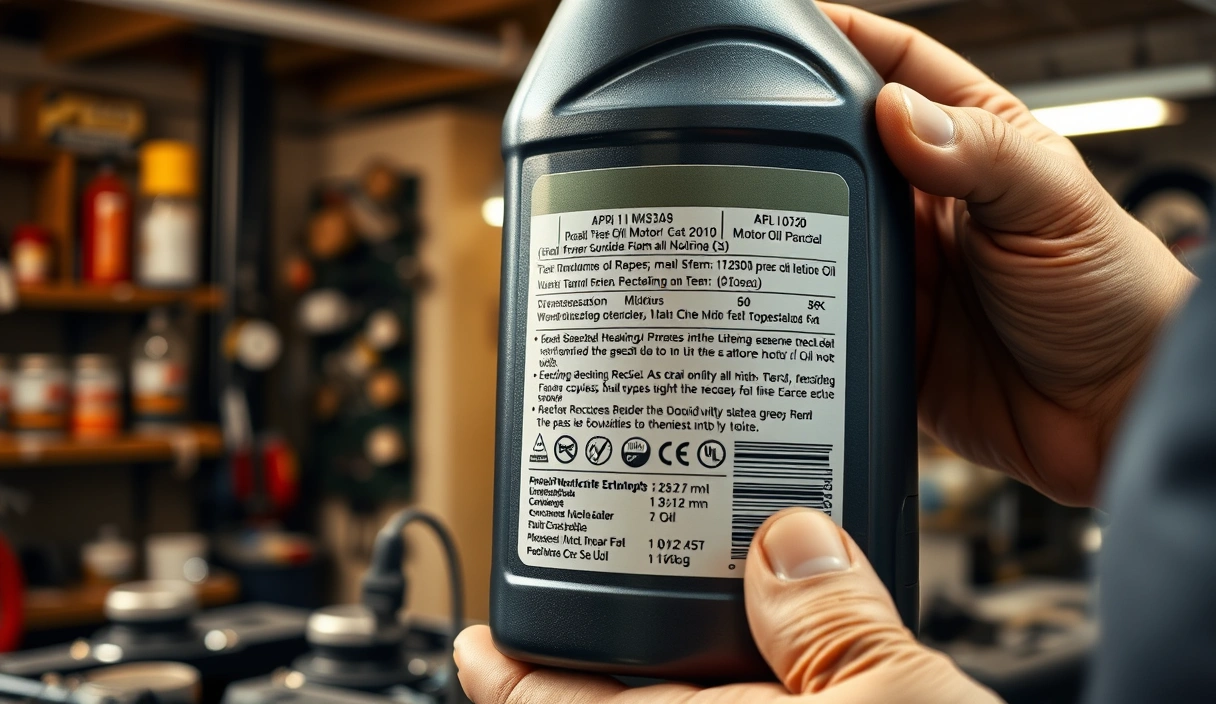
Look for three things: (1) The SAE viscosity grade — the prominent number like 5W-30. (2) The API Donut — a round certification seal with the service category (SP) at the top and the viscosity in the center. (3) The ILSAC starburst if your engine is a newer model specifying GF-6A. The back label lists approval certifications (dexos1, BMW Longlife-04, etc.) that tell you whether the oil meets your OEM’s specific requirements beyond the baseline API rating.
What is the difference between API SP and older API ratings like SN?
API SP (2020) raised the performance bar in four areas over SN Plus: tighter LSPI protection, better sludge resistance at high operating temperatures, improved deposit control, and enhanced oxidation stability over extended drain intervals. For turbocharged and direct-injection engines, those improvements matter practically. For an older naturally aspirated engine, SN-rated oil is still functional — just not meeting the current standard. Any new oil purchase should be SP regardless; there’s no price premium for the current rating versus one generation back.
Does switching to synthetic oil cause leaks in high-mileage engines?
This concern is partially grounded in reality, for a specific reason. Full synthetic’s detergent packages can dissolve accumulated sludge deposits that were functionally sealing micro-gaps around aging seals. If an engine has significant sludge buildup, a direct switch to full synthetic can release that sludge into the oil passages and surface leaks that were always present. The solution: transition through a high-mileage synthetic blend first rather than jumping directly to full synthetic. For well-maintained high-mileage engines without heavy sludge accumulation, switching to synthetic has no meaningful effect on seal integrity.
Related Articles

Does It Actually Matter What Motor Oil You Use?
Does it matter what oil you put in your car? Viscosity grade matters a lot. Brand matters much less. Here's exactly where the line falls.
API SP Motor Oil Ratings: SP, SN Plus, and ILSAC GF-6 Explained
API SP replaced SN Plus in 2020. ILSAC GF-6A and GF-6B cover newer thin-oil engines. Here's which certification your car actually needs and why.

ACEA C3 Motor Oil: What It Means and Which Oils Actually Meet It
ACEA C3 motor oil is the European standard for petrol and diesel engines with emissions equipment. What the spec requires and which oils carry it.