
How to Read a Motor Oil Label: API, SAE & ILSAC Explained
Motor oil labels carry six pieces of information — most drivers decode one. Here's what SAE viscosity, API SP, ILSAC GF-6A, and the rest actually mean.
Contents
Pick up any motor oil bottle. Flip it around. There are at least six distinct pieces of information on that label — and most drivers recognize one of them: the big viscosity grade on the front. That number tells you about a third of what you actually need to know.
The other pieces — the API certification mark, the ILSAC starburst, the base oil type claim, and any OEM approval codes — determine whether the oil meets your engine’s actual specifications. Missing any of them is how drivers end up with oil that’s technically a motor oil but not the right one.
Here’s how to read all of it in under a minute.
The SAE Viscosity Grade: What the Numbers on the Front Mean
The big number — 5W-30, 0W-20, 10W-40 — is the SAE (Society of Automotive Engineers) viscosity grade. SAE International establishes the standard; the number tells you how the oil flows at different temperatures.
The grade has two parts separated by the W. A quick reference for the most common grades:
| SAE Grade | Cold-Start Flow | Operating Thickness | Typical Use Case |
|---|---|---|---|
| 0W-20 | Flows at -40°F | Thin | Modern fuel-efficient engines (Toyota, Honda, many 2015+ vehicles) |
| 5W-20 | Flows at -22°F | Thin | Ford EcoBoost, many Ford/Chrysler applications |
| 5W-30 | Flows at -22°F | Standard | Most gasoline passenger cars and trucks |
| 5W-40 | Flows at -22°F | Thicker | European engines, high-output turbocharged applications |
| 0W-40 | Flows at -40°F | Thicker | Performance engines, cold climate/turbo combination |
| 10W-30 | Flows at -4°F | Standard | Older engines, warm climates, some trucks |
The “W” Number: Cold-Temperature Behavior
The number before the W — 0W, 5W, 10W — is the cold-weather viscosity rating. W stands for winter. Lower is better for cold starts: a 0W flows faster in cold temperatures than a 5W, which flows faster than a 10W.
This number determines how quickly oil reaches critical surfaces in the first 30 seconds after a cold start — the window when most engine wear occurs. If your owner’s manual says 5W-30 and you run 10W-30 instead, your engine is going without adequate oil film for slightly longer on every cold morning. In Arizona in July, the difference is minimal. In Minnesota in January, it’s not.
The Hot-Temperature Number: Operating Viscosity
The number after the W — 20, 30, 40 — is the high-temperature viscosity rating measured at 100°C operating temperature. Higher numbers are thicker at operating temperature. A 5W-40 is thicker at full operating temperature than a 5W-30 — it maintains a slightly stronger film under heat and high-shear load.
Your engine’s bearing clearances are machined to specific tolerances designed for the OEM-specified viscosity. A 0W-20 engine has tighter clearances than a 5W-30 engine. Running a thicker grade than specified means the oil doesn’t reach some passages efficiently. Running thinner means the film between metal surfaces is thinner than the design intended. Match the grade on your oil cap exactly.
For a deeper look at what the full viscosity grade system means, the engine oil viscosity guide covers the SAE grade structure and what happens when you deviate from the spec.
The API Donut: The Certification Mark That Actually Guarantees Performance
Turn the bottle to the back. Look for a circular symbol that looks like a donut — a ring with text around the outside and a category designation in the center. This is the API Service Symbol, and it’s more important than the brand name on the front.
API SP is the current standard for gasoline passenger car engines (introduced 2020). An oil carrying API SP certification has passed a standardized battery of engine tests. What each test actually covers:
Sludge resistance: Oil breakdown byproducts polymerize onto engine surfaces. The API SP sludge test runs oil through a simulated city-driving cycle and measures deposit formation on engine components. Oils that fail this test cause clogged oil passages, blocked screens, and valve train starvation over time.
LSPI protection for turbocharged GDI engines: Low Speed Pre-Ignition is an abnormal combustion event in direct-injection engines at low RPM and high load. It can bend connecting rods and crack pistons in a single event. Certain oil additives — specifically some phosphorus-based compounds — can trigger LSPI. API SP requires testing that confirms the additive package doesn’t contribute to it.
Oxidation stability: Oil oxidizes when it contacts oxygen at high temperatures, forming acids and viscous deposits. The oxidation stability test measures how well the oil resists this process over time — which determines how long it maintains its rated viscosity grade before degrading past the point of effective protection.
Timing chain wear: Modern engines use oil pressure to actuate variable valve timing (VVT) systems. Timing chains and their guides wear faster when oil film strength falls below the required threshold. API SP includes a dedicated chain wear test that earlier API specifications did not require.
The designation inside the donut at the bottom — SN, SP, GF-6A — tells you the specification level. API SP is the most current. API SN Plus is acceptable for pre-2020 vehicles. Anything older than SN Plus is outdated for modern engines.
If a bottle doesn’t carry the API donut, there’s no third-party verification that it meets any performance standard. Every bottle at a major auto parts retailer from a mainstream brand carries it. If you’re buying something that doesn’t, that’s the first warning sign.
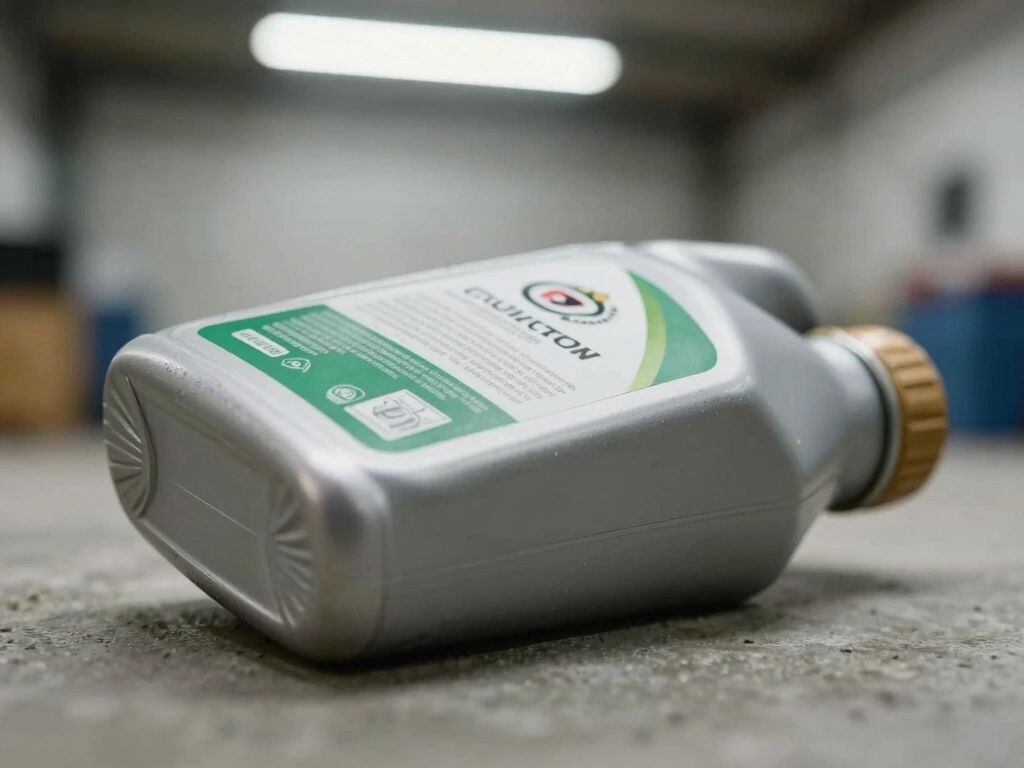
The ILSAC Starburst: A Second Certification Worth Checking
Near the API donut, look for a starburst symbol — a circular star pattern with text inside. This is the ILSAC (International Lubricant Standardization and Approval Committee) certification mark. ILSAC is a joint effort between US and Japanese automakers; the certification specifically validates fuel economy performance in addition to the API engine protection tests.
ILSAC GF-6A is the current standard for conventional viscosity grades (0W-20, 5W-20, 5W-30). ILSAC GF-6B is a separate standard exclusively for 0W-16 — the ultra-thin viscosity grade used in some Toyota and Honda engines.
If your vehicle’s manual specifies ILSAC GF-6A (or the older GF-5), look for the starburst. It certifies that the oil passed fuel economy tests that the API SP standard alone doesn’t require. Most full synthetic oils from major brands carry both certifications simultaneously, but it’s worth confirming rather than assuming.
“Full Synthetic,” “Synthetic Blend,” “Conventional”: What the Label’s Type Claim Actually Means
The front of the bottle usually states the oil type. The legal definitions in the US are looser than you might expect:
“Full Synthetic” — In the US, this means the oil uses Group III (severely hydrocracked) or higher base stock. Group III meets the legal definition of synthetic even though it starts as petroleum. Most “full synthetic” oils at retail are Group III. The claim is legally valid but doesn’t tell you whether the base oil is Group III (mineral-derived) or Group IV (PAO, chemically synthesized).
“Synthetic Blend” — A mix of conventional petroleum base stock and synthetic base stock in an unspecified ratio. No industry standard governs the blend ratio. One brand’s blend may be 30% synthetic; another’s may be 50%. The additive package is typically similar to full synthetic, but the base oil isn’t.
“Conventional” — Straight petroleum base stock without synthetic components. Appropriate for older engines in normal service. Not appropriate for modern engines with extended drain intervals or turbocharger specifications.
The type claim on the label is marketing-influenced. The API certification is not. If you need to know whether an oil is appropriate for your engine’s drain interval and spec, the API donut and viscosity grade are more reliable information than the “Full Synthetic” banner on the front.
OEM Approval Codes: The Fifth Piece of Information
Some labels carry more than API and ILSAC certifications. OEM approval codes are the most specific requirement level on a motor oil label — and when your manual lists one, it overrides everything else.
These codes appear in small print, often on the back label or side panel below the API symbol:
BMW Longlife-04, Longlife-17 FE+: Required for BMW engines with extended service intervals. Only oils carrying these specific approvals meet BMW’s viscosity stability and long-drain additive durability requirements. A standard API SP 5W-30 without the Longlife approval does not meet BMW’s spec.
Volkswagen/Audi 502.00, 504.00, 507.00: VW Group’s tiered approval system for gasoline and diesel engines. A 5W-30 without a VW 504.00 approval doesn’t qualify for VW’s extended service interval even if it carries API SP and ILSAC GF-6A.
GM dexos1 Gen 3: Mandatory for all GM vehicles (Chevrolet, GMC, Cadillac, Buick) from model year 2021 forward. Licensed oils display the “dexos” trademark in small text on the label. Using a non-dexos oil in a dexos-required engine can void the powertrain warranty.
Mercedes-Benz MB 229.5, 229.51: Mercedes has its own specification tier for different engine types. The approval code tells you which Mercedes engine families the oil is cleared for.
If your manual lists no specific approval code and only mentions viscosity grade and API SP, you don’t need to hunt for OEM codes. The requirement applies primarily to European vehicles and recent GM products.
How to Read a Motor Oil Label in 60 Seconds
Walk through this in order every time:
- Front label, big number — Check the SAE viscosity grade. Does it match your oil cap exactly? If not, put the bottle back.
- Back label, API donut — Find the circular symbol. Is it present? Does it say “SP” (or at minimum “SN Plus”)? If no donut, don’t buy it.
- Back label, ILSAC starburst — For most modern vehicles, look for GF-6A. If your manual specifies ILSAC, this confirms fuel economy compliance.
- Type claim — Full synthetic for modern engines on extended intervals. Synthetic blend or conventional if that’s what your manual specifies.
- OEM approval codes — If your manual lists a specific approval (BMW Longlife-04, dexos1 Gen 3, VW 504.00), look for those codes on the label or on the brand’s website approval lookup. These override all other considerations.
- Viscosity grade again — Double-check it before putting it in the cart. Wrong grade is the most common buying mistake.

Steps 1-4 take about 20 seconds. Step 5 takes longer only if you have a European vehicle or a GM product with a dexos requirement. For most domestic and Japanese vehicles, steps 1-4 cover it.
API SP Certified Full Synthetic Picks


* Affiliate links. Prices last updated March 6, 2026.
Related Articles
- How to Choose Motor Oil: The Complete Decision Guide
- Best Synthetic Motor Oil: Top Full Synthetic Picks Compared
Frequently Asked Questions
What does API SP mean on a motor oil label?
API SP is the current API (American Petroleum Institute) service category for gasoline passenger car engine oils. It replaced API SN Plus in 2020. An oil carrying API SP has passed standardized tests for sludge protection, LSPI prevention in turbocharged direct-injection engines, oxidation stability, and wear protection. It’s the baseline certification for any oil used in a modern gasoline engine.
What is the ILSAC starburst on motor oil?
The ILSAC starburst is a certification mark from the International Lubricant Standardization and Approval Committee, which represents US and Japanese automakers. An oil with the GF-6A starburst has passed fuel economy performance tests in addition to the engine protection tests in API SP. Most modern full synthetic oils carry both the API donut and the ILSAC starburst simultaneously.
Does the viscosity grade on my oil cap and the bottle have to match exactly?
Yes, for regular use. Your OEM specified a grade for your engine’s bearing clearances, oil pump design, and thermal operating range. Using a different grade occasionally in an emergency won’t destroy an engine, but regular use of the wrong grade — especially a thicker grade in a modern engine designed for 0W-20 or 5W-20 — causes measurable long-term wear and reduces fuel economy.
What’s the difference between API SN and API SP?
API SN was the previous standard, replaced by API SP in 2020. The key additions in SP: better LSPI protection for turbocharged GDI engines, improved timing chain wear resistance, and better oxidation control for longer drain intervals. For modern vehicles with GDI or turbo engines, API SP is the correct spec. For pre-2010 vehicles with simpler engines, API SN Plus still meets the spec.
What does “full synthetic” actually mean on an oil label?
In the US, “full synthetic” means the oil uses Group III or higher base stock. Group III is severely hydrocracked petroleum that legally qualifies as synthetic. Most retail full synthetics are Group III, not Group IV (PAO). The label doesn’t distinguish between them. What matters more than the “full synthetic” claim is the API certification and the viscosity grade — those are standardized. “Full synthetic” is not.
Where do I find OEM approval codes on a motor oil bottle?
OEM approval codes are usually printed in small type on the back or side panel of the bottle, listed below the API and ILSAC symbols. They appear as alphanumeric codes (BMW Longlife-04, MB 229.5, VW 504.00) or with a prefix like “Approved against” or “Meets requirements of.” If you can’t find them on the label, every major brand maintains an approval lookup tool on its website — search by vehicle make, model, and year.
For the full picture on how to match oil type to your specific vehicle, the how to choose motor oil guide walks through OEM specifications, viscosity selection, and certification requirements in one place.
Related Articles

How to Choose the Right Motor Oil for Your Car
Learn how to choose motor oil using your owner's manual, SAE viscosity grades, and API specs. Includes a selection table for all vehicle types.
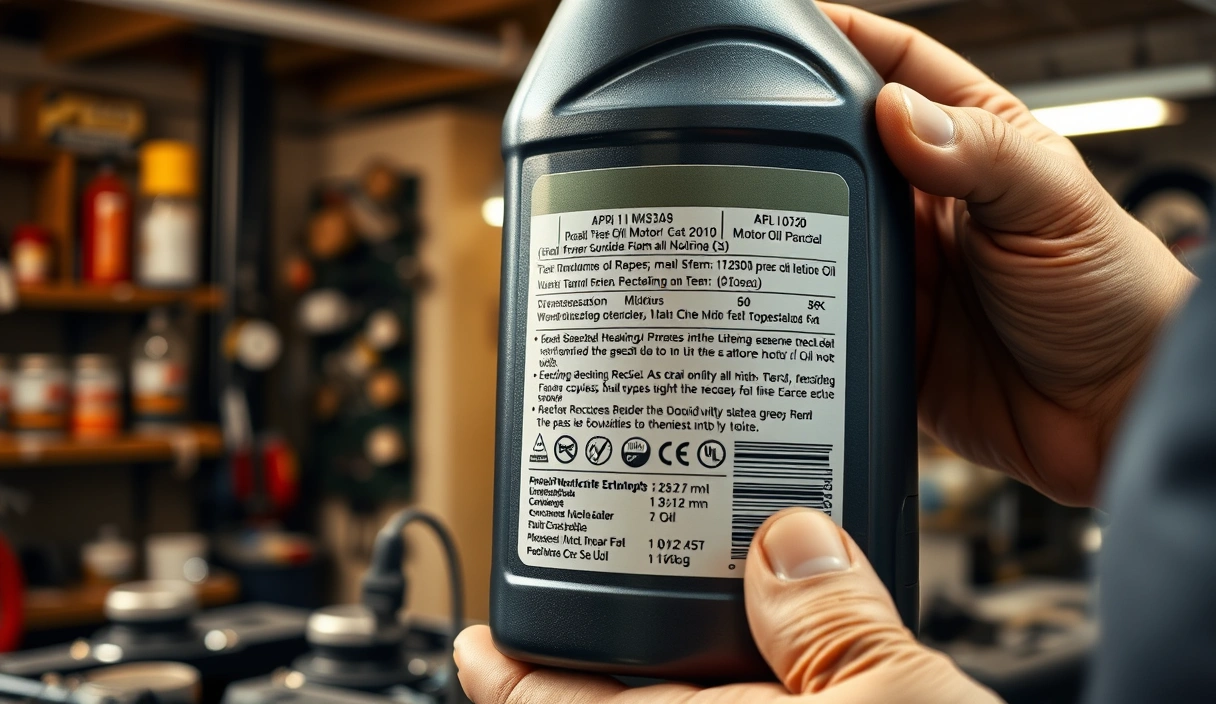
API SP Motor Oil Ratings: SP, SN Plus, and ILSAC GF-6 Explained
API SP replaced SN Plus in 2020. ILSAC GF-6A and GF-6B cover newer thin-oil engines. Here's which certification your car actually needs and why.
ACEA C3 Motor Oil: What It Means and Which Oils Actually Meet It
ACEA C3 motor oil is the European standard for petrol and diesel engines with emissions equipment. What the spec requires and which oils carry it.