
What Is Viscosity Grade? The SAE System Explained
What is viscosity grade? It's the SAE standard for how oil flows at cold and hot temperatures. Here's how the grading system works and how to read it.
Contents
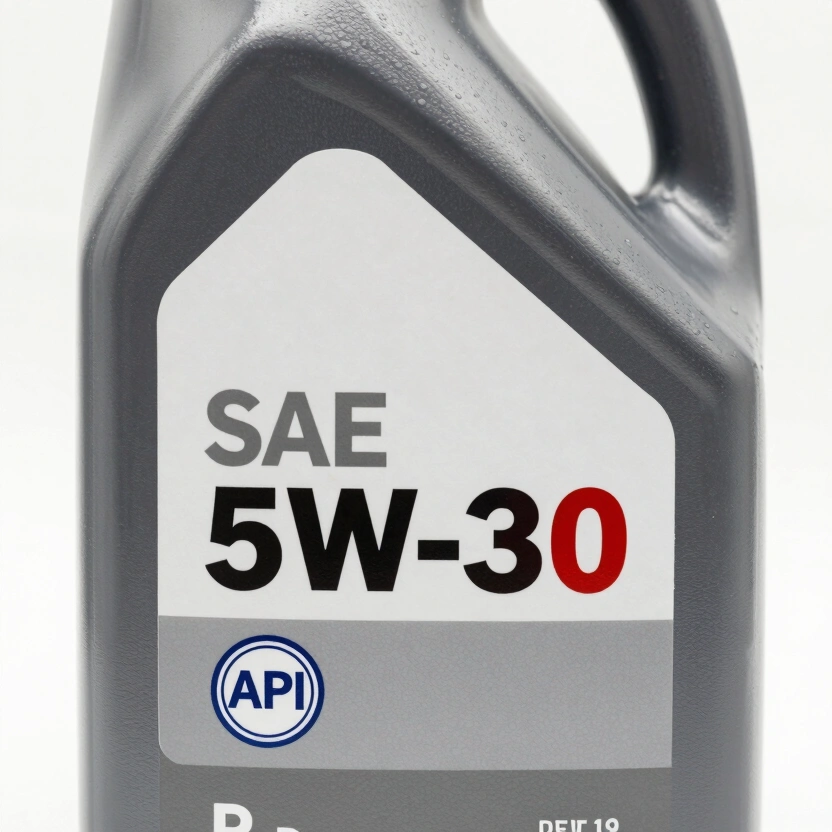
The label on every motor oil bottle in the US carries a two-part number: something like 5W-30, 0W-20, or 10W-40. That number is the viscosity grade — a standardized rating that tells you how the oil flows at cold temperatures and how thick it stays when hot. Understanding what the viscosity grade means is the starting point for choosing the right oil.
What is viscosity grade? It’s the SAE (Society of Automotive Engineers) classification that defines an oil’s flow behavior across a temperature range, tested at standardized conditions set by SAE International’s J300 specification. Motor Oil carries this rating on every bottle sold in the US.
What Viscosity Actually Means
Viscosity is resistance to flow. Water has low viscosity — it pours quickly and thins easily with heat. Honey has high viscosity — it flows slowly and thickens in the cold. Motor oil needs to be something in between: thin enough at low temperatures to flow to engine bearings within seconds of a cold start, and thick enough at operating temperature to maintain the pressurized film that separates metal surfaces.
The challenge: all liquids thin as they heat up and thicken as they cool down. A single-grade oil (like an old straight-30 motor oil) might be too thick to flow in cold weather and too thin to protect at 220°F. Multi-grade oil — the modern standard — uses Viscosity Index Improver polymers to stabilize viscosity across a much wider temperature range. That’s where the two-part viscosity grade comes from.
Reading the SAE Viscosity Grade
Take 5W-30 as the example. The grade has two components, separated by the “W”:
The W number (5W): The W stands for Winter — not weight, a common misconception. The W rating describes how the oil flows at low temperatures, specifically in a cold-crank test that simulates a cold engine start. Lower W numbers flow better in cold weather:
- 0W flows best in extreme cold (Alaska in January)
- 5W is the most common for moderate cold climates
- 10W acceptable in mild climates that rarely see below-freezing temps
- 15W and 20W for warmer climates only
The SAE J300 specification sets the exact low-temperature viscosity limits that each W-grade must meet.
The operating temperature number (30): The second number describes viscosity at 100°C (212°F) — approximately engine operating temperature. Higher numbers mean thicker oil at operating temperature:
- 20 is a thin operating viscosity (common in Japanese economy cars)
- 30 is the most common middle grade
- 40 is thicker (common in European and performance engines)
- 50 and 60 for high-performance and racing applications
This operating-temperature viscosity determines the thickness of the oil film between your crankshaft journals and bearing shells at speed.
The SAE J300 Grading System
SAE International (the Society of Automotive Engineers) maintains the J300 standard — the actual specification that defines viscosity grade boundaries. The J300 standard specifies:
- Cranking viscosity limits (by the CCS test — Cold Cranking Simulator) at low temperatures for each W-grade
- Pumping viscosity limits (by the MRV test — Mini-Rotary Viscometer) to prevent oil starvation at cold start
- Kinematic viscosity limits at 100°C for the operating-temperature grade (measured by the ASTM D445 test)
- High-Temperature High-Shear (HTHS) viscosity limits at 150°C under shear conditions — this test simulates the bearing film under real operating load
The HTHS limit is particularly important: it’s the minimum viscosity the oil must maintain under the combined stress of high temperature and high shear rate. Modern low-viscosity grades like 0W-16 and 0W-20 have been specifically engineered to meet HTHS minimums while flowing more easily for fuel economy.
| Grade | Low-Temp Cranking | Operating at 100°C |
|---|---|---|
| 0W-20 | Flows freely to -35°C | 6.9–9.3 cSt |
| 5W-30 | Flows freely to -30°C | 9.3–12.5 cSt |
| 5W-40 | Flows freely to -30°C | 12.5–16.3 cSt |
| 10W-40 | Flows freely to -25°C | 12.5–16.3 cSt |
Why Viscosity Grade Matters for Your Engine
Engine bearing clearances are precision-machined to specific tolerances. The bearing clearance — the gap between the crankshaft journal and the bearing shell — is designed for a specific operating viscosity. Too thin, and the oil film can’t support the bearing load. Too thick, and the oil creates excess drag, reduces fuel economy, and may not reach tight clearances quickly at cold start.
Modern engines spec low-viscosity oils (0W-20, 0W-16) because tighter manufacturing tolerances allow thinner films to carry the same bearing loads. These specs are not interchangeable with heavier grades — using 5W-30 in an engine designed for 0W-20 means running thicker oil than the clearances require, with real fuel economy penalties and marginal gains in protection.
Using 0W-20 in an engine designed for 5W-30 is the more serious error — the thinner oil doesn’t have the film thickness the bearing clearances were designed for, particularly under load.
The right viscosity grade is the one on the oil cap. For the broader decision of how to choose the right oil for your specific engine, the how to choose motor oil guide covers the decision framework including viscosity, API rating, and OEM approval codes.
Viscosity Index: The Number Behind the Multi-Grade
The Viscosity Index (VI) is a separate measure from the viscosity grade — it describes how much the oil’s viscosity changes across temperature. High VI means the oil’s viscosity stays relatively stable across a wide temperature range. Low VI means it thins dramatically when hot and thickens dramatically when cold.
Conventional motor oil has a lower natural VI than full synthetic. This is why conventional oil needs more Viscosity Index Improver additive (VII polymers) to achieve the same multi-grade performance as synthetic. And this is why VII shear — the mechanical breakdown of those polymers — is a bigger issue for conventional oil over time.
The viscosity grade printed on the bottle is a spec the oil meets when new. As VII polymers shear over the service interval, the effective grade drifts toward the base oil’s single-grade behavior. An oil labeled 5W-30 may behave like a 5W-20 toward the end of a long interval. This is one reason the oil change interval exists.
For a deeper look at how the numbers work in practice on your oil cap and how viscosity grade connects to engine oil selection, the engine oil viscosity explained guide covers the practical application.
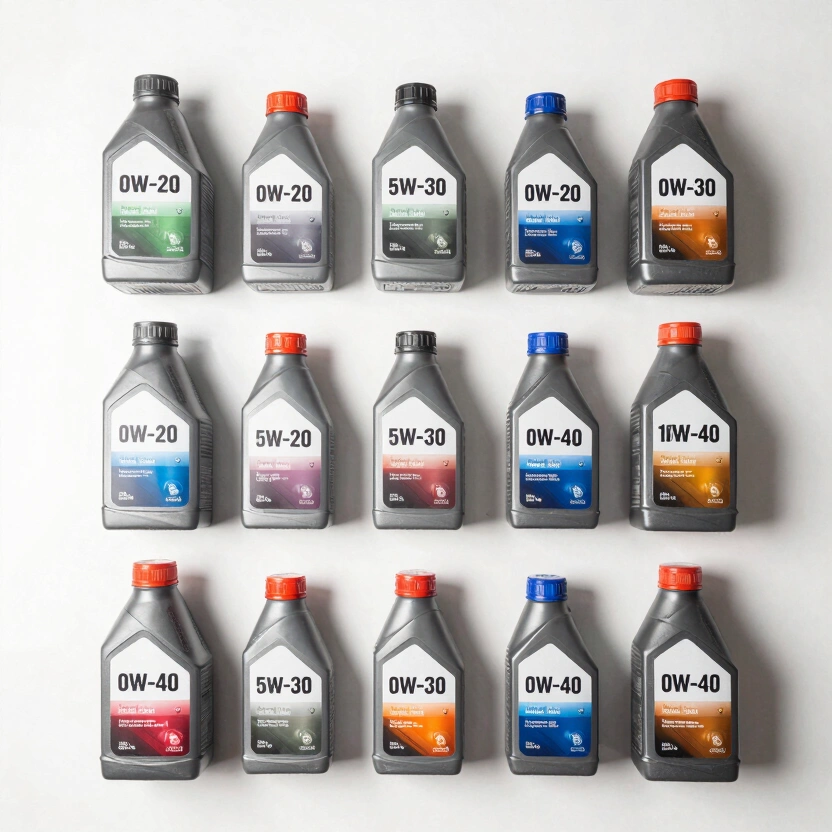
Full Synthetic Oils Across Common Viscosity Grades


* Affiliate links. Prices last updated March 6, 2026.
Related Articles
- How to Choose Motor Oil: The Complete Decision Guide
- 0W-20 vs. 5W-30: Which Viscosity Is Right for Your Engine?
- 5W-30 vs. 5W-20: What Happens If You Use the Wrong Viscosity?
Frequently Asked Questions
What does the W stand for in motor oil grades?
W stands for Winter — not weight. The W-rated number describes how the oil flows at cold temperatures, specifically in the Cold Cranking Simulator and Mini-Rotary Viscometer tests specified by SAE J300. A lower W-number means better cold-temperature flow: 0W flows in colder conditions than 5W, which flows in colder conditions than 10W.
What viscosity grade should I use?
The viscosity grade specified in your owner’s manual or printed on the oil cap. This isn’t a recommendation — it’s the grade the engine was designed for. Substituting a different grade means using oil at a different operating viscosity than the bearing clearances were machined to accept. The only valid exception is a documented OEM allowance (some manufacturers list alternate grades for extreme climates).
Does higher viscosity mean better protection?
Not automatically. Higher viscosity means thicker oil at operating temperature, which can mean a thicker oil film — but only if the higher grade is appropriate for the bearing clearances. Running a heavier grade than specified doesn’t add protection; it adds drag, reduces fuel economy, and may prevent the oil from penetrating tight clearances at cold start. The right grade is the right grade.
Is 5W-30 the same as 10W-30 at operating temperature?
In the operating temperature number — yes, both have the same viscosity spec at 100°C. The difference is the W-grade: 5W flows better in cold weather than 10W. In a mild climate that never sees freezing temperatures, both perform identically at operating temperature. In cold climates, 5W-30 circulates faster at cold start.
What is a single-grade vs. multi-grade oil?
Single-grade oil (like straight 30 or SAE 40) has one viscosity rating measured at operating temperature — no W designation. It was the standard before Viscosity Index Improver additives enabled multi-grade oils. Single-grade oil is too thick at cold start and too thin at operating temperature for most modern engines. Multi-grade oil (5W-30, 0W-20, etc.) covers both temperature extremes in one product.
Related Articles

Does It Actually Matter What Motor Oil You Use?
Does it matter what oil you put in your car? Viscosity grade matters a lot. Brand matters much less. Here's exactly where the line falls.

Engine Oil Viscosity Explained: What 0W-20 Actually Means
0W-20, 5W-30, 10W-40: the numbers on your oil cap follow a specific system. Here's what each part means, why it matters, and how to read it.

Why Is My Car Burning Oil? Common Causes and What to Do
Why is my car burning oil? Two causes: valve stem seals and piston rings. Here's how to tell which one and what to do about it.