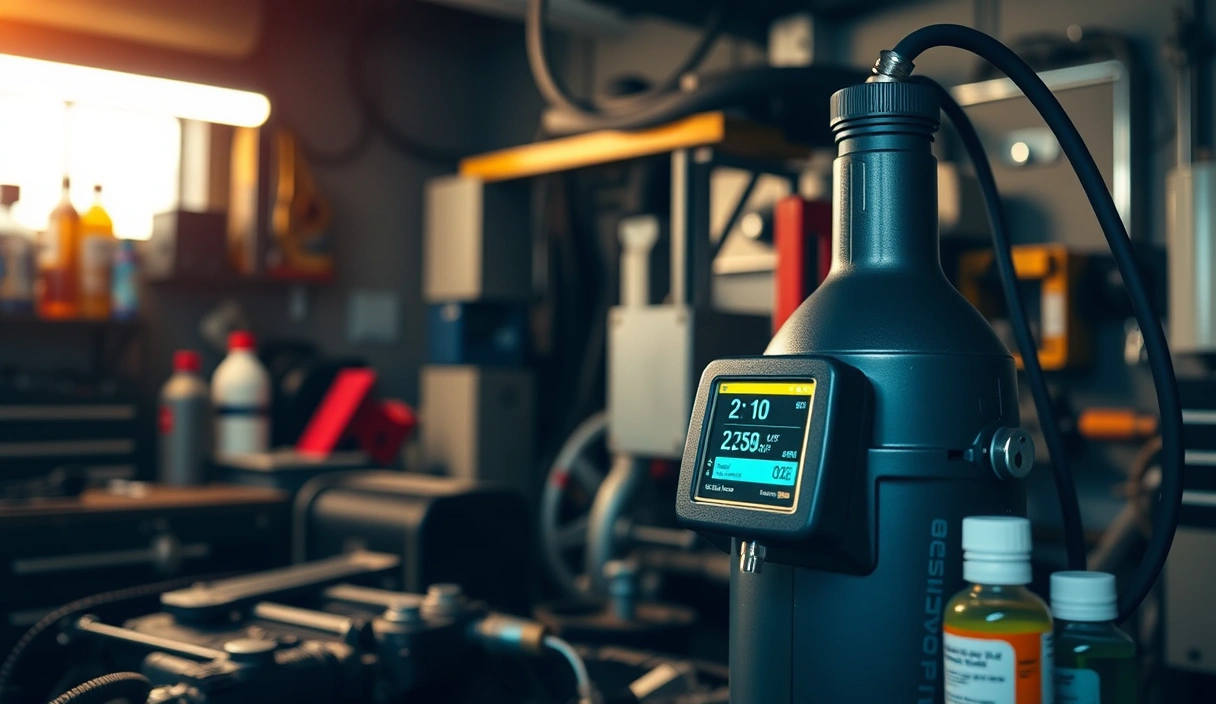
Oil Life Monitor Accuracy: Can You Trust It Over the Window Sticker?
Oil life monitors are algorithm-based, not sensor-based. Here's when to trust yours, when to override it, and why the sticker is a sales tool.
Contents
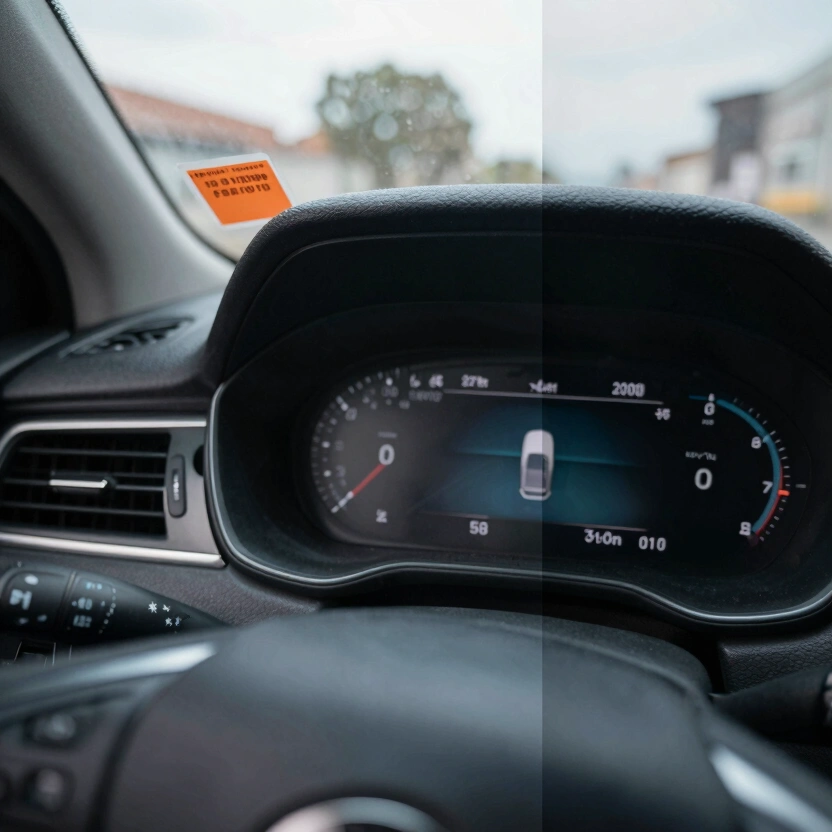
The dashboard says “Oil Life: 38%.” The orange sticker on the windshield says 3,000 miles. You’ve done 4,500 miles since the last change.
Which one should you trust?
The oil life monitor. Oil life monitor accuracy is good enough to trust over any fixed-mileage sticker — but there’s one situation where you don’t. Here’s both.
What the Oil Life Monitor Actually Calculates
The first thing to understand: the oil life monitor does not contain a sensor that measures your actual oil condition. It doesn’t test oxidation levels, total base number (alkalinity reserve), or viscosity. What it does is run a real-time algorithm fed by data your engine already collects.
Typical inputs to an oil life algorithm:
- Engine RPM and load (how hard the engine is working)
- Operating temperature (including cold-start cycles and warm-up time)
- Time since last reset (calendar aging, independent of miles)
- Number of cold starts (cold starts accelerate oil degradation faster than warm operation)
- Drive cycle patterns (short trips vs. highway miles)
The algorithm uses these inputs to estimate oil degradation against a model of how oil ages under those specific conditions. A car driven 500 miles in short winter cold starts degrades oil faster than one driven 500 miles of warm-weather highway. The OLM accounts for that; an odometer-based sticker does not.
GM developed the first mainstream algorithm-based Oil Life Monitor System (OLMS) in the 1980s, validated against actual engine oil analysis testing across hundreds of thousands of miles. Honda followed with their own system. Today virtually every major OEM uses a version of this approach.
Why the OLM Beats the Window Sticker
The windshield sticker represents a fixed-mileage change interval — typically 3,000, 5,000, or whatever mileage the quick-lube shop felt like writing. It doesn’t know whether you ran the engine hard or easy, whether you started it cold 50 times or 5 times, or whether you used full synthetic oil or conventional oil.
The OLM knows all of those things, at least implicitly through the sensor data it consumes. It’s a personalized estimate; the sticker is a population average at best.
A real illustration of why this matters:
Two identical cars, same make/model/year, same full synthetic oil, last changed on the same day:
- Car A: 8,000 highway miles, warm climate, mostly commute distances over 20 minutes — oil life might read 45% remaining
- Car B: 4,000 miles, mostly 5-minute cold starts in winter, some towing — oil life might read 12% remaining
The sticker on both says “next change at X miles.” The OLM on both gives different answers because their actual use profiles are completely different. Car B needs an oil change at half the mileage of Car A — and the OLM captures that; the sticker doesn’t.
The OLM and Oil Type: Full Synthetic vs. Conventional
There’s a nuance here that most owners miss: some OLM systems are calibrated differently based on oil type.
GM’s Dexos-based OLM, for example, was calibrated assuming full synthetic oil. Running conventional oil in a GM vehicle with an OLM and following the OLM’s recommendation can result in longer intervals than conventional oil is designed to handle. The OLM doesn’t know whether you used the specified full synthetic oil or a conventional product — it assumes you used what the manufacturer specified.
The lesson: the OLM’s accuracy depends on using the correct oil type for your vehicle. If your vehicle’s OLM was calibrated for full synthetic oil and you put in conventional oil, the OLM will recommend intervals appropriate for synthetic that conventional oil can’t sustain. Use the oil the manufacturer specifies, and the OLM’s recommendations are reliable. Use a different grade or type, and the OLM’s calibration doesn’t apply.
Extended drain interval estimates from some OLMs are generous enough that they sometimes result in intervals that would surprise people used to conventional oil thinking — Honda OLMs on certain models will go 7,000–10,000 miles on full synthetic in normal highway use. These intervals are backed by Honda’s own oil analysis testing and are appropriate for the specified oil type.

When to Override the OLM
There’s one specific scenario where you should change oil before the OLM tells you to: if more than 12 months have passed since the last change, regardless of mileage or percentage remaining.
Oil degrades through time as well as use. Moisture accumulates in the oil from combustion condensation during cold starts. Oxidation continues slowly even when the engine isn’t running. Most OLMs account for time as one of their inputs — but if you’ve driven very low mileage over a long period (a second car, a rarely-used vehicle), the time-based degradation can exceed what the algorithm expects.
Twelve months is the standard maximum regardless of OLM reading. Most OEM maintenance schedules specify “or once a year, whichever comes first” alongside their mileage intervals. If your OLM still reads 40% after 13 months of light driving, change the oil anyway.
Other situations where conservative judgment overrides the OLM:
Known severe service: Frequent towing, sustained off-road use, extended idling, dusty or dirty air environments. The OLM algorithm was validated on representative driving cycles; severe duty can push oil degradation faster than the model anticipates.
New or recently rebuilt engine: Break-in periods benefit from more frequent early changes to remove machining debris. Even if the OLM shows 80%, many manufacturers recommend a first change at 3,000–5,000 miles during break-in.
Post-coolant-in-oil event: If the engine suffered any coolant contamination, change the oil immediately regardless of OLM reading. The algorithm has no knowledge of coolant mixing.
The Practical Answer to “When to Change?”
Follow the OLM. Change when it reaches 0–5% remaining, or at 12 months, whichever comes first. On full synthetic oil in typical driving, this usually works out to somewhere in the 7,000–10,000 mile range — occasionally longer for light-duty highway driving, shorter for severe cold-start patterns.
The window sticker from the quick-lube shop is a sales mechanism, not a maintenance recommendation. The 3,000-mile interval hasn’t been technically correct for most modern vehicles using full synthetic oil since the early 2000s.
For a broader breakdown of interval recommendations by oil type and driving conditions, the oil change frequency guide covers the interval comparison table in full. If you want to validate what’s actually happening to your oil at a given interval — rather than relying on either the sticker or the algorithm — used oil analysis through Blackstone Laboratories ($35–45 per sample) gives you real data.
Full Synthetic Oils Worth the Extended Interval


* Affiliate links. Prices last updated March 6, 2026.
Frequently Asked Questions
How accurate is the oil life monitor?
For vehicles using the specified oil type under typical driving patterns, OLM accuracy is good — validated by OEM oil analysis testing against actual wear metal data across large sample sizes. The accuracy degrades when you deviate from the specified oil type (synthetic vs. conventional), operate under conditions outside the algorithm’s calibration range (extreme towing, off-road), or let time accumulate beyond what the algorithm expected. For most drivers in normal use with the correct oil, the OLM is more accurate than any fixed-mileage sticker.
Should I change oil before the oil life monitor says to?
Only in specific cases: more than 12 months have passed since the last change, the vehicle is in confirmed severe service (regular towing, dusty environments), it’s a new engine in break-in, or you suspect oil contamination. For normal driving with the correct oil type, following the OLM is the correct approach.
What does 0% oil life mean?
It means the algorithm has calculated that the oil has reached its estimated useful service life limit. It’s not an emergency shutoff trigger — you can drive the car to get the change done. But you shouldn’t accumulate significant additional miles on oil that the OLM has flagged at 0%. Change it promptly.
Can I reset the oil life monitor after changing oil?
Yes, and you must. The OLM doesn’t detect that you’ve changed the oil — it only knows when you reset it. After an oil change, follow your vehicle’s reset procedure (usually holding a button combination in the instrument cluster). If you don’t reset it, the OLM continues counting from where it left off, giving you an inaccurate remaining estimate.
Does the oil life monitor work with synthetic oil?
Yes, and most modern OLMs are specifically calibrated for full synthetic oil — which is the OEM-specified oil for most vehicles built after 2010. Using conventional oil and trusting the OLM will result in the OLM recommending intervals longer than conventional oil can reliably sustain. The OLM works correctly with the oil type it was calibrated for.
Related Articles
Related Articles

How to Check Engine Oil: Level, Condition, and What to Look For
Checking engine oil takes two minutes and tells you everything about your engine's health. Here's exactly how to read the dipstick and what to look for.

Oil Change for Diesel Trucks: Intervals, Oil Types, and What's Different
Diesel truck oil changes cost more and follow different rules. Covers intervals, oil types, and certifications for Cummins, Duramax, and Powerstroke.
How Often Should You Change Your Oil? (The Real Answer)
How often should you change your motor oil? The answer is in your owner's manual — not on that 3,000-mile windshield sticker.