
5W-30 vs. 5W-20: What Happens If You Use the Wrong Viscosity?
5W-30 vs. 5W-20: using the wrong viscosity grade isn't immediately dangerous but causes real long-term wear. Here's what changes and when it matters.
Contents
The quick answer: if your car calls for 5W-20 and you put in 5W-30, it will run. Nothing will fail immediately. Over the next 80,000 miles, the wear data will show the difference — in bearing clearances your engine was designed for a thinner film, and the thicker 5W-30 doesn’t flow to tight tolerances the same way.
The reverse — running 5W-20 in a 5W-30 engine — has different implications. The thinner film at operating temperature may not maintain adequate pressure in high-load situations.
Here’s what the viscosity difference actually means in engineering terms, and where the real risk shows up.
What the Numbers Mean
Both grades have identical cold-weather performance — the 5W rating is the same. “5W” means the oil flows comparably in sub-freezing temperatures. Cold starts behave essentially identically between 5W-20 and 5W-30.
The difference is entirely at operating temperature. The second number — 20 vs. 30 — is the high-temperature viscosity rating, measured at 100°C. A 30-grade oil is measurably thicker at full operating temperature than a 20-grade oil.
That thickness difference translates to:
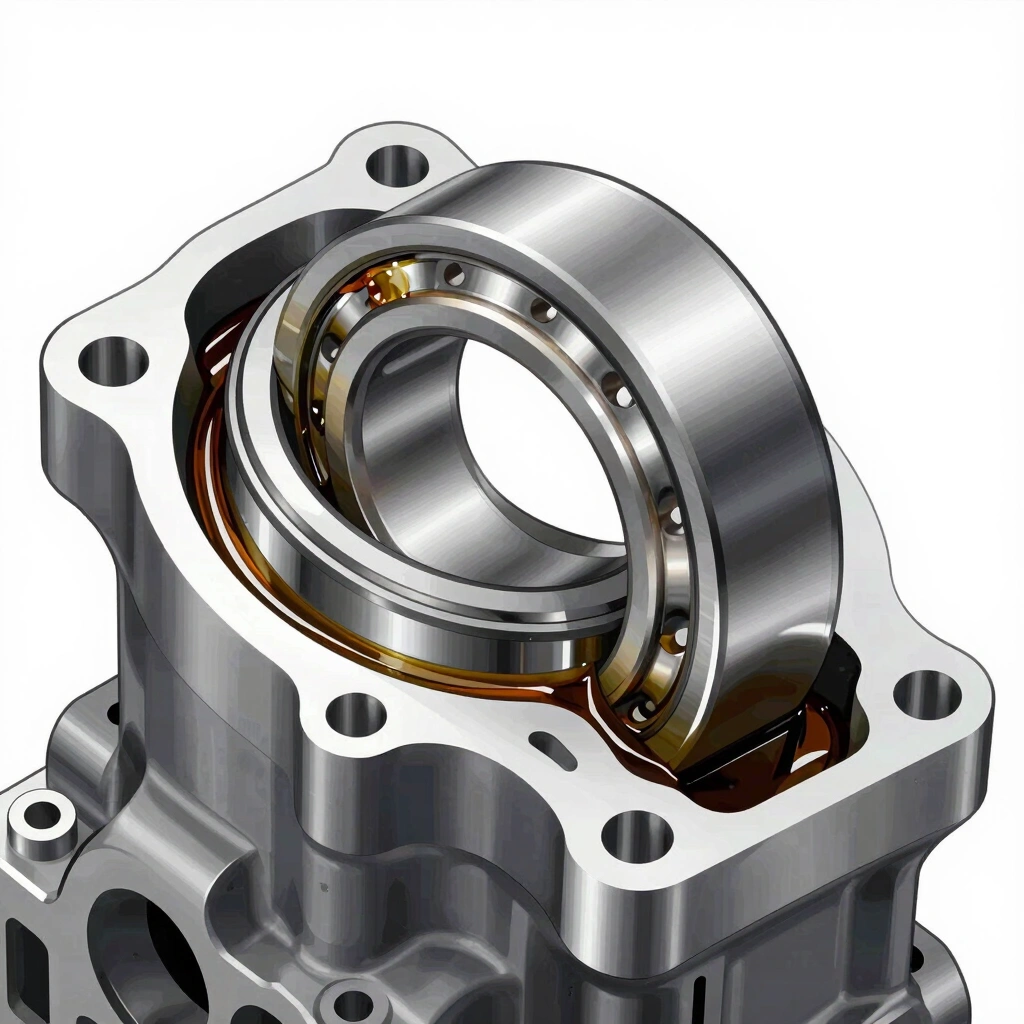
- Film pressure in bearing clearances: Thicker oil maintains higher hydrodynamic pressure in the oil wedge between bearing surfaces. But the clearances are designed for a specific film — too thick creates drag without proportionally better protection.
- Oil pump flow rate: Thicker oil takes slightly more energy to push through passages. The difference is small but measurable in fuel economy testing.
- Cold-start circulation: Identical at 5W temperatures.
The technology that makes this possible — behaving as a thin 5W in cold temperatures and a thicker 20 or 30 at operating temperature — is the Viscosity Index Improver (VII). VIIs are polymer additives that expand at higher temperatures, thickening the oil in a controlled way to maintain the rated high-temperature viscosity. Without them, a single-grade oil would thin too much at operating temperature to maintain adequate film strength.
The practical implication for 5W-20 vs. 5W-30: both grades start from similar base oil viscosity and use different concentrations of Viscosity Index Improvers to reach their respective operating viscosities. As these polymers shear down under mechanical stress over time — which happens gradually over the drain interval — the operating viscosity can drift below the rated grade. A degraded 5W-30 may behave more like a 5W-25 toward the end of its service life. This is one reason following the correct drain interval matters as much as choosing the correct grade in the first place.
The viscosity grade isn’t arbitrary. OEMs select it based on their engine’s actual bearing clearances, pump geometry, and thermal operating range. Changing the grade changes the film characteristics the engine was designed around.
5W-20 Engines: Why the Thinner Grade Is Right
Engines specified for 5W-20 are typically modern, tightly toleranced engines — many Toyota, Honda, and Ford applications from the mid-2000s onward. The tight bearing clearances in these engines are machined to work with the thinner 5W-20 film.
Running 5W-30 in a 5W-20 engine: The thicker oil doesn’t fill those tight clearances better — it resists flowing into them efficiently. Oil pressure readings stay normal because the pump is generating the same pressure, but oil film distribution in ultra-tight passages is slightly reduced. Fuel economy drops by a measurable amount (OEMs test this; the difference between grades can be 1-2% fuel economy at highway speeds). Over 80,000+ miles of the wrong grade, bearing journal wear accumulates slightly faster than with the correct grade.
That said: running 5W-30 once in a 5W-20 engine isn’t a crisis. Using 5W-30 for 150,000 miles in a 5W-20 engine is a long slow drift from the design specification that shows up eventually.
ILSAC GF-6B is a specification that covers 0W-16 ultra-thin oils for newer Toyota and Honda applications. If your engine specs 0W-20 or lower, the GF-6B certification path matters more than the 5W-20 vs. 5W-30 question.
5W-30 Engines: The Risk of Going Thinner
Engines specified for 5W-30 typically have slightly larger bearing clearances than 5W-20 engines. The 30-grade film at operating temperature is what fills those clearances to the designed oil wedge thickness.
Running 5W-20 in a 5W-30 engine: At normal highway operating temperatures, a 5W-20 may provide slightly less film pressure than the 5W-30 the engine was designed for. Under high-load conditions — sustained highway driving, towing, aggressive acceleration — the thinner film is under more stress. Turbocharged engines and Gasoline Direct Injection (GDI) engines are particularly relevant here, because turbocharger bearings and GDI direct injector tips both operate at higher temperatures and loads than a naturally aspirated port-injection engine.
For a turbocharged engine specified for 5W-30, running 5W-20 is a meaningful spec deviation. The turbocharger bearing journal runs at temperatures where the difference in film strength between a 20-grade and 30-grade oil is real.
The Situations Where It Actually Matters
Most of the 5W-20 vs. 5W-30 debate happens in casual use — someone asks if they can use 5W-30 because the store was out of 5W-20. In that scenario: yes, for one change, it’s fine. The engine won’t notice.
The situations where it genuinely matters:
Turbocharged engines: The thermal and mechanical stress on turbo bearings makes film strength differences more consequential. Use the specified grade. No exceptions.
GDI engines with specified 5W-20: GDI (Gasoline Direct Injection) engines have specific oil requirements because carbon deposit formation on intake valves is accelerated when oil viscosity creates incomplete spray patterns. The 5W-20 specification in many GDI applications was chosen based on detailed testing of carbon deposits and injector tip coking. Running a thicker grade doesn’t necessarily make the GDI problem worse, but it doesn’t help it either.
Extended drain intervals: The longer you go between changes, the more the starting viscosity matters. An oil at 10,000 miles has less additive reserve than fresh oil. Starting with the wrong grade at 10,000 miles means you finish with a meaningfully degraded product.
High ambient temperature climates: In Phoenix in August, sustained 110°F ambient temperatures push engine oil temperatures higher at operating conditions. The thicker film of 5W-30 may actually have an advantage here even in a 5W-20 engine, but this gets into territory where the OEM spec should be trusted over improvised reasoning.

The Short Version: Which Grade for Which Situation
| Situation | Correct Choice |
|---|---|
| Owner’s manual says 5W-20 | 5W-20, always |
| Owner’s manual says 5W-30 | 5W-30, always |
| Store is out of your grade (one change) | Either grade is acceptable temporarily |
| Turbocharged engine | Never deviate from OEM spec |
| GDI engine | Never deviate from OEM spec |
| Pre-2000 naturally aspirated engine | Small deviation less critical, but still follow spec |
The engine oil viscosity guide covers how the full viscosity grade system works — including why the W rating and the high-temp rating serve different purposes and what happens to both as oil ages.
Related Articles
- Best Synthetic Motor Oil: Top Full Synthetic Picks Compared
- Engine Oil Viscosity Explained: What the Numbers Mean
Frequently Asked Questions
Can I use 5W-30 instead of 5W-20?
In a one-time situation where your specified grade is unavailable: yes, 5W-30 will not damage the engine immediately. For regular use, no — your engine was designed around the bearing clearances appropriate for 5W-20, and running a heavier grade long-term causes measurable fuel economy loss and slight wear accumulation in tight passages.
What’s the actual difference between 5W-20 and 5W-30?
Both grades have identical cold-weather flow characteristics (the 5W rating). The difference is entirely at operating temperature: 5W-30 is measurably thicker at 100°C than 5W-20. That difference affects film pressure in bearing clearances, energy required by the oil pump, and fuel economy.
Does 5W-30 provide better protection than 5W-20?
Not universally. An engine designed for 5W-20 doesn’t get better protection from 5W-30 — it gets protection outside its design parameters. An engine designed for 5W-30 that runs 5W-20 loses some film thickness. “Better” in this context only means “correct for the engine’s specifications.”
Does using the wrong viscosity void my warranty?
Using a grade other than what your owner’s manual specifies could be used to deny a warranty claim if the failure is related to lubrication — particularly bearing wear or engine seizing. The Magnuson-Moss Warranty Act prevents manufacturers from voiding warranties entirely over oil brands, but not over oil specifications. If your manual says 5W-20 and you ran 5W-30 for 80,000 miles, a failed bearing claim gets complicated.
Why do some engines use 5W-20 instead of 5W-30?
Tighter manufacturing tolerances on modern engines allow the thinner film to work effectively — the bearing clearances are small enough that 5W-20 maintains adequate hydrodynamic pressure. The thinner oil also delivers measurable fuel economy improvements (verified in OEM testing) without sacrificing protection in the engine’s designed operating range. It’s an optimization choice, not a cost-cutting measure.
For a broader comparison of viscosity grades and what makes each right for different engines, the synthetic vs. conventional oil guide covers the base oil chemistry that determines how these grades behave across temperatures. The 0W-20 vs. 5W-30 comparison covers the wider two-step deviation — relevant for modern engines that have moved from the traditional 5W-30 standard to 0W-20.
Related Articles

0W-20 vs. 5W-30: Which Viscosity Is Right for Your Engine?
0W-20 vs. 5W-30: your owner's manual has the answer. Here's why modern engines specify 0W-20, when 5W-30 is correct, and what goes wrong if you deviate.

Pennzoil Platinum vs. Mobil 1: The Honest Comparison
Pennzoil vs. Mobil 1: both are full synthetic API SP oils at similar prices. The real differences come down to base oil source and certification coverage.
Mobil 1 vs. Castrol Edge: Which Brand Actually Wins?
Mobil 1 vs. Castrol Edge: same base stock, same price. The real difference is OEM certifications — dexos1 for GM, BMW Longlife for Castrol.