
High Mileage Motor Oil: What It Actually Does (and What It Doesn't)
High mileage motor oil adds seal conditioners, antioxidants, and extra viscosity modifiers. Here's when it helps, what to expect, and which to buy.
Contents
Most mechanics won’t tell you the 75,000-mile number on the bottle is a marketing anchor, not an engineering threshold. There’s no API specification that says engines change at 75k. No OEM guideline. It’s a round number that happens to appear on most high mileage oil labels because it lands in a sales sweet spot.
The real question isn’t whether your odometer has hit a certain number. It’s what’s happening inside the engine — whether seals are hardening, consumption is ticking up, or wear has opened tolerances enough that standard oil chemistry no longer does the full job. High Mileage Motor Oil addresses those specific conditions. Here’s what it actually contains, when it makes sense, and what you shouldn’t expect it to do.
What Makes High Mileage Motor Oil Different
High mileage formulations aren’t just regular oil with extra marketing copy. They carry a distinct additive stack targeting the specific failure modes of aging engines.
Seal Conditioners
The defining additive in high mileage oil is the Seal Conditioner — esters and specific polymers that cause nitrile and polyacrylate rubber to swell slightly and recover flexibility. Rubber seals in older engines dry out, shrink, and harden over years of heat cycling. A hardened valve stem seal or crankshaft seal that’s lost compliance becomes a seep point.
Seal Conditioners don’t repair torn or cracked seals — the damage has to be chemical (drying, hardening) rather than mechanical (splitting, crumbling). When that condition is met, they work. You won’t eliminate an established leak, but a minor seep that’s just starting can slow considerably.
Antioxidant Additives
Older engines typically run with more combustion blowby past worn rings, and crankcase temperatures run higher as engine tolerances open up. Both factors accelerate oil oxidation — the chain reaction that breaks down base oil molecules and deposits varnish. Antioxidant Additives in high mileage formulations, including additional phenolic and aminic antioxidants beyond the standard package, neutralize the free radicals driving that process.
Standard full synthetic handles oxidation well in a tight engine. A worn engine pushes that chemistry harder, and the elevated antioxidant load in high mileage formulas extends protection further into the drain interval.
Viscosity Modifiers and Cleaning Agents
Engine Wear widens bearing clearances and ring gaps. Oil that performs adequately in a tight new engine may thin too much under shear at those widened tolerances, losing film strength at the surfaces that need it most. Viscosity Modifier packages in high mileage oils are tuned to stay thicker under shear stress — maintaining the protective film across bearing surfaces that are no longer to original spec.
The detergent and dispersant package is also typically heavier than in standard oil — targeting the varnish deposits and sludge that accumulate over years and can restrict passages to lifters and small galleries. This cleaning function is particularly useful on engines that went longer between oil changes earlier in their life, where deposit accumulation is more likely.
When Should You Switch to High Mileage Oil?
The 75,000-mile threshold is a guideline for consumers who aren’t tracking their engine’s condition closely — it’s not wrong exactly, just imprecise.
A well-maintained 100,000-mile engine with clean oil passages, no leaks, and no measurable consumption may not need the high mileage formulation yet. A neglected 60,000-mile engine with hardened seals and 1-quart-per-3,000-mile consumption probably would benefit from it now.
Signals that suggest a switch makes sense:
- Minor oil seeps at valve cover gaskets, cam plugs, or crank seals that weren’t there before
- Slight consumption increase — a quart every 5,000–7,000 miles when previously it was negligible
- Mileage over 75,000 with unknown or spotty service history
- Dark, thick oil at changes suggesting oxidation accumulation
Situations where it’s probably not necessary:
- High-mileage engine with consistent synthetic oil changes, no leaks, no consumption
- Recently rebuilt or resealed engine with fresh seals
- Engines on extended drain synthetic programs with used oil analysis confirming good condition
One more sign that doesn’t get mentioned often: if you notice the oil pressure warning light flickering briefly at idle on a warm engine — and pressure tests come back borderline — that engine is a candidate. Worn bearings with slightly opened clearances bleed oil pressure at idle, and the thicker-at-temp formulation of high mileage oil can restore enough film pressure to stop the flicker without addressing the underlying wear.
For a detailed look at how conventional and synthetic base oils handle aging engines differently, the synthetic vs. conventional oil guide covers the base stock chemistry that underlies these tradeoffs.
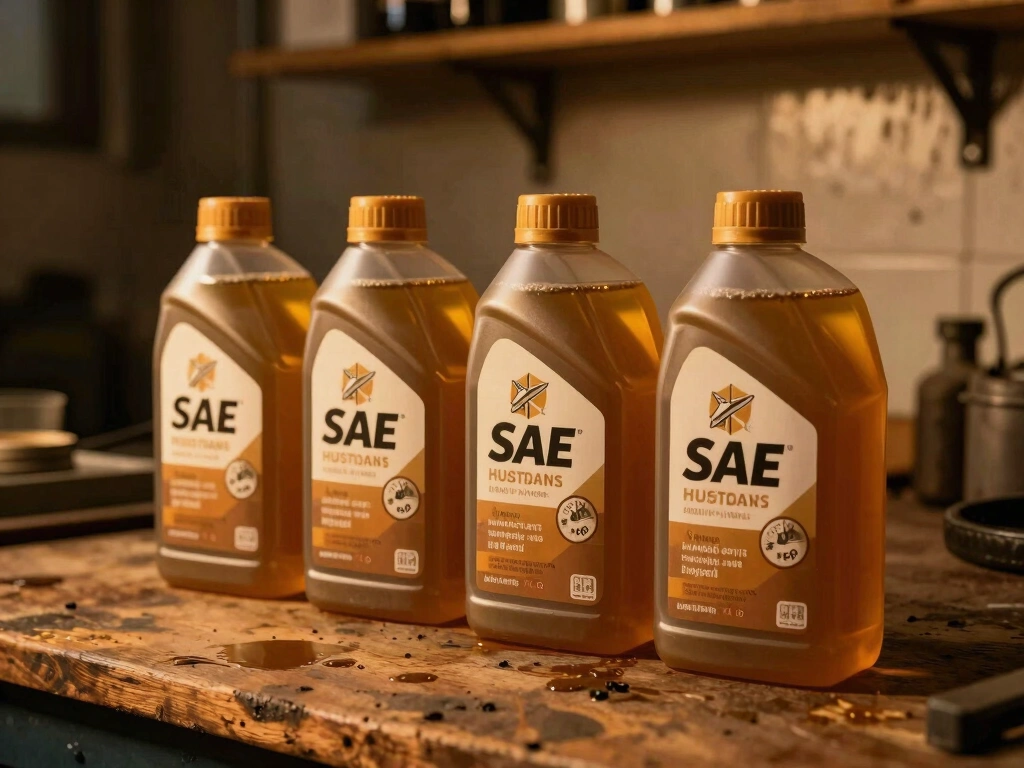
Full Synthetic vs. Synthetic Blend vs. Conventional High Mileage Oil
The high mileage label appears on all three base oil types, and the differences matter.
| Type | Protection Level | Drain Interval | Best For |
|---|---|---|---|
| Full synthetic | Highest | 7,500–10,000 mi | Engines kept long-term; turbo/performance |
| Synthetic blend | Moderate | 5,000–7,500 mi | High-consumption engines; value-focused |
| Conventional | Adequate | 3,000–5,000 mi | Low-stress older engines; tight budgets |
Full synthetic high mileage offers the best oxidation resistance, widest temperature range, and longest drain capability. It costs more, but if you’re planning to keep the vehicle another 50,000–100,000 miles, the per-mile cost difference narrows quickly.
Synthetic blend high mileage is the practical middle ground. Many high-consumption engines burn a quart between changes — topping off with quality blend oil is cheaper than losing full synthetic to combustion. The Seal Conditioner and antioxidant packages are present; the base oil just doesn’t last as long.
Conventional high mileage makes sense for low-stress applications — an older vehicle that barely gets driven, or an engine that will be replaced in the next year or two anyway. Drain intervals need to be strictly followed.
Top-Rated High Mileage Motor Oils


* Affiliate links. Prices last updated March 6, 2026.
Does High Mileage Oil Stop Oil Burning?
This is where the marketing and the reality diverge most sharply.
Oil burning and oil leaking are different problems with different causes. High mileage oil directly addresses seal leaks — hardened rubber that the Seal Conditioner chemistry can restore. It does not directly address worn piston rings.
If your engine is burning oil because the piston rings have worn enough to let combustion gases and oil past, no oil formulation will fix that. The Viscosity Modifier stack may reduce consumption slightly by maintaining better film at the wider clearances, and the detergent package may free up stuck or gummed rings — but if rings are mechanically worn, you’re managing a mechanical problem with a chemical solution.
A realistic expectation: switching to high mileage oil on an engine with minor ring gumming and hardened valve seals might cut consumption from a quart per 3,000 miles to a quart per 4,500–5,000 miles. That’s meaningful. An engine burning a quart per 1,000 miles has a mechanical condition that oil specification can’t address.
There’s also a timeline element. Seal Conditioners and detergent cleaning agents don’t act immediately — allow two to three oil changes before judging the results. Some users switch to high mileage oil, see no immediate improvement, and go back to standard oil, missing the slow-acting nature of seal reconditioning. If the seals were just starting to harden, three changes of high mileage oil often makes a visible difference. If they haven’t improved by the third change, the seal damage is mechanical and you’re past what chemistry can do.
For a deeper look at what actually causes oil consumption, the diagnosis matters more than the oil formulation.
Best High Mileage Motor Oils
Valvoline MaxLife Full Synthetic 5W-30: The Seal Conditioner package here is among the more aggressive in mainstream high mileage formulations. Field reports on high-mileage domestic V8s consistently show reduced seeping at valve covers and cam plugs after a few changes.
Mobil 1 High Mileage Full Synthetic 5W-30: Mobil’s antioxidant package is the standout — better thermal stability at elevated temperatures than most competitors. Good fit for engines running hot or towing occasionally. API SP certified.
Castrol EDGE High Mileage 5W-30: The Fluid Titanium technology adds film strength under pressure, and Castrol’s detergent package is thorough. Tends to perform well in European and Japanese import applications alongside the standard domestic use case.
Valvoline MaxLife Synthetic Blend 5W-30: When full synthetic isn’t the priority — either due to cost or because the engine burns enough that topping off with cheaper oil is the practical strategy — MaxLife blend delivers the Seal Conditioner and antioxidant benefits at a lower per-quart price. Recommended drain interval is shorter than the full synthetic versions.
Related Articles
- Synthetic vs. Conventional Oil: Which Do You Actually Need?
- Why Is My Car Burning Oil? Common Causes and What to Do
- Best Motor Oil for High Mileage Engines: Tested Picks and Buying Guide
Frequently Asked Questions
Can I switch to high mileage motor oil if my engine has never had it before?
Yes. A clean engine with no significant deposit buildup can switch without issue — the Seal Conditioners only act on hardened or dried rubber, not healthy flexible seals. If the engine is heavily sludged, a high-detergent high mileage oil might dislodge accumulated deposits quickly, which could temporarily clog a passage. In that case, a flush before switching is worth considering.
Is high mileage motor oil safe for engines under 75,000 miles?
Yes. The additive package isn’t harmful to newer seals. Seal Conditioners don’t over-swell healthy rubber seals — the chemistry only acts on seals that have already lost elasticity. Using high mileage oil on a younger engine adds no downside and provides a stronger antioxidant package than standard formulations.
How often should I change high mileage motor oil?
Full synthetic high mileage formulations: 7,500–10,000 miles or per your OLM. Synthetic blend: 5,000–7,500 miles. Conventional high mileage: 3,000–5,000 miles. Always follow the OEM interval if it’s shorter than these ranges. Engines with active consumption should stick to shorter intervals regardless of oil type.
Will high mileage oil fix a noisy engine?
Unlikely for most noises. If the noise is ticking from a partially blocked hydraulic lifter — caused by varnish in the lifter passage — the detergent additives in high mileage oil may clear the restriction over several hundred miles. Persistent knocking, especially deep bottom-end knocking that tracks with RPM, is a mechanical issue that no oil formulation resolves.
What viscosity should I use for high mileage motor oil?
Start with the OEM-specified viscosity. If the engine has documented consumption (more than 1 quart per 3,000 miles) and the manufacturer’s spec includes a thicker option (e.g., 5W-30 or 5W-40 both appear in the owner’s manual), moving to the thicker grade sometimes reduces consumption by improving ring seal. Don’t go thicker than what the manual allows — too-thick oil at cold starts restricts flow to bearings during the critical first seconds.
Related Articles

Best Motor Oil for High Mileage Engines: Tested Picks and Buying Guide
Best motor oil for high mileage engines needs seal conditioners, strong antioxidants, and the right viscosity. Here are the top picks and what to look for.
Signs It's Time to Change Your Oil (Don't Trust the Sticker)
The windshield sticker isn't calibrated to your oil or engine. Here's how to actually tell when your motor oil needs changing — and when to change sooner.
How Often Should You Change Your Oil? (The Real Answer)
How often should you change your motor oil? The answer is in your owner's manual — not on that 3,000-mile windshield sticker.