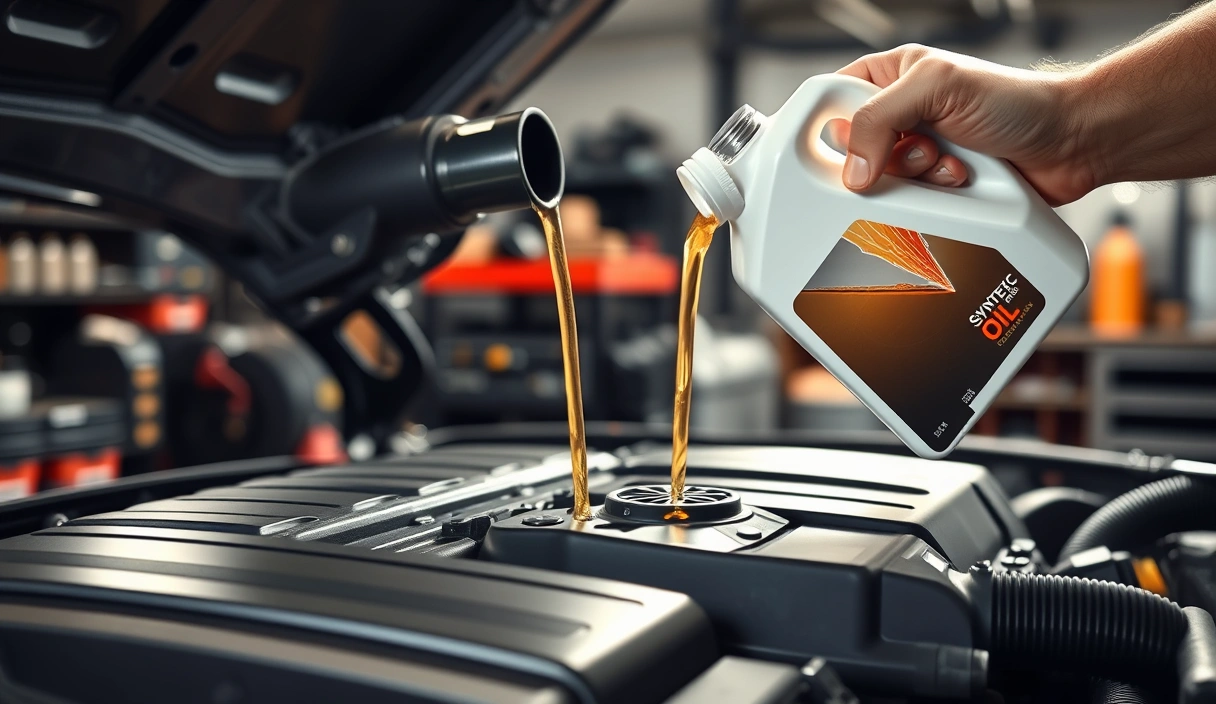
How Long Does Synthetic Oil Last? Mileage, Time, and What Actually Depletes It
How long does synthetic oil last? 7,500–10,000 miles in normal driving, up to 15,000 for extended-drain formulas — but time runs independently of mileage.
Contents
Two independent clocks are running on your engine oil simultaneously. One counts miles. The other counts days. Full synthetic oil degrades on both axes, and most drivers account for only one of them.
How long does synthetic oil last? In normal driving: 7,500–10,000 miles before the change interval. Up to 15,000 miles for extended-drain formulas under the right conditions. At most 12 months regardless of mileage — because the time clock doesn’t stop when the odometer does.
Here’s what actually depletes synthetic oil, how fast each mechanism works, and when the interval shortens regardless of what the mileage says.
The Mileage Clock: What Wears Down the Oil
Full Synthetic Oil lasts significantly longer than conventional on the mileage axis because of two chemistry advantages: oxidation resistance and Viscosity Index Improver (VII) stability.
Oxidation: At operating temperature under load, base oil molecules react with oxygen, forming acids, sludge precursors, and cross-linked deposits. Synthetic base stocks (Group III hydrocracked petroleum or Group IV PAO) have more uniform molecular structures that resist initiating this reaction. The Antioxidant package — hindered phenols and aromatic amines — sacrifices itself to interrupt the chain reaction when it does start. When the antioxidant reserve is depleted, oxidation accelerates sharply.
VII shear: Multi-grade oil contains Viscosity Index Improver polymers that maintain viscosity across temperature ranges. These long-chain polymers shear mechanically under engine stress — they break into shorter chains that no longer coil and expand as designed. Sheared VII oil behaves as a lighter grade than labeled. Synthetic base stocks have a naturally higher viscosity index, requiring less VII to achieve multi-grade performance, which means less shear degradation over the interval.
The combined result: full synthetic at 10,000 miles typically has meaningful antioxidant reserve remaining and manageable VII shear — confirmed repeatedly by used oil analysis laboratories. Conventional oil at the same mileage is usually depleted past its useful service life.
For the comparison of synthetic vs. conventional oil base stocks and why the chemistry difference produces a longer interval, that article covers it in detail.
The Time Clock: Why Mileage Alone Isn’t the Measure
A common scenario: you drive 4,000 miles a year. You’re on full synthetic. You figure one oil change per year is excessive — the mileage barely registers. The oil looks fine.
Here’s what’s happening in those low-mileage months:
Cold-start combustion moisture. Every cold start — especially when the engine doesn’t fully warm up — produces combustion water that ends up in the crankcase. On long highway drives, this moisture burns off as the oil reaches full operating temperature. On short trips where the engine warms up but doesn’t get hot enough long enough, moisture accumulates. Over 12 months of mostly short-trip driving, the moisture load in the oil builds up regardless of odometer readings.
Acid accumulation. Combustion produces sulfuric acid from sulfur in fuel. This acid gets past the piston rings and into the oil. The oil’s alkaline reserve (Total Base Number, or TBN) neutralizes these acids. TBN depletes on a time basis from short-trip driving even when mileage is low.
Additive package degradation. Some additive depletion is time-based, not load-based — it proceeds at a slow rate just from sitting. After 12 months, even low-mileage oil has consumed some of its additive capacity to time-based degradation.
This is why 12 months is the standard maximum for any oil, on any vehicle, in any condition. Even if your OLM reads 60% at 13 months, change the oil. The algorithm isn’t calibrated for 13-month accumulation of short-trip moisture.
The oil life monitor accuracy guide covers when to trust the Oil Life Monitor (OLM) and when to override it — the 12-month rule is one of the specific override cases.

Extended-Drain Formulas: What They Actually Claim
Several full synthetic products carry Extended Drain Interval ratings beyond the standard 7,500–10,000 miles:
Mobil 1 Extended Performance: Rated to 20,000 miles. Mobil’s claim is based on their own testing protocol under light-duty conditions. Most real-world users run 12,000–15,000 miles with this product before the OLM signals a change.
Pennzoil Ultra Platinum: Rated to 15,000 miles. Uses GTL (Gas-to-Liquid) base stock with higher natural viscosity index and oxidation resistance compared to standard Group III synthetic.
Amsoil Signature Series: 25,000-mile claim per Amsoil’s testing. This is the most aggressive claim in the consumer market, and Amsoil backs it with their oil analysis confirmation program (Signature Series customers who submit used oil samples can verify remaining life).
A few honest notes on these claims: they’re manufacturer-conducted testing under specific conditions — not independently audited intervals. The 20,000-mile rating assumes light-duty, warm-climate driving with regular level checks. The 12-month time limit still applies regardless of product.
If you want to actually run these longer intervals with confidence, used oil analysis through Blackstone Laboratories ($35–45 per sample) gives objective data on what’s happening in your specific engine under your specific driving conditions.
For a detailed breakdown of the data behind extended intervals and the conditions that make them safe or unsafe, the extended oil change interval guide covers the full picture.
What Shortens the Interval
Even with full synthetic in the engine, certain conditions push the degradation curve faster:
Short-trip driving: If most of your trips are under 5 miles — engine warms up but never reaches sustained operating temperature — the combustion moisture and acid accumulation described above work faster than the odometer. Cut your mileage interval by 25% if short trips dominate your driving profile.
Turbocharged engines: Turbos run at extreme heat that pushes oil degradation at the bearing supply lines. The localized temperature during and immediately after hard driving adds thermal stress to the oil that naturally-aspirated engines don’t generate. Full synthetic is a requirement for any turbo application, but the interval still runs shorter under high-boost driving than under light highway use.
Oil consumption: An engine that burns or leaks oil — adding a quart between changes — isn’t running on the same oil charge for the full interval. The replacement quart dilutes the additive package and changes the cumulative degradation calculation. High-consumption engines need shorter intervals.
Extreme ambient temperatures: Sustained cold-start cycles in very cold climates add mechanical stress to cold, thick oil during those first seconds before the oil fully warms. Sustained hot ambient temperatures (95°F+) accelerate oxidation in the crankcase. Either extreme pushes toward the shorter end of the interval range.
Unopened Synthetic Oil: Shelf Life in the Container
A different question: how long does synthetic oil last in an unopened container?
Most synthetic oil has a manufacturer-rated shelf life of 5 years from the production date. The key degradation mechanism for stored oil is oxidation through the container seal and additive package degradation over time without the protection of use. Storage conditions matter: cool, dry, away from direct sunlight and extreme temperature swings.
Practically speaking: sealed containers of full synthetic oil stored properly are generally reliable within the 5-year window. Check the production date or best-before date stamped on the bottle before buying old-stock inventory.
Full Synthetic Oils With Proven Extended Interval Performance


* Affiliate links. Prices last updated March 6, 2026.
Frequently Asked Questions
How long can you go without changing synthetic oil?
For standard full synthetic in normal driving: 7,500–10,000 miles or 12 months, whichever comes first. For extended-drain formulas (Mobil 1 Extended Performance, Pennzoil Ultra Platinum): up to 15,000 miles per manufacturer, but the annual time limit still applies. The practical ceiling with used oil analysis confirmation is around 15,000 miles for the best extended-drain synthetics under the right conditions.
Does synthetic oil go bad if the car sits?
Yes, over time. The degradation mechanisms are slower when the engine isn’t running — no thermal stress, no combustion byproducts — but time-based additive depletion continues. Moisture from previous short-trip use stays in the oil. At 12 months, change the oil regardless of how little you drove. Sitting engines are also at risk from moisture condensation if the car sits in a humid environment for extended periods.
Is it bad to change synthetic oil too early?
You’re wasting money, not harming the engine. Changing full synthetic at 5,000 miles when it has 50% protective life remaining is simply leaving protective capacity unused. It’s not harmful — it’s just unnecessary. The interval exists to use the oil’s protective capacity efficiently without running it into the ground.
Can you mix different brands of full synthetic oil?
Chemically safe to mix in an emergency top-off. API-certified synthetic oils use compatible additive chemistries regardless of brand. Running mixed brands long-term isn’t the ideal approach — you get an oil somewhere between the two formulations rather than the engineered product — but it won’t cause a reaction or immediate damage.
Does a longer interval mean lower oil quality at the end?
It depends on whether the interval is within the oil’s designed service life. Oil at 9,000 miles that’s still within its service life (confirmed by OLM or oil analysis) is fine. Oil at 5,000 miles that’s been severely stressed — short-trip moisture accumulation, high consumption, extreme heat — may be more depleted than oil at 9,000 miles of light highway driving. Mileage alone doesn’t tell you the condition of the oil.
Related Articles
How Often Should You Change Your Oil? (The Real Answer)
How often should you change your motor oil? The answer is in your owner's manual — not on that 3,000-mile windshield sticker.

Full Synthetic Oil Benefits: What It Actually Does for Your Engine
Full synthetic oil benefits come down to base stock chemistry, not marketing. PAO, antioxidants, and VII polymers explained — plus the cost-per-mile math.

How to Check Engine Oil: Level, Condition, and What to Look For
Checking engine oil takes two minutes and tells you everything about your engine's health. Here's exactly how to read the dipstick and what to look for.