
Full Synthetic vs. Synthetic Blend: Is the Upgrade Worth It?
Full synthetic vs. synthetic blend: when the upgrade earns its price and when it doesn't. Includes cost-per-mile math and engine-type guidance.
Contents
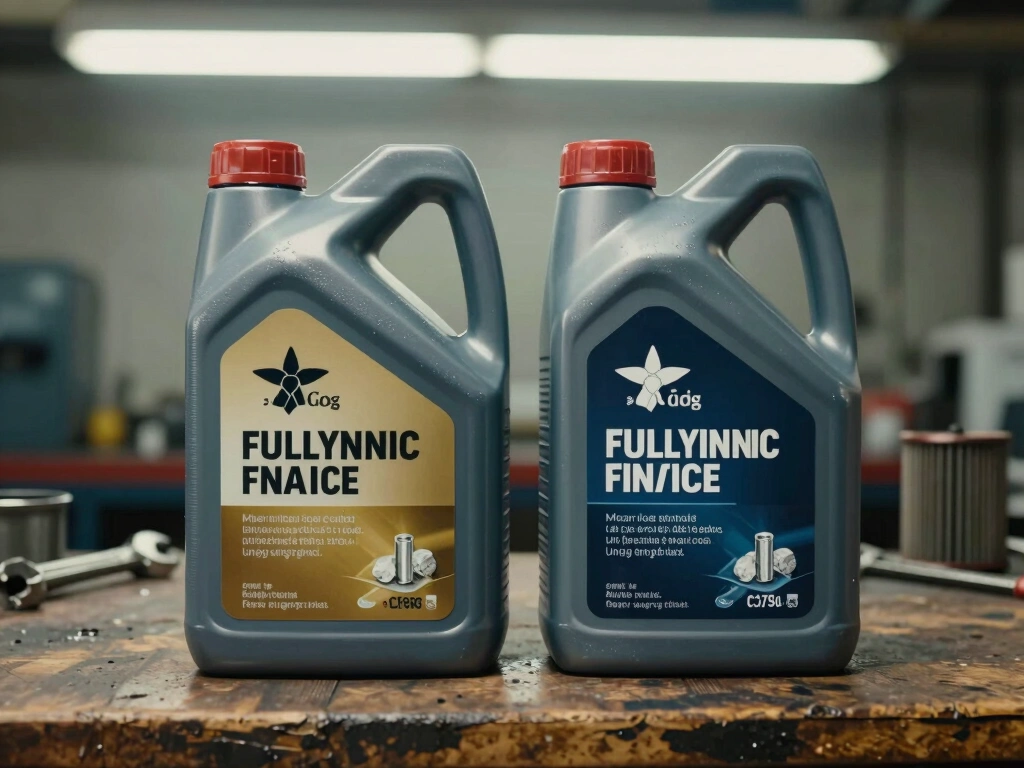
Two jugs on the shelf. Full synthetic at $28. Synthetic blend at $20. Both say they protect your engine. Is the $8 difference buying you anything real?
For most modern vehicles: yes. For older vehicles in mild conditions: maybe not. The answer depends on your engine’s actual demands, not on what the label says about “premium protection.”
What Is the Actual Difference Between Synthetic Blend and Full Synthetic?
Both types start with base oil. The difference is how much of that base oil is synthetic.
Synthetic blend mixes conventional petroleum base stock with synthetic base stock in an unspecified ratio. There’s no industry standard for the blend ratio — one manufacturer’s blend might be 30% synthetic, another’s 50%. The additive package is usually similar to full synthetic, but the base oil itself is a mix of refined petroleum and synthetic. It performs better than conventional oil, particularly at temperature extremes, but doesn’t match full synthetic across all conditions.
Full synthetic is entirely synthetic base stock — either Group III (severely hydrocracked petroleum that meets the legal definition of synthetic) or Group IV (polyalphaolefin, chemically synthesized). The more uniform molecular structure is what drives the performance advantages: better oxidation resistance, better cold-flow properties, longer additive life.
The chemistry matters for understanding why one costs more. Group III base stock is manufactured through an intensive hydrocracking process that strips out the irregular molecules — sulfur compounds, paraffin waxes — that make conventional oil thermally unstable. Group IV (PAO) base stock is chemically synthesized from scratch with molecules engineered for specific lubrication properties.
Where Synthetic Blend vs. Full Synthetic Actually Matters
Drain Interval: The Most Practical Difference
Full synthetic: 7,500–10,000 miles in normal service. Synthetic blend: 5,000–7,500 miles.
This is the most significant practical difference for most drivers. The interval gap exists because full synthetic’s more uniform base oil resists oxidation longer. The additive package has more time to do its job before the base oil degrades past the point where the additives can compensate.
Running a synthetic blend and changing at 5,000 miles is not a bad maintenance strategy. It’s just more frequent than running full synthetic at 7,500-8,000 miles. The cost math often closes the gap between the two options.
High-Temperature Stability
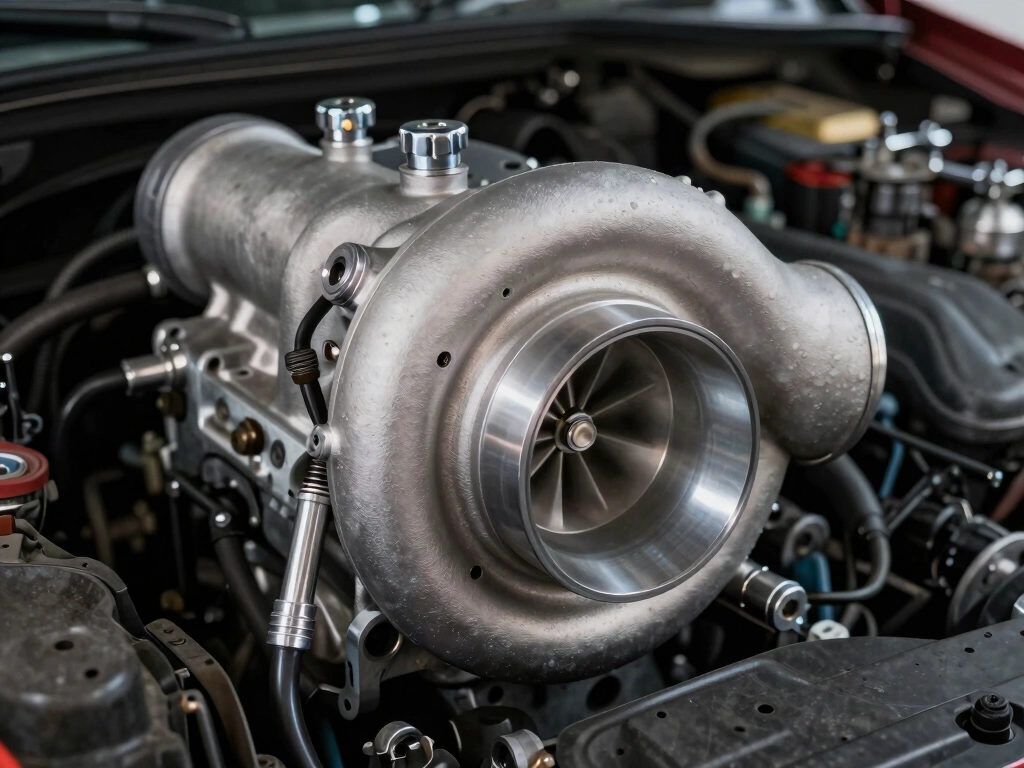
Under sustained heat — towing, driving in Phoenix in August, turbocharger operating temperatures — full synthetic holds its viscosity grade more consistently than synthetic blend. The conventional base stock portion of a blend has more irregular molecular structures that oxidize preferentially under sustained thermal stress, thickening the oil faster.
For naturally aspirated engines in temperate conditions, this difference rarely shows up in 5,000-7,500 mile intervals. For turbocharged engines or frequent towing: full synthetic is the right call, not because synthetic blend is bad, but because it’s the wrong tool for those thermal demands.
Cold-Start Protection
Full synthetic has a lower pour point (the temperature at which oil stops flowing) than synthetic blend. In sub-freezing temperatures — particularly below 10°F — synthetic base stocks flow faster through oil passages in the seconds after startup when the pump is building pressure.
The cold-start window (first 30-60 seconds) accounts for a disproportionate share of total engine wear. If you park outside in Minnesota winters, the full synthetic advantage here is not theoretical. If you’re in Southern California, the cold-start difference between blend and full synthetic is genuinely minimal.
Sludge Formation
Sludge forms when oil oxidizes and combustion byproducts polymerize onto engine surfaces. Full synthetic’s oxidation resistance is better than synthetic blend’s for the same reason the interval is longer: fewer irregular molecular chains to oxidize first.
For high-mileage engines with any sludge history, or for engines that see a lot of short-trip city driving, full synthetic’s sludge resistance advantage is meaningful. For a well-maintained engine on regular intervals, both types keep sludge at bay if changed on schedule.
The Cost Math: Full Synthetic vs. Synthetic Blend Per Mile
| Oil Type | Cost per 5qt jug | Interval | Cost/1,000 miles |
|---|---|---|---|
| Synthetic Blend | ~$20–24 | 6,000 miles | ~$3.50–4.00 |
| Full Synthetic | ~$27–32 | 8,500 miles | ~$3.20–3.75 |
The numbers are closer than the per-jug price suggests. At a 6,000-mile interval on synthetic blend versus an 8,500-mile interval on full synthetic, the cost-per-mile difference is often less than $0.50 — frequently less than that.
If you’re paying shop labor rates ($40-75 per oil change), the fewer annual shop visits on full synthetic add real savings on top of the per-mile cost difference. Two full synthetic changes per year vs. three synthetic blend changes per year saves a shop visit — roughly $40-75 — regardless of the oil price difference.
For DIY mechanics: run the numbers for your actual purchase prices. If your AutoZone has synthetic blend on sale at $18 and full synthetic at $30, the per-mile math might favor blend. If they’re $22 and $28, full synthetic probably wins at extended intervals.
When Synthetic Blend Is the Right Call
High-mileage engines with aging seals. High-mileage synthetic blend formulas (Valvoline MaxLife, Castrol GTX High Mileage) add seal conditioners and extra detergents specifically calibrated for engines past 75,000 miles. The seal conditioner component isn’t a feature of standard full synthetic. For these applications, a purpose-built high-mileage blend often outperforms a generic full synthetic.
Budget-conscious drivers on a shorter interval. If you’re disciplined about changing at 4,000-5,000 miles and want to spend less per jug, synthetic blend delivers more protection than conventional at a lower cost than full synthetic. It’s a legitimate middle-ground if the interval discipline is there.
Older engines where the OEM didn’t spec synthetic. For a pre-2001 vehicle with a simple naturally aspirated engine and no turbocharged components, synthetic blend meets the specification and provides adequate protection. Full synthetic is also fine — but so is blend, and the price savings add up over the vehicle’s remaining life.
When Full Synthetic Is Worth the Extra Cost
Any turbocharged or GDI engine. The thermal demands of a turbocharger — bearings at 100,000+ RPM, turbine side temperatures that can exceed 1,000°F — require synthetic oil’s thermal stability. Synthetic blend’s conventional base stock portion doesn’t handle sustained turbocharger heat as reliably. This isn’t a preference. It’s the engineering requirement for boosted applications.
Modern naturally aspirated engines (post-2010) with extended-interval specs. If your owner’s manual specifies 7,500-10,000 miles between changes, it’s calibrated for a full synthetic. Running synthetic blend on an OEM extended interval is using a product not designed for that duration.
Cold climates where startup protection matters. Below 10°F, full synthetic’s lower pour point provides faster oil circulation in the critical first-30-seconds window. The difference in cold-start protection is real, measurable, and increasingly relevant as ambient temperatures drop.
Any engine where the OEM certifications require full synthetic. BMW Longlife-04, dexos1 Gen 3, Mercedes-Benz 229.x — these OEM specifications require full synthetic base stocks by definition. Synthetic blend doesn’t meet them, regardless of its blend ratio.
For a deeper look at what drives the chemistry difference and why the interval diverges, the synthetic vs. conventional oil breakdown covers the base oil group structure and real-world oxidation data.
The Bottom Line: Which Should You Use?
For most modern vehicles: full synthetic. The cost-per-mile difference is narrow, the interval advantage means fewer changes, and the protection margin under stress conditions is genuinely better.
For high-mileage engines over 75,000 miles: high-mileage synthetic blend if you’re seeing any consumption or seal issues. Standard full synthetic is also fine for well-maintained high-mileage engines without sludge history.
For older vehicles (pre-2001) with simple naturally aspirated engines: synthetic blend is a solid choice that’s a meaningful step up from conventional without the full synthetic price.
The how to choose motor oil guide has the full selection framework — including OEM certification requirements and viscosity grade matching — if you want to confirm the right oil type for your specific vehicle.
Related Articles
- Best Synthetic Motor Oil: Top Full Synthetic Picks Compared
- Synthetic vs. Conventional Oil: The Chemistry That Actually Matters
Frequently Asked Questions
Is full synthetic actually worth the extra cost over synthetic blend?
For most modern vehicles, yes. The cost-per-mile difference is smaller than the per-jug price suggests because full synthetic lasts longer between changes. The protection advantage — particularly for turbocharged engines, cold climates, and extended drain intervals — is real chemistry, not marketing. For older vehicles in mild conditions, the difference matters less.
Can I switch from synthetic blend to full synthetic?
Yes, at any scheduled oil change. The transition is chemically safe — modern API-rated oils from all types use compatible additive packages. Full synthetic’s stronger detergent package may clean up light deposits in an engine that’s been running blend or conventional for years, which appears as slightly faster oil darkening for the first change or two. That’s normal.
Does synthetic blend last as long as full synthetic?
No — synthetic blend’s appropriate interval is 5,000-7,500 miles versus 7,500-10,000 for full synthetic in normal service. The conventional base stock in the blend oxidizes faster under sustained heat than full synthetic’s base stock. Using a synthetic blend on a 10,000-mile full-synthetic interval would leave you running on depleted additive chemistry for the last 3,000 miles.
What is the difference between synthetic blend and full synthetic for high-mileage engines?
High-mileage synthetic blends (Valvoline MaxLife, Castrol GTX High Mileage) include seal conditioners and enhanced detergent packages specifically formulated for engines past 75,000 miles. Standard full synthetic doesn’t include these seal conditioners. For high-mileage engines showing oil consumption or aging seal behavior, a high-mileage blend is often a better match than a standard full synthetic.
Is synthetic blend good enough for a turbo engine?
No — not for sustained use. Turbocharged engines generate heat beyond what the conventional portion of a synthetic blend is designed to handle reliably. Synthetic blend in a turbo application doesn’t fail immediately, but the oil degrades faster under sustained turbocharger thermal stress than full synthetic does. For any turbocharged engine, full synthetic is the engineering requirement, not a preference.
Related Articles

Full Synthetic Oil Benefits: What It Actually Does for Your Engine
Full synthetic oil benefits come down to base stock chemistry, not marketing. PAO, antioxidants, and VII polymers explained — plus the cost-per-mile math.
How Long Does Synthetic Oil Last? Mileage, Time, and What Actually Depletes It
How long does synthetic oil last? 7,500–10,000 miles in normal driving, up to 15,000 for extended-drain formulas — but time runs independently of mileage.

Pennzoil Platinum vs. Mobil 1: The Honest Comparison
Pennzoil vs. Mobil 1: both are full synthetic API SP oils at similar prices. The real differences come down to base oil source and certification coverage.